The battle between young and old

The first time I heard John Mayer’s song, "Waiting on the World to Change," I was ecstatic. I had a vision of joining together with an intoxicating fervor. Finally, this is the social commentary that would be the spark igniting my peers into action. Instead of waiting for the baby boomers to roll over and relinquish control, we’d rise up and take it!

Well, I couldn’t have been more wrong. Apparently my generation is perfectly content to continue waiting. In fact, I don’t believe many of my peers are even standing in line. I’m pretty sure they’re all out back hiding behind some trees trying to avoid the shift in power all together.

I can’t blame my generation’s shared apathy to the impending inheritance of the world, especially in its current state. Every minute of every waking hour, the media is saturated with images and sounds illustrating death, doom, and destruction occurring on the planet. And as we look around, we can’t help but hold our parents partly accountable for the condition of the world.  

But it’s not entirely the boomers’ fault. They were completely unprepared to handle the globalization that bloomed under their feet. Unfortunately, love isn’t a redeemable currency. So they made choices based on what they believed to be right at that time, and with little regard for the future. Now, they’re slowly coming to terms with those choices.

And it’s not that the boomers don’t want to fix some of the disastrous outcomes of the decisions they made. But, they’re old. And they’re tired. And they’re much more concerned with recapturing the 40-plus years they’ve wasted away at an unfulfilling job. Just as I can’t blame my generation for not wanting to take responsibility for the crumbling world, I can’t blame my parents’ generation for their inability to fix it.

As more and more boomers turn the corner onto the path toward retirement, they are experiencing a second coming of age. New retirees are becoming introspective as they are afforded more time for leisure and relaxation. Seeing the mountains of material things amassed over the years in search of happiness, the boomers are now finding solace in using the fruits of their labor to experience and to explore. And this realization is slowly starting to seep into the psyche of my generation.

As the boomers are running to the finish, my generation is floundering in its first steps. We’ve enjoyed a cushy life free of difficult decisions and burgeoning responsibility. College isn’t the liberating, mind-expanding rebellion our parents experienced. Technology has made it easy to continue living under a shroud of parental influence. And while we hear our parents when they tell us to get a job to make lots of money, we can’t help but squirm a little.

Whereas the boomers experienced a temporary freedom from parental control, we haven’t had the chance to escape. Although I dream for my generation to collectively rise up and demand control, everyone is still trying to figure it out. Defiance will come upon the realization that we are capable of making it on our own without the help of our parents. But until then, I’ll just continue to wait.


Child healthcare, eavesdropping, and protecting journalists

"President Bush vowed Wednesday to veto bipartisan legislation that would sharply increase funding for a popular health insurance program for poor children."

Well, isn’t that sweet?

The reason: "S-Chip covers children whose families earn too much to qualify for Medicaid but not enough to pay for private insurance. The bills would make an estimated 3.2 million additional children eligible for S-Chip. Bush says this expansion is a first step toward government-funded universal health coverage."

Well, we certainly don’t want that, now do we? We certainly don’t want America to have a better health care system than Peru? We don’t want to save lives and improve the health of our citizens like every other modern nation on Earth does. The health of children  pfft, who cares? Once it’s out of the womb (when we dote on it and talk about the culture of life, when we vow to do anything to protect it), it’s on its own.

I know it’s only by a single seat, but the Democrats do control the Senate. So how did a bill expanding the government’s power to listen to our phone calls without warrants get passed? Can anyone explain this to me?

Finally: "Legislation to shield reporters from being forced by prosecutors to reveal their sources was approved Wednesday by the House Judiciary Committee." I’m happy, but I don’t even want to hear from Judy Miller about this, or ever again, really.

There’s never a dull week in America.


Why doesn’t Kate Winslet have an Oscar?

kw.jpg


Amen. 


Pro-anorexia nation

"When you are actively in your eating disorder, you desperately want someone to understand, and a lot of time you find groups like the pro groups on Facebook that are supportive of you continuing your eating disorder."

21-year-old American Andrea Schneider, addressing the boom in pro-anorexia and pro-bulimia groups  not to be confused with support groups for those seeking recovery from their condition  on social networking sites such as MySpace and Facebook.

Pro Ana Nation, a pro-anorexia MySpace group boasting more than 1,000 members, includes in its group rules that there must be "no people trying to recover, it ruins our motivation."  Facebook, another social networking site, has a group called "Get thin or die trying."  Both social networking sites have prohibitions against posting harmful content.


Going the distance

As summer winds down — and heats up — many of us find ourselves traveling to unlikely places by land or sea, even in our minds or on the (Web) page. However and wherever we journey, we usually encounter a few roadblocks and detours before we find ourselves exactly where we want to be.

In this month’s issue of InTheFray, we invite you to pile into our station wagon in cyberspace and join us for some reflective journeys around the globe. We begin by Rowing in place with Victor Mooney, who, as Michael Rymer discovers, is a bit concerned that others might consider him crazy for setting his sights on rowing across the Atlantic. But while Mooney’s journey might seem, on the surface, to be a fanatical quest for fame, there’s something more to his quest. Mooney rows long distances to cope with his family’s struggles with AIDS — and to shed light on the disease that has already killed one of his brothers and lurks behind another.

We then ride with Megan Stielstra to Prague, where she must come to terms with identifying herself as an American even while she feels anger at her own government. Over in Japan, we share Laura Hancock’s frustrations and joys as she desperately tries to find something she can achieve in a country where she can barely speak the language. And back in rural America, poet Shelley Getten recalls the boulders that made two sisters the strong women they became.

Rounding out this month’s stories are two book reviews: ITF Contributing Writer Sharlee DiMenichi reads Matthew Wray’s Not Quite White and discovers that the phrase “white trash” is No ordinary slur, while Jeremy Gillick tries to pinpoint the eye of the Balkan storm in his reading of the collaborative graphic novel Macedonia.

Coming next month: our special issue on the state of language in the 21st century.

Thanks for reading!

Laura Nathan
Editor


Of trials and tea

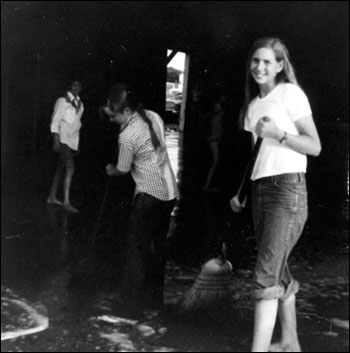
200708_ttlg.jpgFollowing tradition while kneeling.


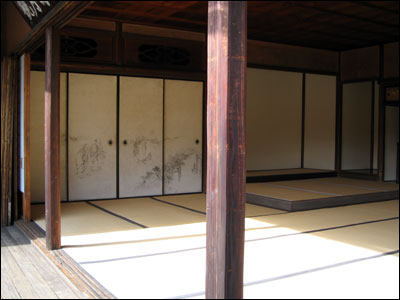
A month after moving to Japan, I find myself kneeling on a straw tatami mat, a tea whisk awkward in my right hand as my bespectacled teacher instructs me on the correct way to whip matcha — powdered green tea — into the perfect, bitter froth.

Her smooth, Kyoto-accented Japanese rushes over me like a gentle wave, and is about as comprehensible as one. Though I’ve been studying Japanese for two years now in a sterile classroom environment, nothing has prepared me for this — trying to master the intricacies of the tea ceremony from a teacher who speaks no English.

My teacher smiles at the end of her explanation, and I nod enthusiastically with all the understanding I don’t have. Satisfied for the moment, she effortlessly rises from her knees to glide across the room on white tabi socks, attending to her more advanced students in the corner.

I watch her float by, a kimono-clad vision of grace, touching another student on the shoulder, who smiles at her attention and asks a question. Frankly, I’m envious of their easy understanding. I remember when all it took to ask a question was a thought and a voice, no quicksand of translation to struggle through.

With a sigh, I shift my aching legs and my attention diverts to the jolts of pain searing upwards. The proper sitting position for tea ceremony is seiza, or on one’s knees, which my teacher seems to be able to do for hours, but it puts my ill-bred legs to sleep in minutes.

“Stop it,” I say firmly to myself, cheating with English. Whining about sore legs or my woeful lack of Japanese comprehension doesn’t help to make the tea.

This is the first time my teacher has let me near a whisk and hot water on my own. My first couple of lessons were dedicated to watching — an exercise in kneeling for entirely too long while observing the other students pour, mix, bow, and present perfectly whipped bowls of green ambrosia every time.

Pursing my lips, I go through the ritual with my little practice tray. The Japanese tea ceremony is a very exact science — there’s just the right way to pick up the bowl, a certain number of rotations involved in wiping the bowl, the right distance to put the bowl between the jar holding the tea and the whisk, and an exact angle to balance the tea scoop, or chashaku, on the tea container. The first time my teacher had explained this level of detail, entirely straight-faced, I had fully expected a dictated number of tea molecules to be rationed per serving.

Going through the motions, I’m pretty positive I’ve folded the wiping cloth incorrectly and can’t remember the amount of times I was supposed to rinse the bowl, but my teacher is still occupied with other students who actually speak her language, so I duck my head and diligently continue to make mistakes.

Much of Japan has been to this tune. I can’t wrap my head around a bonanza of things: kanji characters that mystically change pronunciation with no warning; a smorgasbord of the endlessly frustrating, like the unexplainable reluctance of the Japanese to come out and say no when they mean it; or the downright hazardous, such as the many times I’ve almost gotten plowed over by a car since they drive on the other side of the street here.

Another constant problem is my left-handedness. It’s ruled me out from pursuing my original Asian cultural torture of choice: calligraphy. An ancient geometric principle (that I couldn’t quite understand when explained to me in rapid Japanese) prohibits the use of the left hand for writing as art. Aside from my left-handed geometric limitations, anything remotely calligraphic I tried to produce with my right hand caused the teacher to hum sympathetically, tap his finger against his stubble and say, “Maybe we could try that again?”

Maybe, I had decided, I’ll try tea ceremony instead.

So here I am, my legs numb beneath me as I carefully measure out the tea powder into the bowl, tapping the bamboo scoop the prescribed number of times against the side (loudly; this is one of the things I’m sure I remember correctly), and balancing it perfectly straight on top of the lacquered tea container.

I am not by nature a serene person. I like to play rugby, argue politics, sing bawdy songs, and drink beer. This tearoom, with its quiet breathy calm and dreamy charcoal sketches, is completely foreign to me in every way. As I reach forward for the hot water pot (not yet allowed to use the bamboo dipper), I inhale that deep, patient scent of fine incense and old wood.

Pouring the hot water, I draw it all in, the kanji, the botched calligraphy, my leg pains, the quicksand of translation, and pick up the whisk.

Of course, in the perfectly ordered Way of Tea, one uses one’s right hand to whisk the matcha. Pressing the whisk against the side of the bowl, I manage a few weak swirls, but can’t force my wrist go to fast enough to whip it into a fine, bubbly froth, making the tea “stand,” as my teacher explained it.

“What’s wrong?” Returning to my side, the teacher kneels in a wave of elegant mauve silk and airs her question in equally elegant Japanese. With a rueful smile I sit back on my heels, wincing, as I can no longer feel anything below my knees.

“I use my left hand,” I say, wiggling the tea-and-water–covered whisk in my impotent right hand, dripping on the tatami.

My teacher purses her red lips, painted brows drawn together in confusion. In despair, I start to consider music lessons before she asks, “Then why don’t you use your left hand?”

Shocked, I nearly drop the whisk. “Really?”

“Of course,” she says with a smile. Drawing back her ample sleeve, she shows me her own left hand. “I use my left hand too.”

It’s a small, small victory, but I can’t help the big goofy grin that spreads across my face as I transfer the whisk to my dominant hand and quickly produce a bowl of green heaven, heavy with foam.

“I’ll be your guest,” my teacher says, sliding back to assume the proper position.

Still awed, I pick up the bowl, turn it on my palm two times so the painted design faces the guest, as I have been told to do, and place it before my teacher. 

Pulling it forward, my teacher bows, palms flat on either side of the cup. “Otemae choudai itashimasu,” she murmurs. I humbly receive from you.

She drinks it, and smothers me with compliments about how delicious it is. Still smiling like a loon, I finally allow my legs to fall out of seiza position. The world becomes an odd mix of happiness and pain as blood rushes back into my beleaguered limbs.

I’m not Japanese. I’m not right-handed. I boast the language skills of a five-year-old and the inherent grace of an ox. But none of this matters in the face of my left-handed tea ceremony teacher drinking tea that I myself have concocted, both of us sharing the time-honored tradition of exchanging hospitality.


Farm girls like it heavy

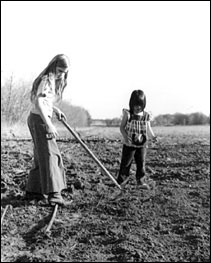
200708_imagine2.jpgLooking back on lessons learned.

Hey Deb, didn’t we love to shovel shit
from the barn, toss it
into the waiting manure spreader
just outside the door, until the barn floor
was clean down to concrete, the spreader
full beyond capacity?
And didn’t we compete
over who could lift the biggest load? 
The heaviest bucket of water?
The largest bale of hay?

Maybe we did have something to prove
if only to ourselves — two oldest girls
on the farm — preadolescent girls
working like ants —
lifting more than our weight
in whatever needed lifting
and almost always dressed as if
going to the beach instead of the open field.

Don’t you think we were stupid?
In halter tops and shorts lifting
huge rocks, boulders really
onto the tractor bucket.
Bruises and scrapes
on our arms and legs? Ever-reddening
scratches from embedded chafe?
Was it worth the deep dark tan?

Or maybe, Deb, the real reward, was the way
dad bragged about his girls — how we could hold
our own, and stick it out till the field was clear.
How we earned a swim in the deep, cold quarry,
or dinner at the Supper Club. How, at the end of the day
we knew what we could do.


Rowing in place

Victor Mooney’s boat show.

Victor Mooney dreamed of the ocean a few days before I met him. We were sitting together in a downtown Brooklyn, New York Au Bon Pain when he closed his eyes, tilted his head back, and revisited the dream. He was in a boat, he told me, that suddenly, yet peacefully, elevated on a giant wave above the water’s surface. Mooney raised both of his arms to indicate the height to which he’d been lifted. As I watched him, I noticed that he was sweating; his forehead gleamed.

A little while later, Mooney asked me, indirectly, if I thought he was crazy. We were discussing the relative popularity of ocean rowing — specifically, trans-Atlantic rowing — in Britain and the United States. England’s ancient ocean rowing societies have sent generations of athletes on trans-Atlantic crossings — generally in teams, on long boats, and often with the goal of breaking speed records. The best rowers in the United States, meanwhile, tend to content themselves with routes that hug the coast, or with workouts on fresh water. “Here, when you’re doing something like I am,” Mooney said, drawing an index finger to his temple to make the universal symbol for crazy, “people tend to think …”

Like many people who speak slowly and pause before completing their sentences, Mooney sometimes calls on his interlocutors to help obviate conversational logjams. As he looked at me now, with his finger pointing toward his temple, I understood that he was calling on me.

Hercules or Mitty?
   
Victor Mooney is one part Walter Mitty and one part Herculean hero. Like Mitty, he spends most of his time working his middlebrow job. He is a public affairs officer at ASA: The College for Excellence, a private college with campuses in Manhattan and downtown Brooklyn. He even has a wife and family that he lives with in Forrest Hills, Queens, New York. Unlike Mitty, Mooney’s fantasies of what he could do and who he could be have some basis in what he has already done. In 2000, he rowed from the Queensboro Bridge to the Verrazano Narrows Bridge in a sports canoe. Two summers later, he circumnavigated Long Island — a 300-mile loop that he completed in 13 days (he docked each night to sleep). In 2003, he rowed around Long Island, and then paddled west to circumnavigate the island of Manhattan. While traveling along the East River, he encountered a police boat whose captain encouraged him to row further on his next venture. A few weeks later, he began planning to row across the Atlantic Ocean, from Goree, a former slave port island off the coast of Senegal, to the Brooklyn Bridge, in a one-man boat. He has been preparing for a trans-Atlantic crossing — training, boat building, and fundraising — ever since.

I met Mooney by chance, stopping at his booth at the 2007 New York National Boat Show, an event that fills the Javits Convention Center with half-million-dollar yachts and ruddy yacht salesmen at the beginning of each year. Mooney’s booth stood on the periphery of the showroom, pinched between the towering portside of a Sea Ray 48 Sundancer and a cinderblock wall. A scattershot display that included press clippings (Mooney was awarded the Brooklyn Paper’s annual Don Quixote Award) and a waterproof medical kit was arranged on three small tables. Behind them was a metal scaffolding draped with forlorn-looking marine equipment — a poncho, a wet suit, and a rope. In contrast with the slick presentation of the yacht manufacturers, Mooney’s setup looked as though it might have been tossed off the side of a boat.

So did he: Though he has the bulging shoulders of an oarsman, Mooney lacks the endorphin-rich aura of an endurance athlete. He has a round, lightly freckled face — and even a modest gut that belies his avocation (this May, Mooney’s web site boasted that he had lost 30 pounds). He is neither tall nor strapping, and his chin bunches into folds. The afternoon I met him, he was wearing a dark, rumpled suit and a worn tie with a slipshod knot. He paced slowly, with his hands clasped behind his back.


No ordinary slur

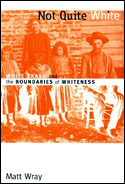
200708_wray.jpgMatthew Wray’s Not Quite White traces the history of the term “white trash.”


Mention monster trucks, cheap beer, trailer parks, and NASCAR races, and the term “white trash” inevitably comes to mind. Some people, including those who would not dream of describing a racial minority with an epithet, might even say the classist phrase aloud. While some self-caricaturists have reclaimed and defanged the slur, in many circles, people still use it to suggest their separation from a so-called lower class.

In Not Quite White: White Trash and the Boundaries of Whiteness (2006: Duke University Press), Matt Wray traces the history of the term “white trash” from its origination in the colonial-era South. Inspired by his own impoverished upbringing, Wray — who is white — explores the concept of “white trash” and the reason the epithet remains powerful more than a century after its first recorded use.

Wray, a sociology professor at the University of Nevada, Las Vegas, argues that the status of middle-class whites at the turn of the 20th century relied in part on their categorizations of lower-class whites as “white trash,” derived from its inception as a derisive term among blacks in the pre-Civil War South.

Class scapegoating is not the only reason the epithet outlasted its predecessors. According to Wray, the unusually compelling term derives its power from the tension created by juxtaposing “white” — with all its connotations of racial superiority — and “trash,” which is valueless and disgusting.

“But why white trash? Split the phrase in two and read the meanings against each other: white and trash,” Wray writes in the introduction. “Slowly, the term reveals itself as an expression of fundamental tensions and deep structural antimonies: between the sacred and the profane, purity and impurity, morality and immorality, cleanliness and dirt. In conjoining such primal opposites into a single category, white trash names a kind of disturbing liminality: a monstrous, transgressive identity of mutually violating boundary terms, a dangerous threshold state of being neither one nor the other … This is no ordinary slur.”

In fact, argues Wray, the term “white trash” evolved out of two other colonial-era slurs — “lubber” and “cracker.” One of the earliest descriptions of the poor rural whites known as lubbers occurs in the writings of William Byrd, a legislator in colonial Virginia who went on a surveying trip to settle a boundary dispute with North Carolina. According to Byrd, lubbers affronted respectable whites not only by being destitute, but also by disregarding conventional morality, social boundaries, and gender roles. In the diary of his journey, which Wray quotes, Byrd depicted lubbers as idle men content to leave strenuous labor to their industrious wives. In Byrd’s account, lubber men interacted openly and closely with blacks and American Indians, a habit rare among elite whites at the time. Lubber women, to Byrd, were notable for their sexual availability to high-status white men. Byrd went on to describe these poor whites as sick-looking and lazy, characteristics that would be associated with “white trash” for centuries to come.

Crackers shared with lubbers a tendency to laziness, but were construed as bragging, nomadic, mean-spirited outlaws who stole from American Indians and wealthy whites. When charged with theft, crackers blatantly defied agents of both law enforcement and government.

For a while, “cracker” and “lubber” were used prevalently to describe poor Caucasians, but “white trash” eclipsed them before the Civil War, says Wray, who attributes the first recorded use to an English actress and abolitionist who included it in an 1835 account of her tour of the United States. “… the greater proportion of domestics being slaves, all species of servitude whatever is looked upon as a degradation; and the slaves themselves entertain the very highest contempt for white servants, whom they designate as ‘poor white trash,’” wrote Fanny Kemble in her journal.

“White trash” both reflected and created class- and race-based contempt. After white domestic workers gained the right to vote when the franchise was extended to non-landholders in the 1820s, enslaved Africans used the term to express their disdain for their fellow servants.
 
“This historical situation suggests the likelihood that blacks, in labeling white servants poor white trash, were reacting with resentment and hostility to white domestics’ claims to superiority. They were, after all, doing similar if not identical kinds of work, but the shifting political landscape meant that white servants, despite their immigrant status, could demand and reasonably expect to be granted limited privileges over blacks,” Wray writes.

The term then entered the mainstream through the printed word, and was perpetuated by higher, literate classes as a means to oppress the lower class. Expanding printing operations in the 1850s meant more books for those in the middle class or above, including volumes reflecting on the social landscape of the young country. Authors discussing class disparities in the South explained the condition of poor whites differently, depending on the writers’ views of slavery. For abolitionists, those who fell into the “poor white trash” category were victims of an immoral system: Not only did slavery oppress those enslaved, but it also forced poor whites, who had to compete against a captive population forced to work for free, to live in poverty. By contrast, authors who supported slavery argued that poor whites’ biological predisposition to laziness and immorality made their penury inevitable. Proslavery writers noted that “white trash” lived in northern states as well, so the forced labor system could not be to blame.
 
The written debate over why whites were not living up to commonly held expectations for their race brought the phrase and concept of “white trash” to a wider audience, and cast it as a national issue, Wray explains. Out of the initial divisions over whether poor whites’ existence had become degraded due to biology or circumstance evolved an even more sinister debate over how to deal with their problem.
 
“White trash” became targets of eugenics researchers advocating involuntary sterilization and hookworm crusaders seeking to rid them of the “germ of laziness.” Eugenics research led to a chilling 1926 Supreme Court ruling that upheld a law that allowed Virginia to involuntarily sterilize an 18-year-old, “feebleminded,” unwed mother to prevent the birth of generations of destitute criminals. “The strength of the sterilization movement in the United States was such that by the early 1930s, eugenics reformers routinely performed involuntary sterilization (ovariotomies for women and vasectomies or castration for men), believing it to be the only sure way to stop the propagation and proliferation of the ‘unfit,’” writes Wray.

Another group of researchers opposed the prevailing wisdom that poor whites’ biology made them destined for degeneracy. These “anti-hookworm” advocates argued that the unhealthy complexions and sluggish habits associated with “white trash” stemmed not from genetic inferiority, but from a parasitic illness acquired by walking barefoot in areas where human feces containing worm eggs frequently mixed with the soil. These “advocates” presented shoes and outhouses as solutions to what they argued was an environmental, not a hereditary, problem.

Unfortunately, Wray concludes his history of “white trash” here. Although he skillfully traces the term “white trash” into the early 20th century, he fails to explore the more recent history that could illuminate how the term helps create and perpetuate class divisions today. Also missing are first-person accounts, such as the memoir of trailer park life that opened White Trash: Race and Class in America (1996: Routledge), a collection of essays coedited by Wray. In spite of its limited historic and narrative scope, Not Quite White offers valuable insight into a term that is still disturbingly common in American English. Understanding the genesis of the slur might be the first step toward making it as taboo as other racist epithets we’ve come to despise.


Balkin’ at war

200708_pekar.jpgCollaborative graphic novel Macedonia explores the eye of the Balkan storm.


Less than one year after Gavrilo Princip assassinated Franz Ferdinand, archduke of the moribund Austro-Hungarian Empire, the American journalist and future Red army fighter, John Reed, set off for the Balkans with likeminded, and sometimes controversial, political cartoonist Boardman Robinson to cover the war Princip had sparked: World War I.

Since Reed and Robinson published their illustrated history, The War in Eastern Europe, a historical consensus seems to have emerged that of all the soldiers who fought in all the world’s wars, those who fought in World War I were the most confused about what, if anything, they were fighting for. While Princip himself may not have known why he had been instructed to shoot the archduke, aside from the pressing matter of removing the term “archduke” from the Austrian lexicon, his superiors certainly did. The leaders of the Black Hand — Bosnian Serbs tired of Catholic Austria-Hungary’s vicious rule, and envious of neighboring Serbia’s independence — agreed that Ferdinand’s death would expedite the creation of Yugoslavia, a national home for the South Slavs.

Nearly a century later, the Black Hand’s accomplishment undone and the republics that briefly comprised Yugoslavia again plunged into war, Harvey Pekar, Ed Piskor, and Heather Roberson take up where Reed and Robinson left off in their graphic novel, Macedonia: What does it take to stop a war? — written by Roberson, illustrated by Piskor, and orchestrated by Pekar.

While Reed covered the Balkans after people “had settled down to war as a business, had begun to adjust themselves to this new way of life,” Roberson wants Macedonia to give people “a firm idea about what peace is.” Pekar similarly describes the book as having an opposing agenda. “There isn’t any fighting going on. There are disagreements, but people aren’t shooting at each other.”

A motivated, Gandhi-admiring student in University of California, Berkeley’s Peace and Conflict Studies Program, Roberson met Pekar by chance in 2003, when her sister invited him to speak at a showing of American Splendor, a movie based on Pekar’s successful comic book series, in their hometown of Columbus, Missouri. The timing was fortuitous. Roberson happened to be stopping through Missouri en route to Macedonia where, she told Pekar, she planned to spend a month researching why that country did not descend into civil war in the 1990s while the other former Yugoslav Republics — Slovenia, Croatia, Bosnia, and Serbia — did. Intrigued, Pekar asked Roberson to send him some notes that he could use as the basis for a story. “I was expecting to do at most a long short story, maybe 25 to 50 pages,” says Pekar. “But she sent me almost 150 pages of material, and I thought ‘Wow, we could make a book out of it.’”

While Pekar’s earlier work rarely comes across as political, he says he cares “much more about history and politics than people realize.” Indeed, he lectured me authoritatively for 20 minutes, succinctly summarizing Yugoslavia’s history since the archduke’s assassination. When World War I ended four years and many deaths after that fateful event, Yugoslavia was created, he explains. If millions of people had fought and died for naught, at least Princip’s superiors could take solace in the fact that the Yugoslavian nationalists had not.

“When the Second World War started,” explains Pekar, “Germany invaded Yugoslavia and there was all this guerrilla warfare. The most effective guerrillas were led by [Josip Broz] Tito. Tito managed to pull Yugoslavia together, to pull all these ethnic groups together who had a lot in common with each other, but who, nevertheless, had been fighting each other for God knows how long.”

Tito’s Yugoslavia was communist but unaligned, undemocratic but relatively free, and — despite ethnic and religious variety — united. But after Tito died in 1980, the common identity he had managed to instill in, or force on, the Yugoslavian people began to fade away. When the new leader, Slobodan Milosevic, tried to reimpose that identity (albeit with less popular support and less skill than his predecessor), local nationalisms were awakened and civil wars broke out. Macedonia, with its large Albanian minority and weak central government, was a prime candidate for violence. Surprisingly, some might say, war never broke out.

Roberson is a firm believer in peace, but it does seem remarkable, given the unwavering pessimism with which journalists, scholars, and Macedonians alike prophesied Macedonia’s demise after its secession in 1991, that war never came. In Robert Kaplan’s Balkan Ghosts, the editor in chief of Macedonia’s largest daily newspaper is quoted as saying, “This is the most volatile area of the Balkans. We are a weak, new nation surrounded by old enemies. Several nations could come to war here as they did at the beginning of the century … And don’t forget that we are a quiet Kossovo: twenty three percent of Macedonia’s population is actually Albanian … We face the same fate as the Serbs in their historical homeland.”

Perhaps it is this fear that makes Macedonians so nostalgic. As one woman tells Roberson, Yugoslavia “was wonderful. Just traveling was so different then. We could go wherever we wanted. We used to go to the beach in Croatia … I was very young, but yes, I cried at his [Tito’s] funeral. Everyone was devastated.” Surprising or not, the avoidance of war in Macedonia proves Roberson’s point: What is needed to prevent a civil war is that “people within the country and in the international community make a commitment to peace and diplomacy as a strategy.”

For Roberson, peace does not necessarily mean harmony. It may actually entail conflict, which she sees as a good thing. “Conflict is how we learn,” she says, “it’s how we uncover problems in our own way of thinking.” Despite being a tiny country of barely 2 million people, Roberson insists, Macedonia’s case is applicable elsewhere, even to larger countries with valuable natural resources. Pekar adds, “Macedonia shows that if you can ever get international cooperation, a lot of things could be accomplished. Right now, there’s very little cooperation.”

A graphic novel whose illustrations are both immensely comical and brutally honest, especially in their depiction of prejudice, Macedonia is much more than a lesson in political optimism. Perhaps Pekar’s disillusionment with the standard superhero comic — which he had grown sick of by age 11 — and his desire to break away from the arbitrary limits imposed on the graphic novel as a medium, make him underestimate the humor inherent in this book. “Some parts of Macedonia are funny,” he admits, “but basically, I saw this as a serious project and I didn’t have any problem with that. Just because it’s never been done doesn’t mean it can’t be done.”

But scarcely a page lacks an image or anecdote worthy of a hearty chuckle. The existence of a Bill Clinton Street in Kosovo, for example, is very funny, as is the anecdote about a policeman who pulls over an international worker because he mistakenly believes a dog is driving his car.

Amusing, informative, and often compelling, Macedonia fits into no preexisting genre; its format serves its purpose effectively. Roberson explains, “A graphic novel is a great way to tell a story that has so much to do with geography, so much to do with where a place is and who lives there.” Even more so when the story concerns Yugoslavia, a historical labyrinth that not even Borges could have concocted. Boasting “the most frightful mix-up of races ever imagined,” as John Reed put it, Yugoslavia’s constantly changing names and boundaries, regular population transfers, and wealth of religions and alphabets render the Macedonian situation entirely inseparable from Yugoslavia’s sprawling history. This book serves as “a primer, something that is as accessible as possible, but that has the history people need to know in order to understand Macedonia and why it was so exceptional for dealing with its conflicts peacefully,” says Roberson.

The huge cross that sits atop a hill overlooking Skopje and reminding Muslim Albanians that they are not in charge; the segregation between ethnic Albanians and Macedonians; the rumors of Macedonian doctors who poison Albanian children — these are not exactly signs of a harmonious society. But in the same country, citizens plaster billboards with antigun posters; graffiti declares “war is bad for your health”; NATO troops peacefully disarm militias; nongovernmental organizations (NGOs) listen to Albanian grievances and pressure the Macedonian government to consider them; and young people set up a multiethnic university. Only segregation has found its way into history books, but it’s been the antiviolence campaigns and the cooperation that have ultimately triumphed; it is these symbols that should be recorded as phenomena of historical significance.

Macedonia is a valiant attempt to set history straight. Roberson, Pekar, and Piskor have created a moving and memorable book that has revolutionized the art of the comic and has the potential to alter the long-dominant discourse on war.

Visit jeremygillick.blogspot.com for the full interviews.

personal stories. global issues.