ITF speaks with Andrew Blackwell about his new book, Visit Sunny Chernobyl, a travel guide to the most polluted places on the planet. Even sites ravaged by radiation and industrial waste, he argues, can still be places of “nature, wildness, and beauty.”
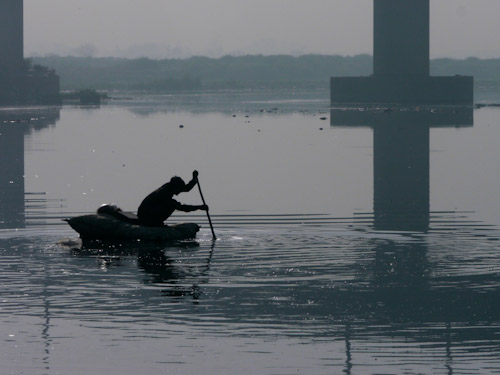
A man paddles across the Yamuna River, India’s most polluted.
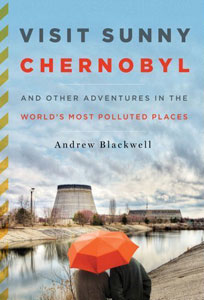
Visit Sunny Chernobyl: And Other Adventures in the World’s Most Polluted Places By Andrew Blackwell
Rodale Books. 320 pages.
Journalist Andrew Blackwell traveled to seven of the most polluted places on the planet: from the nuclear disaster zone of Chernobyl, to the smog-ridden city of Linfen, China, to the Great Pacific Garbage Patch. In his new book, Visit Sunny Chernobyl, Blackwell details his often humorously grotesque experiences hanging out in these past and present eco-disasters. In The Fray culture editor Susan M. Lee talked with him about his travels, the unique charm of the globe’s dirtiest corners, and the myth of pristine nature in an age of climate change. (Disclosure: Andrew Blackwell is president of ITF’s board of directors.)
You were inspired to write this book by a trip to India that you took years ago.
I heard how polluted Kanpur was supposed to be. It had just been named the most polluted city in India by the government. And it certainly lived up to that expectation. But I learned, after the fact, that I really enjoyed my time there — strictly as an interesting place to visit. So I had this flash: I just realized that, almost because they were polluted, there were all these places around the world that you would never really bother to visit, that you were missing out on because they had this stigma of pollution attached to them.
Did you have any expectations of what you would find, before you started out on your trips?
I thought the destinations would be a lot grosser than they were. As I went along, I realized I was in danger of not getting enough grossness in, and doing my due diligence for a book about pollution. Fortunately, I ended up being fazed by the Yamuna River in northern India in the last chapter. There was no way to say that it didn’t smell really, really gross. But otherwise, the visceral sensory experience of the locations was not nearly as intense or offensive as I expected. But that might have something to do with my message, which was not to find the grossest place but to find places that were the ultimate examples of a particular kind of environmental problem. And that didn’t always line up with the place being unpleasant.
Andrew Blackwell aboard the brigantine Kaisei, en route to the Great Pacific Garbage Patch.
What did you enjoy the most on these trips? What were the highlights?
In almost every case, it was experiences I had with people I met. I think that’s often true either about reporting or about travel. It’s less about whether you saw this or that building and more about the kinds of people you met.
In Chernobyl, my guides Dennis and Nikolai and I are drinking and totally wasted. And I see they are thinking, “Oh, he’s not joking — he really wants to see what’s fun and interesting about this town, not just what the horror story is.” People do respond to your curiosity and sincerity. Like the time with the sadhus [ascetic, nomadic Indian monks]. I’m with these guys and they’re wearing robes and paint and we’re camping in the countryside and they’re completely taking care of me and feeding me. They were so friendly and solicitous, almost to a degree that they drove me insane. That was a special experience.
What were some of the challenges you encountered in writing about the world’s most polluted places?
Some of the regular problems of traveling, such as: I don’t speak Chinese and I don’t speak Portuguese. On a topical level, while these places are real and their [environmental]issues are all real — and I certainly don’t want to be thought of debunking these issues — they’re often hyped. Maybe not by serious journalists, but at a popular level. A lot of the time, I did go into each location expecting it to be more spectacular. What I realized was that the story was more subtle and much harder.
But I think it ended up making the book stronger in the end — that struggle became a theme in the book. For example, that popular image of the Great Pacific Garbage Patch as a solid mass is not true. But it’s still a powerful image that persists, even in the minds of people fighting the problem.
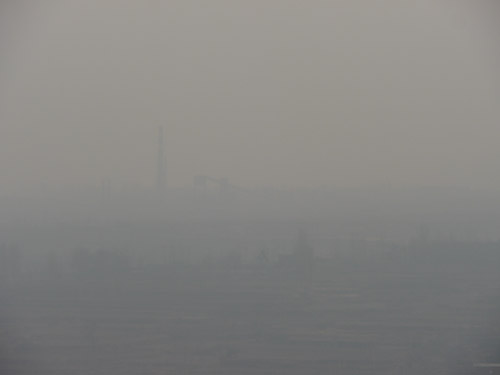
A smokestack disappears in the haze surrounding Linfen, China. The city is notorious for having some of the worst smog in the world.
In the book, there seems to be a recurring theme of problematic ways of viewing nature, even by modern environmentalists. Could you talk a little about these alternateviews of nature?
Inside the U.S., in the environmental movement, there is this foment right now with traditionalists, who draw their spiritual energy as it were from an idea of “pure nature” and restoring as much of the environment to a pure, pre-human phase as possible. That’s not the literal goal, but that is sort of the ideal that drives their entire enterprise.
Then you have these modernist folk, who believe that that is an impossible ideal: holding that ideal actually will leave you to miss out on all kinds of opportunities and will waste your time and energy on causes that aren’t worth it and harmful. They also believe that, yes, ideally it would be great to have that idea of purity and wildness at the center, but we are so far past that being the reality that there has to be something else motivating environmentalism. And what that is, is a recognition that human civilizations are part of nature and that there is no way of knowing what it means to have a pristine environment — and that it doesn’t exist anyway in an era of climate change.
Also, it’s just another form of separation. We’re still seeing nature as separate from human civilization, and that has been half the problem right there. And so the goal really is to find an integrated idea of what a healthy environment is.
The destroyed Chernobyl nuclear power plant, with a view of the steel and concrete “sarcophagus” built to contain Reactor No. 4, which is still dangerously radioactive.
So you’re sort of trying to demystify these polluted places as well as the idea of pristine nature?
Yeah, exactly. There are people out there doing some interesting work on showing ways in which places that are thought of as pristine aren’t. And I’m working from the other end, by finding places that are considered to be horror stories and “anti-nature” and saying it’s also still a place that has nature, wildness, and beauty.
Do you think that your background had anything to do with your desire to write about environmental and industrial issues?
I don’t know what comes from my family or what just comes from me. But my brother was trained as a scientist. Now he works doing visualizations at the California Academy of Sciences. My dad is an engineer. His dad was an engineer. And I have a cousin who’s a geologist. So science has always been special to me.
I grew up mostly in Seattle, but before that our family lived in Japan for three years. I lived in Japan for first, second, and third grade. And we also did a lot of traveling in the summer since we were in Asia. We went to Indonesia, Singapore, and a number of other places. That was a really formative, great experience. Just that a place can be bizarre and strange and can be welcoming and fun. I think Japanese culture especially, at least thirty years ago, was extremely safe — and people were friendly, probably because I was American and different and had blond hair.
If you could have included other places, which ones would they be?
I wanted to go to the oil fields in the Niger Delta. Two things kept me from doing that. The two or three people I talked to sort of were cautious. You want to make sure you’re in safe spots. And also I didn’t want half the book to be about oil-related locations. I wanted a better spread.
I really wanted to see ship breaking in India or Bangladesh — these incredible beaches where they tear ships apart. The world is just a candy store for this stuff.
Interview has been condensed and edited.
An oil tanker carrying twenty million gallons of crude oil approaches Port Arthur, Texas.
Susan M. Lee Susan M. Lee, previously In The Fray's culture editor, is a freelance researcher and writer based in Brooklyn. She also facilitates interviews for StoryCorps, a national oral history project. In her spare time, she maintains the blog Field Notes and Observations.
Dear Reader,In The Fray is a nonprofit staffed by volunteers. If you liked this piece, could you please donate $10? If you want to help, you can also:
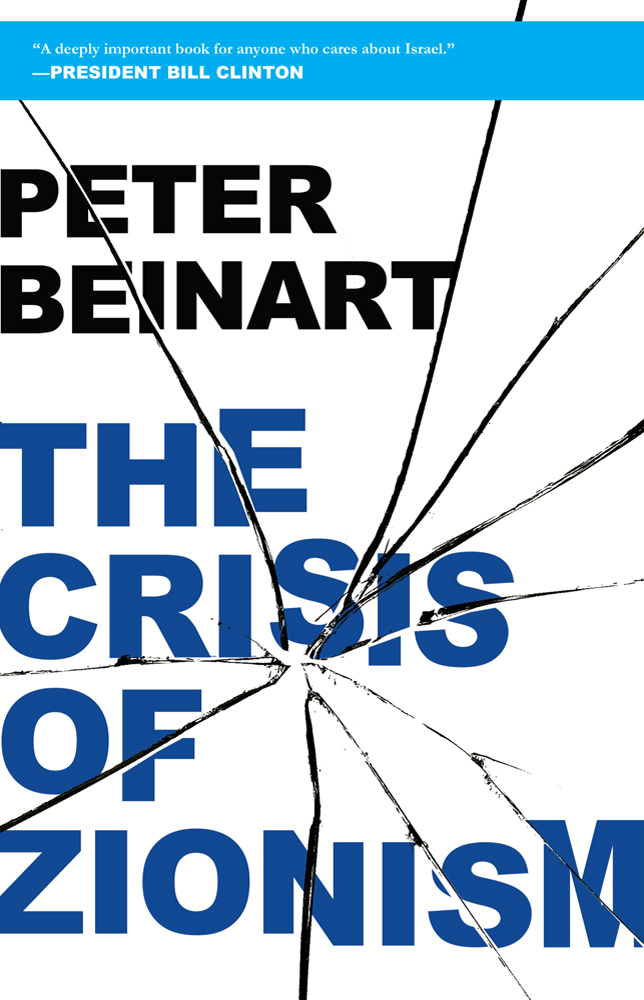
The stories now featured on the site touch on many issues, but one theme they have in common is the role that religion plays in driving people to get passionately involved politics and activism — and how difficult it is to find secular ways to kindle the same fire. In Saving Souls, Benjamin Gottlieb profiles an enterprising humanitarian group that is busily educating poor children in Delhi’s slums. But the work of COI and other evangelical Christian groups continues to draw controversy in India, a once-colonized nation now booming economically and working mightily to assert its own cultural identity. In Losing Zion, Rob York reviews the book The Crisis of Zionism, which argues that the two-state solution to the Israeli-Palestinian conflict is dying, ruined by extremism in Israel and the apathy of the liberal American Jews who could help bring about a broad-based peace movement.
Religious groups have been almost unmatched in their ability to train activists and build social movements. In America, the most obvious recent example is the pro-life movement and the cultural warriors it has drawn from the pews of evangelical, Catholic, and other congregations. But the civil rights movement, too, acquired its power and breadth by filling the streets with churchgoing protesters, and filling its rhetoric with the biblical language of freedom, struggle, and redemption.
Wherever people congregate, they organize. Social scientists talk about how churches (and other houses of worship) serve as reservoirs of social capital — the web of relationships that connect people and bring about various benefits, including the ability to rally around political causes. Generally speaking, this is great for democracy. And many religious groups have managed to find a balance between doing God’s work and respecting views that diverge from their own. But in America, Israel, and elsewhere, it seems the people getting inspired and engaged come from the extreme, intolerant ends of the political divide, trapped in their own dogma and their own sets of facts.
I used religion as a jumping-off point for my comments, but really the problem is not religion, but fundamentalism of whatever kind — religious or economic or nationalist or otherwise. The Tea Party, for example, is crusading on behalf of an uncompromising economic fundamentalism that verges on religious fanaticism, with its own patron saints in F.A. Hayek, Frédéric Bastiat, and Ayn Rand — ironically, a mirror image of the earlier cult of communism. But religion appears to motivate many of these true believers, too, and may help explain the movement’s success in organizing. On the question of Israel and Palestine, too, the same dynamic seems at work: the more devout and dogmatic speak louder.
Perhaps the recent wave of global protests against corruption and austerity — for example, the indignados demonstrations in Spain, or Occupy Wall Street and its related movements in America — will help balance the scales. Churches and synagogues have been heavily involved in the organizing of the Occupy actions across this country, reminding us that the religious right is not the only voice of faith in the streets and on the megaphone.
That said, younger Americans seem to be turning awayfrom religion, while the secular ways that ordinary people have traditionally gotten involved in politics are in decline. Labor unions have been dwindling away in America for decades — the one bright spot in recent years was public-sector unions, and the recent failed Wisconsin recall election may have been their Waterloo. Political parties rely increasingly on big donors and independently wealthy candidates, while the old political machines that groomed leaders out of local wards are disappearing. Young people continue to rally to various causes on college campuses, but it will be hard to fill in the hole left by these institutions, which could organize in a sustained, concerted fashion and appeal to broad segments of the population.
This is yet another reason that we can expect politics to become more partisan and extreme in the coming years. The hard-liners are hungry for power, while more reasonable men and women stand by and watch. It brings to mind words by the Irish poet W.B. Yeats: “The best lack all conviction, while the worst / Are full of passionate intensity.”
The center cannot hold, as Yeats wrote. And things didn’t end too well in that poem.
Tell us the ways that dishonesty and greed undermine the proper workings of organizations, from Congress to corporations, from regulations to relationships. Is corruption an inevitable human tendency or a curable condition?
In The Fray Magazine | Call for Submissions | June 2012: Corruption
Corruption is an inevitable part of political life, in countries rich and poor. In India, a Transparency International study finds that 55 percent of citizens have had firsthand experience with bribing government officials. In Buenos Aires, Argentina, storeowners pay police officers protection money to “watch over” their shops. And in the United States, corruption has become a high, if hidden, art, with politicians and lobbyists conspiring to rewrite the rules to grant special interest groups an unfair advantage in the marketplace.
But in recent years, advancing technology and increased public awareness have changed the ways that corruption is tackled, exposed, and ultimately punished. In India, almost a quarter of the country’s members of parliament were recently facing criminal corruption charges, and a strong case can be made that the evolving digital news environment is responsible for their undoing. Websites like Wikileaks have made it easier for whistleblowers to bring misdeeds to light — while also weakening the secrecy that governments argue is necessary for their diplomacy and strategizing.
This month, In The Fray wants your stories of corruption — political and otherwise. Tell us the ways that dishonesty and greed undermine the proper workings of organizations, from Congress to corporations, from regulations to relationships. Is corruption an inevitable human tendency or a curable condition? As usual, we are open to stories that deal with the topic broadly construed, and in a variety of approaches: profiles, interviews, reportage, personal essays, op-eds, travel writing, photo essays, artwork, videos, multimedia projects, and review essays of books, film, music, and art.
If interested, please email submissions@inthefray.org with a well-developed, one-paragraph pitch for your proposed piece as soon as possible — along with three links to your previous work — NO LATER THAN JULY 1, 2012. All contributors are urged to review our submissions guidelines at http://inthefray.org/submit.
We are also looking for artists, photographers, and writers, who can take care of specific assignments, including interviews, book and film reviews, and accompanying photos and artwork. If interested, please follow the instructions at the bottom of http://inthefray.org/submit to join our contributors’ mailing list.
Conservative inflexibility and liberal apathy have endangered the dream of a democratic, secure Jewish state, a prominent American Zionist argues in a new book. But for all his ideas to salvage the two-state solution, Peter Beinart seems really to be documenting its demise.
The Crisis of Zionism By Peter Beinart
Times Books. 304 pages.
What do Palestinian activists and a Jewish Zionist in Manhattan have in common? The opposition of Israeli hard-line conservatives, as it turns out. Peter Beinart, a former editor of The New Republic who now teaches at the City University of New York, argues that the future of Israel is in grave danger — not from the enemies that have long surrounded it, but from its growing extremism internally and the growing apathy of liberal American Jews toward Israel.
In his new book, The Crisis of Zionism, Beinart makes the case that the dream of a democratic Israel is dying, undermined by West Bank settlements and the marginalization of Palestinians. Within the United States, Israel’s longtime ally, Zionist organizations reflexively support Israel’s policies, while liberal Jews have a fading interest in Israeli issues. In both countries, there has been no significant opposition from liberal Zionists to the bellicose policies that endanger Israel’s founding principles of democracy.
Beinart fears the end of the two-state solution that would grant Palestinians and Jews their own nations, believing that the two groups could not live together harmoniously in one state after decades of acrimony. Breaking with many of his fellow Zionists, however, he identifies Jewish settlements in the proposed Palestinian nation as the greatest threat to this goal. “There are, to be sure, many Palestinians who don’t want two states and seek Israel’s destruction,” he writes. “But the best way to ensure their triumph is to keep eating away at the land on which a Palestinian state may be born.”
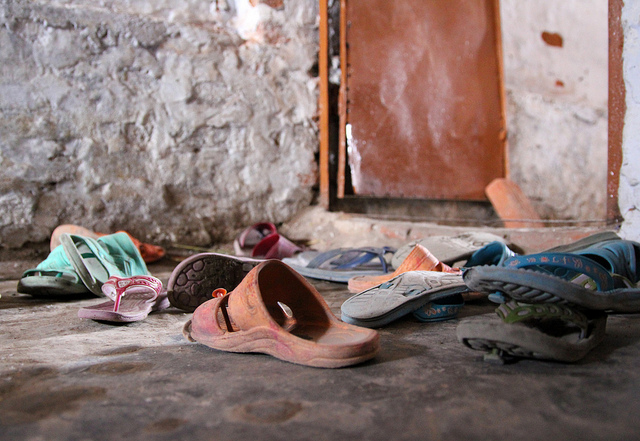
Home to one-third of the world’s poor, India attracts hundreds of Christian humanitarian groups seeking to do God’s work in its slums and hinterlands. But while these groups make up in vital ways for the failings of government and markets, their work comes with a consequence: conversion.
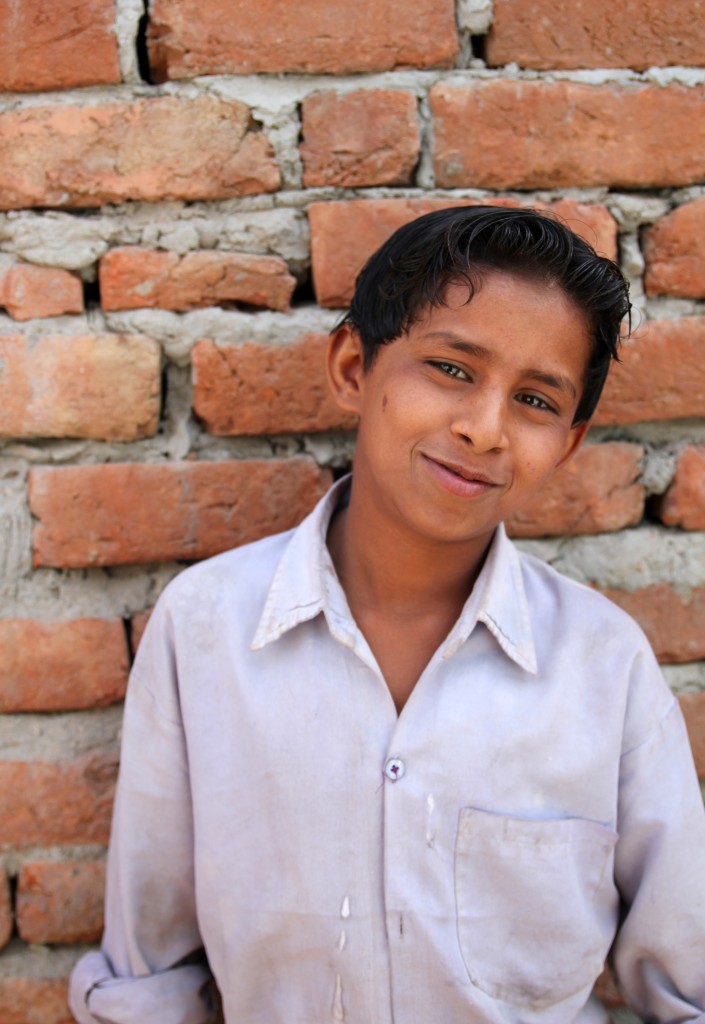
On a sun-kissed Saturday morning in March, Rahul Kumar whips through a squalid Delhi neighborhood, his ashen buttoned-down shirt tucked into his dress pants and thick black hair gelled back from his forehead. He is headed to the Sanskar Centre, a bare, one-room school run by a Christian nonprofit in the city’s Shahbad Dairy slum. Every day, Rahul walks to the schoolhouse for his lessons, the best education to be had for many of the district’s poor migrant families.
Just twelve years old, Rahul is already a leader among the neighborhood children, who flock to his side as he walks, eager to embrace him. Though short for his age, he has an outsized ambition: one day, he says confidently, he will dance in Bollywood’s biggest productions. But first, Rahul says through a translator, “I need to get a job to help my family. I need to study hard.”
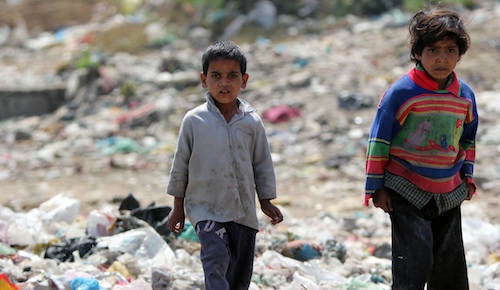
Rahul’s family moved to Delhi from northern India several years ago, lured by the prospect of a better life. But the situation for Shahbad Dairy’s 100,000 residents is overwhelmingly grim, their opportunities circumscribed by severe, endemic poverty. While some parts of the district enjoy government support—a public school, a maintained latrine, a health care center—most of the slum’s inhabitants live in jhuggis, or slum dwellings, without running water or proper sanitation. A thick expanse of garbage and sewage surrounds the slum and is patrolled by scavenging children and feral pigs alike.
“[Shahbad Dairy] has the dynamics seen in every ghetto or slum,” says Alfred Gnanaolivu, special projects director for Cooperative Outreach of India (COI), the Christian group that runs Rahul’s school. “You have turf warfare. You have the influence of drugs and alcohol … Unfortunately, the main victims are the children.”
A nongovernmental organization, COI works extensively in Shahbad Dairy’s slum blocks, offering clean water, food, and education to local families. Children account for 50 percent of the district’s population, Gnanaolivu notes. That’s where COI—along with the hundreds of other faith-based NGOs operating in India—can have an impact: educating the children of impoverished families that are neglected by the Indian government.
But like many NGOs working in India, COI has a slant. It provides the 500 children enrolled in its schoolhouse an education—but with evangelical undertones. Young boys and girls recite Christian hymns during class, not conscious that they are being indoctrinated. Their faith-driven education is reinforced by COI’s pastoral care workers, or religious counselors, who help the slum’s families with their economic and personal problems using a Christian form of therapy. COI says this “results in transformation of the communities.”
Rahul Kumar, twelve, outside his home in the Shahbad Dairy slum in Delhi, India.
While Shahbad Dairy’s families—most of which are Hindu and from India’s lower or scheduled castes—are aware of the Christian sculpting, they believe that COI is giving their children a better chance at life. And as their relationship with their Christian benefactors deepens, some families are even converting.
“Very often, children are lured in the name of providing [a] good education,” says Chandan Mitra, a Bharatiya Janata Party (BJP) representative in India’s upper house of Parliament. “They don’t understand very often why they have become Christians until they are older.” Religious conversion is banned in many Indian states, but the laws are “violated frequently,” Mitra adds. (In Delhi, conversion is legal.)
Of course, proselytizing Indians is not a new phenomenon. Christianity has existed in India for centuries, and Protestant missionaries have been working in Delhi since the early eighteenth century. Today, Christianity is India’s third-largest religion, with approximately twenty-four million followers.
What is different today is the growth of a politically independent, economically powerful India, a rising nation of a billion-plus people that has become more comfortable asserting its culture. In India (and Indian America) today, there is a willingness now to question the outside influences that for many years were tolerated as the price of doing business. Meanwhile, India has become home to roughly a third of the world’s poor, according to World Bank data. As a result, the country is a magnet for humanitarian aid organizations, many of them Christian.
The conversion of destitute Indian families to Christianity enrages many Indians, and on blogs wild accusations fly that Christian NGOs are committing “culture murder” in India. Mitra—whose Hindu nationalist party is one of India’s two major political forces—takes a more evenhanded stance. Christian NGOs may be indoctrinating children with Christianity, he says, but they are also educating and feeding an entire community that would otherwise remain overlooked.
For its part, COI believes that its religious message helps break down some of the barriers that keep Shahbad Dairy’s residents in poverty. “The caste system has dehumanized human beings,” says Ramesh Landge, COI’s executive director. “We need to help these children, give them a reason to live, and provide them with a childhood.” Among “the few hundred families that have adopted our changes, our teachings,” Landge adds, “we’ve seen success.” He notes that before COI began working in the slum, none of the children had birth certificates, making it nearly impossible for them to enroll in government schools.
Donald Miller, a professor of religion and sociology at the University of Southern California, points out that the evangelical Christian organizations working in India today tend not to fit the colonial-era stereotypes: brazen missionaries coming over to save souls by any means necessary. “Conversion by these groups is more often a side effect as opposed to a direct, manipulative attempt to indoctrinate people,” says Miller, who studies the social ethics of religion. It’s not that they don’t want to see conversions take place. But today’s faith-based humanitarian work, particularly by evangelical organizations, “has much more language about partnership and shared goals,” he says.
Before it was a slum, Shahbad Dairy was cattle country, settled by a Hindu Haryana community of dairy farmers. In 1987, the Indian government ceded a small parcel of land to the local inhabitants to build slum dwellings. Today, most of the shanties in Shahbad Dairy are illegal. Their occupants are immigrants from across India, who left their villages to find work in the sprawling city of Delhi, India’s second largest.
Rahul’s family is originally from Uttar Pradesh, a state about 500 miles to the north. His mother, Reena Kumar, supports the family by extracting the iron from automobile tires to sell as scrap metal. Asked why she moved to the slum, far from her ancestral homeland, Kumar’s response is simple: “To survive.”
The Kumar home in Shahbad Dairy amounts to four scantily constructed shacks, which house Rahul, his mother, and five siblings. A lone television is mounted in the master bedroom, powered by stolen electricity patched in from a nearby power line.
Back from school, Rahul navigates the Indian airways to his favorite Bollywood channel. His brothers, sisters, and friends pack the tiny room, waiting to watch him perform the dance steps.
Gnanaolivu watches the children with a smile. The work that his Christian group is doing, he says, will give children like Rahul much-needed opportunities, so that one day they can achieve their dreams—in Bollywood and beyond. “If they can be given that direction and sustained love … then we can save them.” In the end, it still comes down to saving souls.
Reading the recent remembrances of legendary broadcaster Mike Wallace, I was struck by a quote from his son, Fox News anchor Chris Wallace. Shortly before his father’s death, Chris Wallace talked about his father’s failing condition.
He’s in a facility in Connecticut. Physically, he’s okay. Mentally, he’s not. He still recognizes me and knows who I am, but he’s uneven. The interesting thing is, he never mentions 60 Minutes. It’s as if it didn’t exist. It’s as if that part of his memory is completely gone. The only thing he really talks about is family — me, my kids, my grandkids, his great-grandchildren. There’s a lesson there. This is a man who had a fabulous career and for whom work always came first. Now he can’t even remember it.
The stories we’re featuring on the site now touch upon the impact that fathers have — even in their absence. In Learned at My Father’s Feet, Kae Dickson remembers her experience caring for her “Daddy” at the end of his life, as dementia robbed him of his memories and independence. In A Circle, Broken, Amy O’Loughlin reviews a family memoir by CNN journalist Mark Whitaker, who describes his complicated relationship with his absentee father, an African American scholar who blazed trails only to see his career burn out amid his struggles with alcoholism.
For Mike Wallace, work came before family. After his first divorce, Wallace left his sons behind in Chicago to pursue a broadcast career on the East Coast. He had a famously cold relationship with his son Chris early on, though they reconciled and became close near the end of his life. “Part of it is, he was chasing fame and making it big and proving himself, and that was the motivating force,” Chris Wallace said. “Because I can see where it has taken him, I hope I’ve learned from his mistakes. I spend more time with my family and the relationships with my children.”
Many people would say that the tradeoff was worthwhile in Wallace’s case: his hard-nosed journalism helped usher in a golden age for broadcast journalism. But it’s telling that Wallace himself seemed not to care much for his success at the end of his life. And for the rest of us mortals, who lack Wallace’s once-in-a-generation talents, perhaps there’s all the more reason to question whether the ways that we prioritize career over family and friends are really, in the long run, worthwhile. That’s especially true for those of us who are parents, as the stories in the magazine remind me.
It’s hard to think of another role with as much impact as being a mother or father. For almost every other position, we are replaceable in the long term. Someone else will do our job, for better or worse, if we’re not there to do it. Someone else will eventually start our company or make our invention or sketch out our idea. Maybe it won’t happen for a long time; maybe it would have happened earlier, if we weren’t around to slow things down. But eventually, society makes progress, and the niches of innovation — in business or technology, art or politics — are filled.
It’s harder to say that about the gaps in our private lives. Steve Jobs by all accounts had loving adoptive parents, but even that was not enough, some say, to fill a void he felt because he was abandoned as a child. Civilization marches onward toward a predictable and rational future, but the trajectories of individual lives vary wildly, thanks to the influence, or absence, of family and friends.
I say this as a far-from-perfect parent, husband, son, and friend myself: how easy it is to forget the impact we have on those close to us, with all the incentives to see our worth in the job we have and the house we live in. Yet in our private lives we have more power than we may realize. Paradoxically, the real movers and shakers of the world, as Tolstoy once said, are perhaps the most constrained in what they can do, pushed and pulled by the forces of implacable history.
May is a time for college commencement speeches, and uplifting talk of making a difference and achieving success. Certainly our work defines us in many ways, and can be a vital source of meaning. Still, it’s worth considering whether the greatest difference we will ever make is one closer to home.
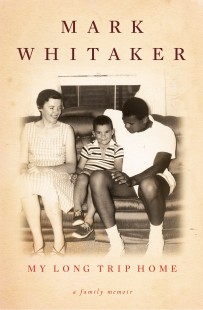
In a poignant family memoir, veteran journalist Mark Whitaker describes his long road to truth and reconciliation with his parents, a biracial couple brought together by a shared faith and torn apart by their separate frailties.
My Long Trip Home: A Family Memoir By Mark Whitaker
Simon & Schuster. 368 pages.
There is a saying among reporters: “If your mother says she loves you, check it out.” Few have taken this advice as literally as Mark Whitaker has done in My Long Trip Home. In Whitaker’s poignant family memoir, the veteran CNN journalist and first African American to lead a national news magazine details his journey to discover the unspoken truths, hidden motivations, and deep-rooted hurts that shadowed his upbringing and defined his tortured relationship with his father.
On a superficial level, My Long Trip Home will remind some readers of Barack Obama’s memoir, Dreams from My Father. Whitaker was born in 1957 to an interracial couple. His mother, Jeanne Theis, was a white, tenured professor at Swarthmore College in Pennsylvania; his father, Cleophaus Sylvester “Syl” Whitaker Jr., was the first black student admitted to the doctoral program in political science at Princeton University.
Even as a child, Whitaker was the “spitting image” of his father, he writes. Both shared the same worry lines in their foreheads that creased in moments of seriousness and reflection. “I think Mark, like Syl, has a fundamentally happy and open temperament,” his mother wrote in a letter, “which will probably be quite resistant to sobering influences. We trust he won’t have to meet anything too sobering.”
Unfortunately, Whitaker’s life was more difficult than his mother had hoped. His parents divorced when he was five, and his mother struggled as a single parent to raise him and his younger brother, Paul. He and his father had a tenuous and sporadic relationship, further complicated by Syl’s emerging battle with alcoholism.
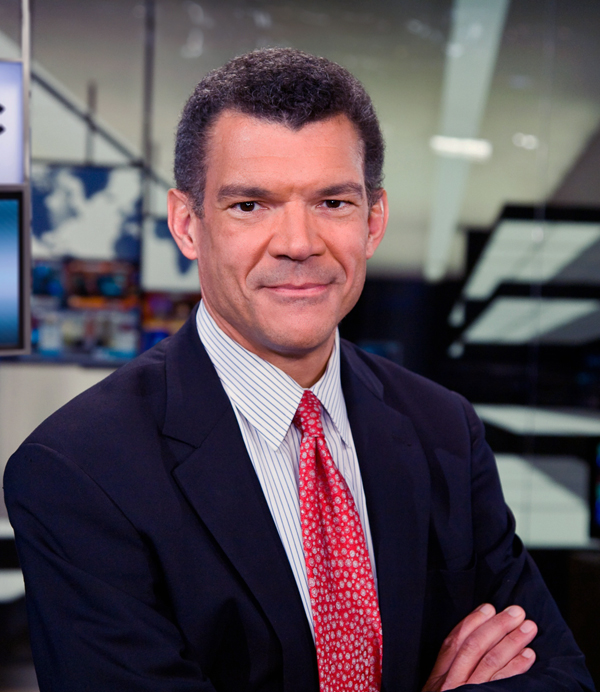
To ferret out the complex dynamics of his family’s history, Whitaker relies on the investigative reporting techniques he learned from his three decades of experience as a journalist. Whitaker currently serves as the executive vice president and managing editor of CNN Worldwide. He formerly worked as a reporter and editor at Newsweek and as the Washington bureau chief for NBC News. Whitaker knows how to work a story. Although here he is investigating his own personal history, he approaches it in the same manner he would for any other journalistic assignment: carefully, candidly, and with reasoned prose.
Some of the details, he knew. He knew that his mother was born in Cameroon, Africa, to Protestant missionaries, and grew up in France. He knew his father was born in Pittsburgh, the only son of once-prosperous business owners. Because Syl had rarely mentioned his own father when his boys were growing up, Whitaker believed there had been some kind of friction between the two. He knew that his parents met at Swarthmore, where Jeanne was a professor and Syl was a student. He knew his parents’ marriage as an interracial couple was a brave move in the 1950s, when miscegenation laws remained in effect in many states. He knew his father was a luminary in the field of African studies. And he knew his mother suffered from bouts of depression after his parents’ six-year marriage ended.
Yet, all of this was superficial knowledge. It didn’t get Whitaker very far when he decided he wanted to write a memoir about his father. He needed to delve deeper into the family’s past. “I discovered,” he writes, “that the truth was far more revealing than what I thought I knew and that the story wasn’t just about him, it was about all of us.”
Whitaker began by interviewing family, friends, and colleagues of his parents. He gathered letters, newspaper clippings, diaries, and photographs. He examined his parents’ voluminous scholarly works. And, much to his amazement, he uncovered an illuminating family relic: Cleophaus Sylvester Whitaker Sr.’s autobiography, an eleven-page document crafted in 1973.
In it, Whitaker’s grandfather recounts his life and origins. He was the son of a slave who was “set loose from the plantation” when the Civil War ended. In 1916, at the age of eighteen, Cleophaus headed north from Kansas as part of the Great Migration, a movement of millions of blacks from the Jim Crow South to the urban North, in search of factory jobs and less hostile segregation. He married and fathered three daughters, but his first wife died of tuberculosis. He later remarried and had a son, Syl.
The autobiography was most telling in what it did not mention — the shattered relationship between Cleophaus and his son. Whitaker eventually deduced that Cleophaus physically and psychologically abused Syl. The revelation cleared up a “mistaken assumption” he had about his father, Whitaker writes:
I always thought my father had inherited all of his magnetism from his mother, [a “light-skinned beauty” with an “elegant … and entertaining way of speaking”] …. I had never considered the impact my father’s father had on his life … and for the first time I learned what a force of nature C.S. Whitaker Sr. was in his own right.
Their fierce bickering began in Syl’s teens when he asked his family to stop calling him by his “demeaning” nickname, “Junior.” He insisted upon “Syl,” a shortened version of his middle name. It took months for “Syl” to stick, but his father persisted in calling Syl by his old nickname “out of prideful pique.” Cleophaus’s flagrant philandering strained their relationship even more. Syl saw the anguish his father’s infidelity exacted on his mother, and he became her “champion.” Thereafter, a “bitter chill fell over their relationship.”
It was around this time that Syl was introduced to Quakerism by his Baptist bible school teacher, who encouraged Syl to attend a summer Quaker work camp in Ithaca, New York. The experience changed his life. Syl embraced the religion’s “teachings about simplicity and pacifism and the subtle power of silent prayer, so different from the raucous call-and response of the black church services he was used to.” When it came time to contemplate college, members of the American Friends Service Committee advised Syl to attend Swarthmore, a prestigious liberal arts college founded by nineteenth-century Quaker reformers outside Philadelphia.
Love and Liberation
Mark Whitaker. Pete Williams
In the years before World War II, Jeanne Theis’s family lived in the Protestant village of Le Chambon-sur-Lignon in central France. Edouard Theis, Whitaker’s grandfather, was the parish’s assistant pastor. After France signed an armistice with Nazi Germany in 1940, Theis learned that the Nazis had banned higher education for girls in the occupied countries. Theis, a progressive thinker committed to a philosophy of “nonviolence and a just social and international order,” wanted his daughters educated. He heard that famed American philanthropist Martha Sharp, who had helped Jewish refugees escape Nazi-occupied Czechoslovakia, was organizing a boat trip from Europe to New York for children who had American connections. Whitaker’s grandmother was a U.S. citizen, which meant the family could obtain State Department visas. Six of the eight Theis girls were among the twenty-seven refugees that Sharp brought to America several months later. All of the sisters except for fourteen-year-old Jeanne stayed with relatives in Ohio. Jeanne went to live with the Enders family, fellow Protestant missionaries who lived in Swarthmore.
In 1943, Vichy authorities arrested Theis and two of his colleagues for hiding thousands of Jewish refugees in Le Chambon and guiding them to safer locales. The three men were briefly held in an internment camp, but shortly after German forces surrendered to the Russians at Stalingrad, they were inexplicably released. Theis fled underground and joined a resistance group that helped Jews escape into Switzerland. It wasn’t until 1945, when Theis traveled to Swarthmore on a speaking tour, that Jeanne learned of her beloved father’s awe-inspiring valor during the war.
Jeanne’s ardent interest in Syl developed during his junior year at Swarthmore. A French instructor, Jeanne organized a production in the original French of a Jean Giraudoux play about Captain Cook’s arrival in the tropics. The cast needed someone to play the tribal leader, and one person who had the “perfect look for the part” came to mind: Syl Whitaker, one of the few black students at Swarthmore. Syl did not speak French, though. Jeanne became Syl’s coach, and they trained together until he could master a “convincing accent.” During their rehearsals, Jeanne couldn’t help noticing how handsome Syl was, and Syl picked up on Jeanne’s gestures and began “wooing” her.
They started dating secretly, fearful of the fallout within the Swarthmore community if their relationship were exposed. Syl soon “grasped that he had started something that could only be made respectable in the eyes of the college and the broader society of mid-1950s America by giving it the sanctity of an engagement.” Whether or not the twenty-year-old was prepared for a serious commitment, it came barreling at him.
For Jeanne, falling in love with Syl was an “intellectual process” as well as a physical one. Whitaker explains:
She fell in love with the idea of him. He was handsome in a way that … appealed to her, perhaps because she had spent her early childhood in Africa. She respected his bravery in coming to a virtually all-white school like Swarthmore and good-naturedly confronting the racism he encountered in his life. And she was moved that he took his faith so seriously, that coming from such different backgrounds they shared the same commitment to battling the world’s evils by turning the other cheek rather than demanding an eye for an eye.
Syl and Jeanne married in 1956. Jeanne gave birth to Mark, and two years later, Paul. In 1961, the Whitakers moved to Princeton after Syl was offered a teaching-assistant position there. Jeanne gave up her tenured position at Swarthmore and found an unfulfilling, temporary teaching job at Princeton.
The move undermined the family’s structure, and cracks began to show in the Whitakers’ marriage. Much to her chagrin, Jeanne learned how unconventional Princeton was compared to the sedate haven of Swarthmore. The faculty held a “liberated” mindset that rejected the “fuddy-duddy bourgeois morality of early 1960s America.” Syl began drinking often and heavily. He also started cheating on Jeanne and asked her for an open marriage. Heartbroken, confused, and humiliated, Jeanne wondered how Syl could so easily scuttle his marriage vows and abandon their Quaker values.
The following year, UCLA offered Syl a professorship. Thinking that new surroundings in California might patch-up their troubled marriage, Jeanne accompanied Syl and tried to make a happy home life for Mark and Paul. Within a year, the couple divorced.
Sins of the Father
Jeanne retained custody after the divorce, yet “her mind was a horror chamber of regret and self-recrimination,” Whitaker writes. Money was scarce, forcing the family to live a peripatetic lifestyle as Jeanne switched from job to job in pursuit of a lucrative teaching position. Stability came into their lives in 1964, when Wheaton College in Norton, Massachusetts, hired her as an assistant professor.
His father’s visits were intermittent, and oftentimes years would lapse before Syl reappeared in Whitaker’s life. When father and son were together, their arguments and Syl’s immobilizing drunkenness frequently cut the outings short. Syl’s life and career also took on a nomadic routine. Whitaker witnessed his father reach the height of academe when he was asked to return to Princeton to start its first African American studies program and become a fellow at its Woodrow Wilson School of Public and International Affairs — only to lose that position, and several more prestigious professorships, because of his erratic behavior. By deftly relating the hapless tumbles that ruined Syl’s reputation as “an exciting new voice” in the field, Whitaker offers an empathetic portrait of his father as a battered and tragic figure.
Meanwhile, the son spent his early life in a “quiet rage.” Whitaker’s sense of abandonment intensified his anger and destabilized his self-esteem. He began to eat compulsively; by the time he entered junior high school, he weighed over 200 pounds. His relationship with his brother deteriorated, leading to physically violent confrontations. Whitaker examines his difficult passage from boyhood to adulthood to fatherhood, caught between the polar extremes of his parents’ moral weaknesses: Jeanne’s “formidable shield of diffidence,” which locked her in a self-made shelter of passivity, and Syl’s self-destructiveness, a “life [that] had come to resemble his father’s more than he ever wanted to contemplate.”
In Whitaker’s case, his eventual reconciliation with his family began in high school. As a student at George School, a Quaker academy in Pennsylvania, Whitaker made strides in overcoming his anger and pondering differing ideas about who he was. Interestingly, Whitaker’s progress toward self-knowledge took shape with Syl’s influence, not in spite of it:
One reason I was glad to see my father was that at George School, for the first time in my life, I was reflecting on my racial identity. Until then, I had spent most of my life in small college towns where there were hardly any black people of my age, or any age. During our visits to Pittsburgh, I connected with that part of my heritage, but apart from that I knew only the virtually all-white environments of Norton, and Swarthmore, and Grenoble [France]. Now at George School, I was reading Native Son by Richard Wright, and James Baldwin’s Go Tell It on the Mountain, with their bracing portraits of what it was like to be black in places like the South Side of Chicago and Harlem. Although written in a previous generation, they raised powerful questions about whether any black American, of any shade or upbringing, could be untouched by racism, conscious or unconscious.
When I asked my father what he thought, [he said]: “I’ve been wondering how long it would take for you to ask me that …. You won’t believe this, but some of your ancestors looked even less black than you do … and could pass for white. But that doesn’t matter as far as American society is concerned. Mixed-race, light skin, we’re all black. But I want you to know that it will be up to you to decide how you want to be black. That will always be your choice.”
Whitaker’s story becomes less engaging in the latter portion of the book, but he has insightful observations to make about the maturing relationship between Jeanne and her sons. In the 1980s, his younger brother Paul found college life anxiety-provoking. He planned to move to San Francisco to start a new life. Their mother disapproved. Whitaker favored the plan:
When my mother told me how upset she was about the idea of Paul traveling alone to San Francisco, I took his side. At the time, I had a theory about the roles that she had unconsciously assigned the two of us. I was supposed to be the successful son who went forth into the world and earned her reflected glory, while Paul would be the helpless one who was so dependent on her that he would never venture far from home. The differences in the way she treated us bothered me on both of our accounts, and now I found myself rooting for him to escape her fretful orbit.
Paul ended up moving to San Francisco. Eventually, he finished college, earned a doctorate, and built a successful psychology practice in San Diego.
The older brother, too, found his way. In his rise from a humble Newsweek intern to its first African American editor, who oversaw the magazine’s coverage of the Monica Lewinsky scandal, the September 11 terrorist attacks, the prisoner abuse at Guantánamo Bay, and the flawed intelligence used to justify the war in Iraq, Whitaker outshone his father’s tragic career. As a loving husband and father, he succeeded in breaking the vicious circle of dysfunctional family anger created by both his father and paternal grandfather. As a forgiving son, he forged a new bond with his mother, free of resentment and misunderstandings, and shed the bitterness he felt toward his father, who died in 2008.
Going to the heart of his remarkable memoir, Whitaker alludes to a French proverb, “Tout comprendre, c’est tout pardonner” — “To understand all is to forgive all.” “That’s the adage we all know,” Whitaker writes. “Yet if I learned anything from my journey, it’s that sometimes it has to happen the other way around.”
Correction, April 10, 2012: An earlier version of the article implied that the saying, “To understand all is to forgive all,” was invented by Leo Tolstoy. It is actually a French proverb that Tolstoy quoted. The text has been updated to reflect this.
I took care of my father near the end of his life, as dementia slowly unraveled the strong and proud man I had known. His memories faded, his body failed him — and yet his heart was full of grace.
By Kae Dickson
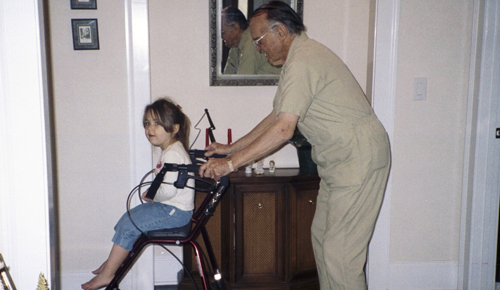
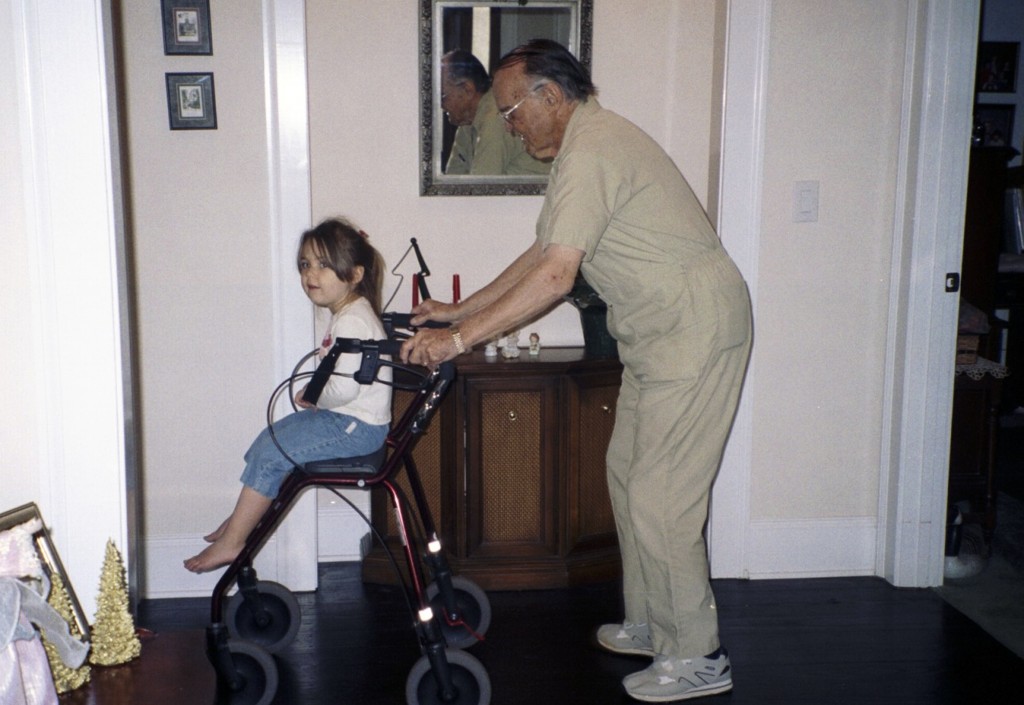
The writer's father, Richard Dawsey, playing with his great-granddaughter, Lemuel.
“Daddy, can I help you?”
“Oh, Sugar, I just can’t seem to get my fingers to cooperate.”
“That’s okay. Here, I can do this.” I buttoned his shirt. “There. All set.”
He smiled and patted me on the shoulder. “What would I do without you?”
I heard that loving question hundreds of times. “Oh, you’d do fine,” I would say, but we both knew differently.
“Have you got anything sweet?”
“You know I do. I made chocolate pudding, and you can have these oatmeal cookies if you want.”
“That sounds good.”
“Daddy, how big do you think those birds are?”
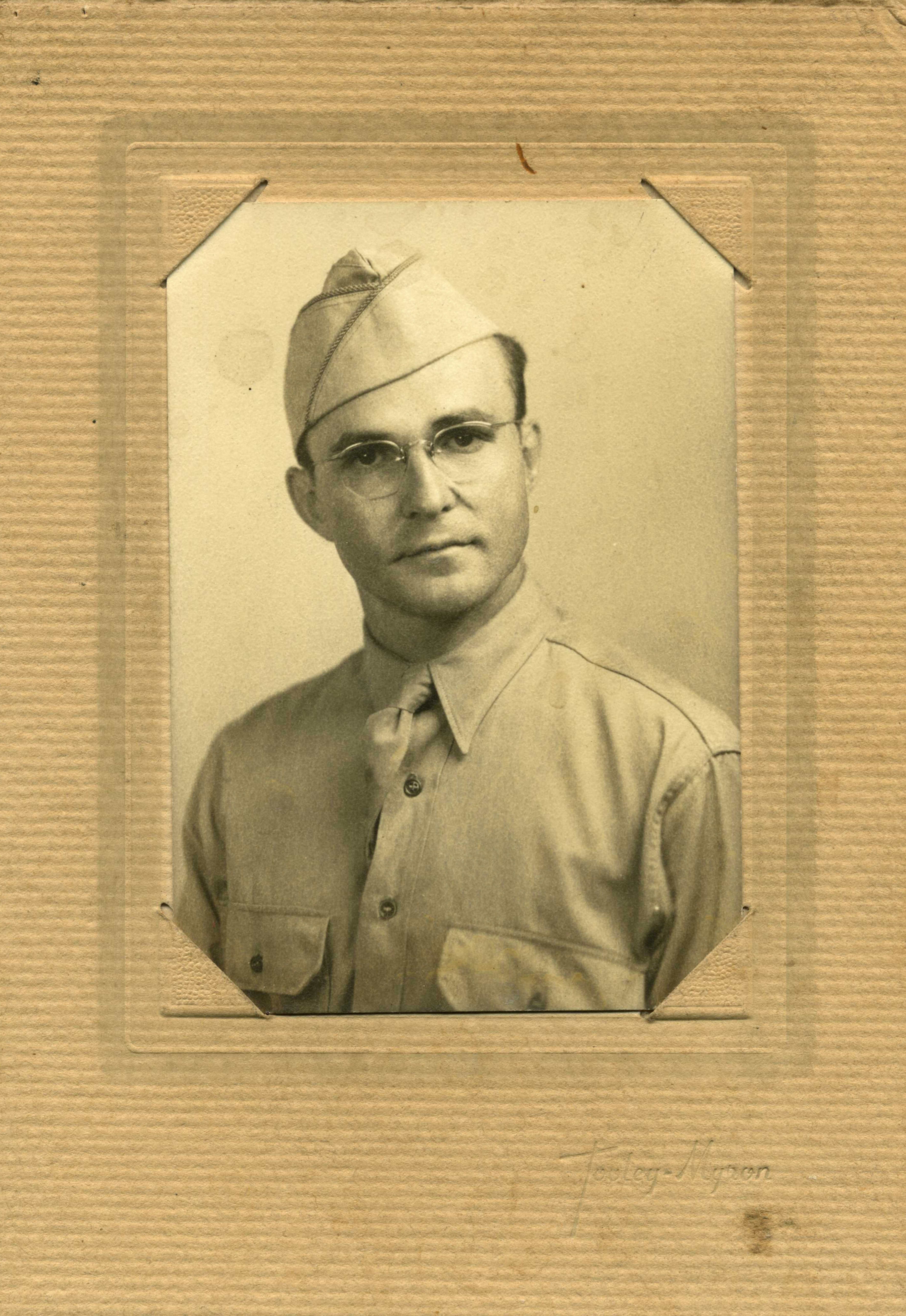
We had been watching huge birds, probably American black vultures or the more common turkey vultures, whose wingspan can measure six feet or more, soaring above the trees behind our house. Daddy was always my go-to expert on birds. Before he retired, my father had worked for the U.S. Fish and Wildlife Service. He had loved and studied birds for years.
“I don’t know, Shug.” He smiled wanly. It hurt him not to be able to recall what he had once known so well.
“What do you think? Eight feet?” I asked, trying to keep the conversation going.
“Probably. You know they can soar almost indefinitely like that, as long as the air currents are right.”
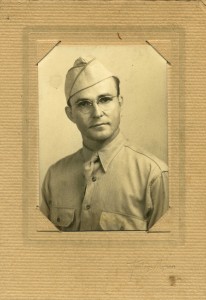
Dawsey's portrait from the U.S. Army Air Corps, 1942.
“How do they do that?”
He explained that wherever there are people or animals, there is increased heat. Warmer air rises and creates the air flow that birds use for lift. They can manipulate their height just by lifting one wing or the other to catch the drift of the warm air. “They can go as far as fifteen miles or more without ever flapping their wings,” he added. “They’re fabulous creatures.”
I had witnessed many times how the memories my father thought he had lost would come back to him when tickled with the right questions. This is how we spent our breakfast and lunch every day, looking out on the wonderful habitat that was our backyard and talking about God’s creatures. Daddy was a fabulous storyteller, but these days he often fell into the quicksand of failing memory and depression. I worked hard to bring him back to the surface during these times.
“I hope that tree never gets cut down,” I said of the tallest tulip poplar, which was the birds’ favorite perch.
“That would be a shame,” said Daddy quietly.
I got up and cleared the table, and he shuffled off to fall asleep in his chair in front of the television, where he would stay till I called him to supper.
Such was our life now. I fixed breakfast, sat with Daddy at the breakfast table for two hours or so, cleaned up, prepared lunch, sat at the same table for another two hours, cleaned up, and did it a third time for supper in the evening.
My father was a dementia patient. Strong as an ox, he had the heart of a teddy bear. He smiled when you entered the room and called everyone “Shug,” or more formally, “Sugar.” At some point, what had been my childhood nickname became a generic moniker for the family members and caretakers whose names would escape him.
Daddy was one of the 20 to 40 percent of dementia patients who fall outside the more common box of Alzheimer’s. In my father’s case, we knew the origin of his brain disease. Throughout his life, he had experienced several severe brain traumas.
At Georgia Tech, he played college football at a time when the only head protection was a thin leather helmet. He experienced countless blows to the head, including multiple concussions. Then, in 1939, he had an automobile accident — a head-on collision that should have killed him, but left him in a coma for months. When he finally regained consciousness, he was unable to walk, sit, or stand. His spinal cord was intact, but his brain was so badly bruised that messages intended for his extremities were unable to arrive there.
Released from the hospital with a hopeless prognosis, my father was determined to prove the doctors wrong. Every morning, he was parked under a tree in his wheelchair. Every morning, he threw himself out of the chair onto the ground. Over the next weeks and months he used the tree to pull himself up to first a crawling position, then to standing. He would move away from the tree — first inches, then feet — until he fell to the ground. He would then drag himself back to the tree and do it again and again and again. A man of faith, he never lost hope that he would walk again.
Decades later, my father ran, swam, and played tennis without even a limp.
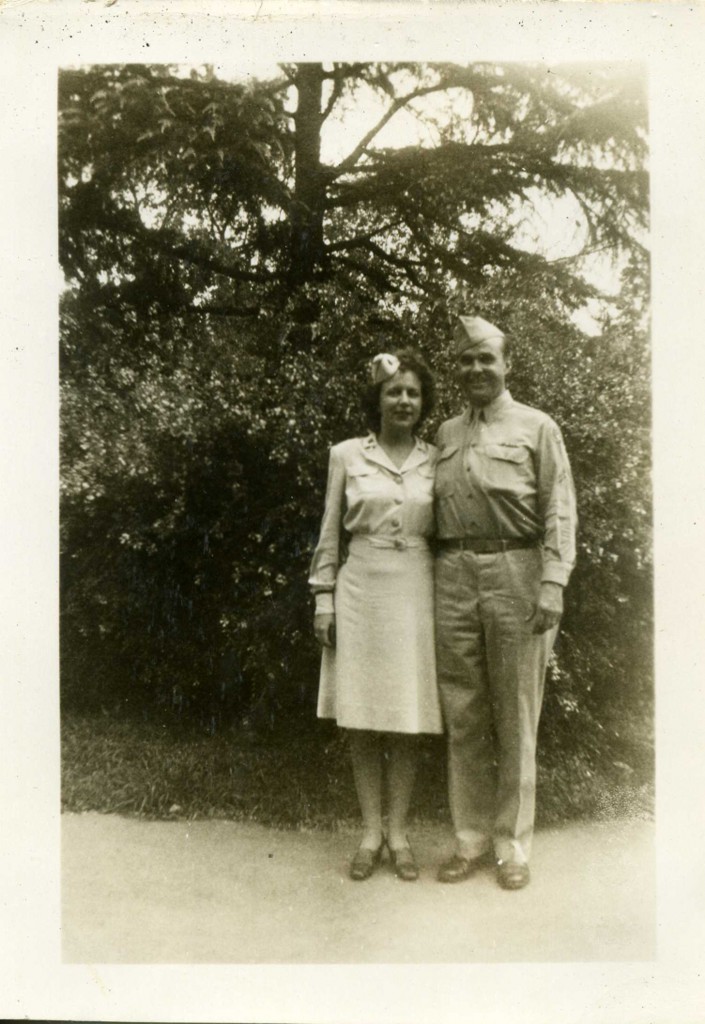
Lemuel and Richard Dawsey, married in Atlanta, 1945.
My mother was a nurse and was assigned to care for Daddy when he was injured. They fell in love and continued to correspond after he left the hospital. When World War II broke out, she joined the U.S. Army Nurse Corps. My father enlisted in the Army Air Corps. While serving in England, he suffered another head injury when he fell off the wing of an airplane onto the concrete runway.
Daddy recovered again. In 1945, my father and mother were married.
Growing up, I heard the story of “the wreck” many times, but the man I knew was completely whole. He taught me tennis, made me go to church, and was a strict disciplinarian. In all ways, he seemed normal.
Daddy adored my mother. I never knew him to leave the house or come home without kissing her, even if he was just walking to the corner mailbox. There was no doubt that family was the most important thing to both of them.
In 1981, Daddy was involved in another head-on collision. His car landed nose down in a creek bed, and the impact threw his head into the steering wheel, crushing his face. This accident left him with hydrocephalus — swelling and fluid in the brain. A doctor told him that his cumulative head traumas had added ten years to his age.
My father never fully recovered. His personality did not change, but his memory became worse and worse.
The symptoms at first were not so noticeable, and he lived the next ten years in happy retirement. Then my mother died in 1991, and his decline accelerated. My mother had been his world, and without her, life lost its purpose.
It became more and more obvious that my father should not be living alone. My husband Paul and I built a new house and asked him to move in with us.
Daddy had lived in the same home for four decades. Memories of his long, loving marriage reigned in every room. He liked to mow the grass around the flower beds, which had been my mother’s passion. I had to take all this away from him, and he was resistant to the end.
Finally, Daddy moved in. My daughter Julie and her two-year-old daughter were living with us as well, which made ours a four-generation household. My granddaughter called him “Greatdaddy.”
My life revolved around Daddy. After a year and a half, I went to work part-time, but a string of small accidents made me uneasy about leaving him alone. My daughter quit her job and became his caretaker for a year. I left my job so that I could be with him all the time and Julie could go back to work. We had a woman come in three times a week to bathe him, because that was the one thing that neither my daughter nor I could do.
I did learn to take him into the men’s bathroom when we were out, because I had no choice. It was not fun.
He was hospitalized several times in the last years of his life. After he fell trying to get to the bathroom in his hospital room, I stayed there with him all the time, once for three weeks when he had very severe pneumonia. His doctor admitted later that he was surprised my father survived. I never really minded these hospital stays because we had extensive opportunities to hold hands and laugh at silly old sitcoms like The Golden Girls. He wanted me there, and I needed to be there as well, for my own peace of mind.
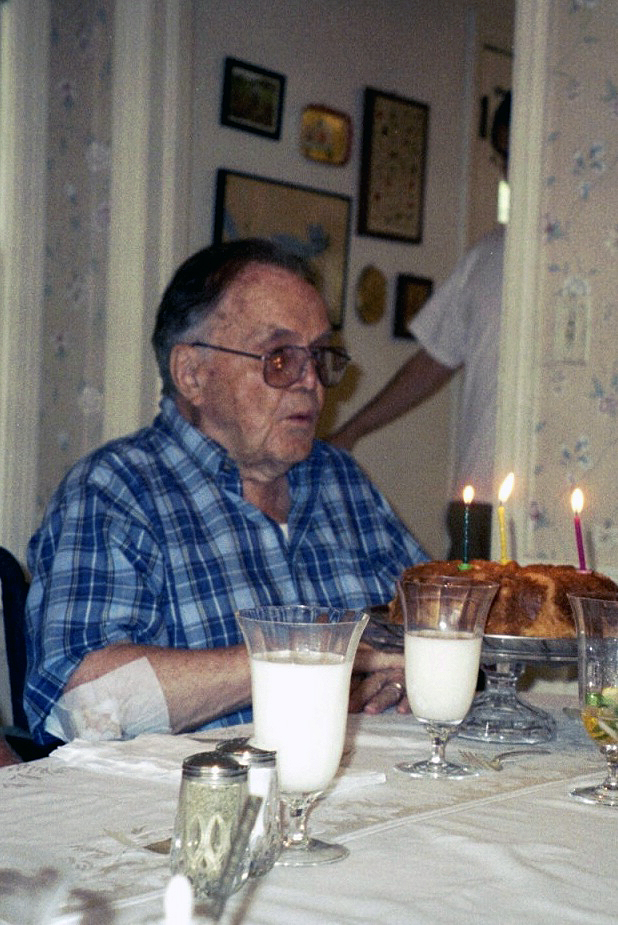
Dawsey celebrates his last birthday, at ninety-two.
When I was diagnosed with breast cancer, we moved him to an assisted living facility. When I told him about my disease, he said only, “I’m sorry, Shug.” I thought he didn’t understand the severity of what I had told him, but every time I came to see him, the first thing he would say would be, “Are you doing okay?” I think he knew.
I had wanted to bring him home again when I was strong enough, but I didn’t have that chance. A few months after I finished my treatments, he made the final trip home to be with God. He was ninety-two.
While I felt some relief that his suffering was over — he had not been happy for a long time and was now together with my mother — my grief was almost unbearable. I had now lost both my parents, and I will never get over the loss.
And yet I am grateful that I had the chance to take care of my father near the end of his life. His illness never took away his decency — his love of his family, and his deep faith in God. He accepted his condition, and the patience and courage he showed throughout taught me a lot. In the time left to me with my children and grandchildren, I pray I can live my life, and face my death, with the grace learned at my father’s feet.
An Atlanta native, Kae Dickson lives in Cumming with her husband, three dogs, and a cat. Together they have five daughters and four grandchildren. Her love of God, family, and the South is reflected in her poetry, essays, and short stories.
To watch a 2000 Georgia Tech alumni interview with Kae Dickson’s father, James Richard Dawsey, click here.
Dear Reader,In The Fray is a nonprofit staffed by volunteers. If you liked this piece, could you please donate $10? If you want to help, you can also:
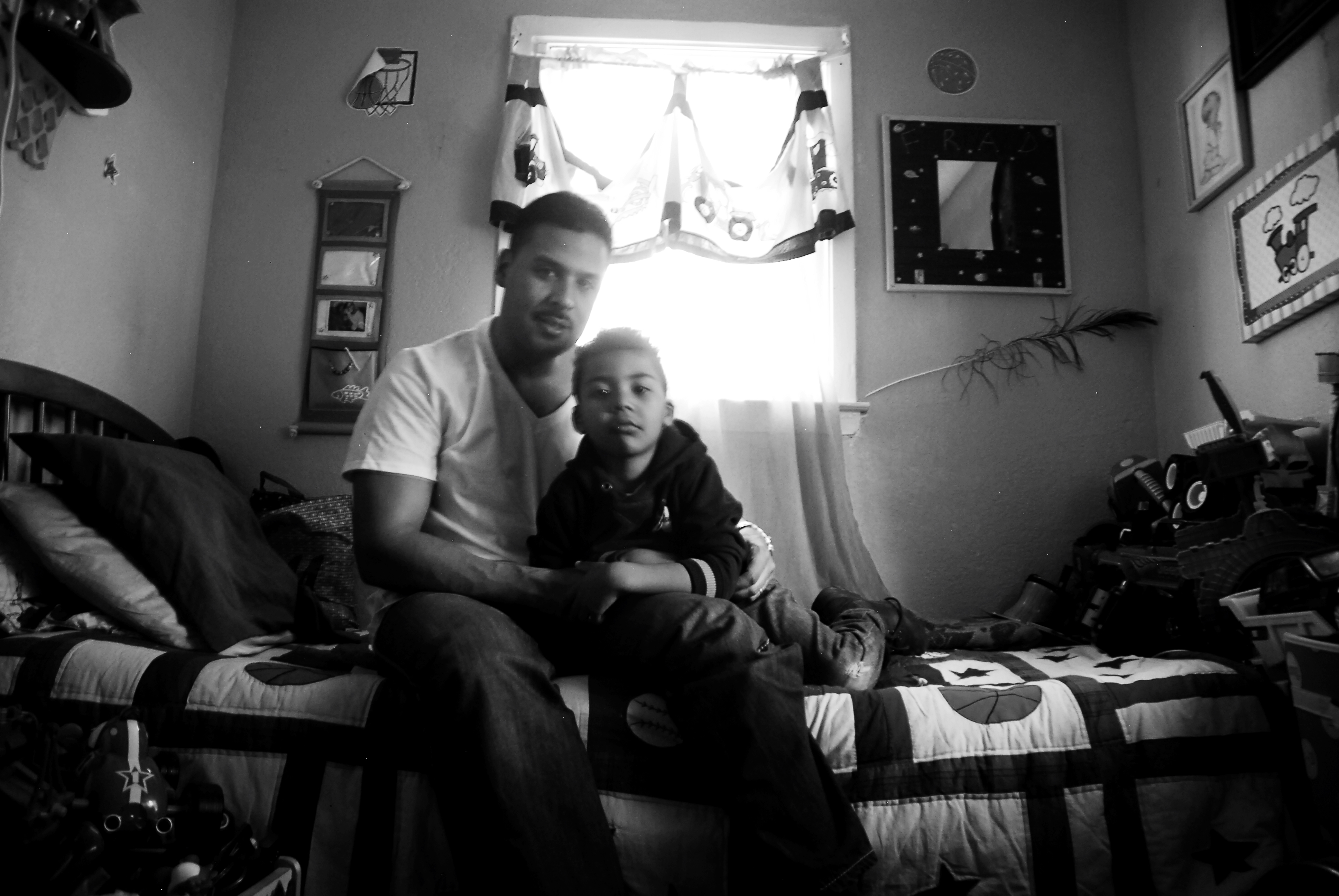
This week the magazine is featuring a trio of articles about prisons, real and psychological. In Freed, but Scarred, Francesca Crozier-Fitzgerald describes the post-prison lives of three men who spent, among them, forty-three years in New York penitentiaries for crimes they did not commit. After proving their innocence, Jeffrey Deskovic, Kian Khatibi, and Fernando Bermudez have returned to a changed world of broken relationships and lost identities, struggling to find the assistance and understanding they need to overcome their pasts. In an accompanying photo essay, Life after Innocence, Dana Ullman presents intimate portraits of the three men and their families, still scarred by absences and regrets.
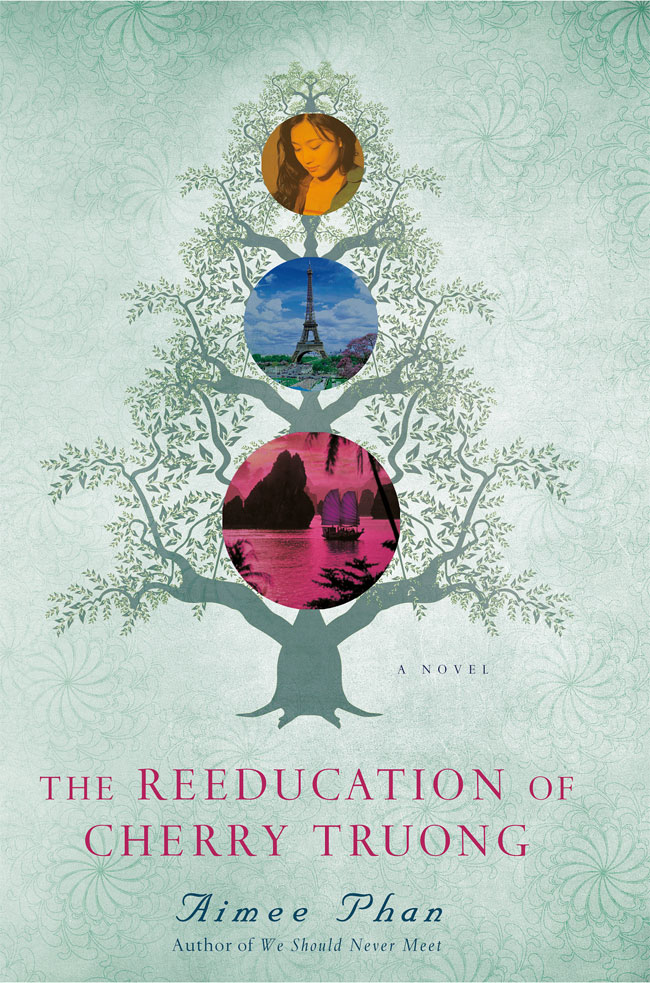
Finally, in Across Oceans, Haunted by Memories, Susan M. Lee reviews the novel The Reeducation of Cherry Truong, a tale of two Vietnamese families flung across the globe, chased by their war-era remembrances of traumas endured and wrongs perpetrated — at times, on each other. This debut novel by Aimee Phan (disclosure: Phan is a friend) reminds us of the tensions inherent in our strivings to remember the past, and yet overcome it — to seek truth, and yet find peace.
The Truongs and the Vos escaped war-ravaged Vietnam, but years later, the wounds of unspoken trauma and regrets have not healed. In a story that spans three decades across three countries, Aimee Phan’s debut novel describes the secret history of two families and the shared pain that both unites and divides them.
The Reeducation of Cherry Truong By Aimee Phan
St. Martin’s Press. 368 pages.
Spanning three decades across three continents, The Reeducation of Cherry Truong is a story of the fierce love, betrayal, anger, heartbreak, and forgiveness that can only exist between family members. Aimee Phan’s debut novel follows three generations of the Truongs and the Vos, two Vietnamese families tied by marriage. The novel illustrates how decisions made by one generation can cast a high, consequential shadow over the next generation, and explores the difficult balance between fulfilling our duty to family and keeping our sense of independence and identity.
Phan’s protagonist, Cherry Truong, is a second-generation Vietnamese American. After getting into a California medical school, Cherry disobeys her family’s wishes by deferring medical school for a prolonged visit to Vietnam to reconnect with her estranged brother, Lum. This is the first major act of rebellion in Cherry’s coming-of-age story.
Lum, who has a gambling addiction, was banished overseas by his family after he accidentally endangered Cherry’s life. Cherry goes to Vietnam to reunite with her brother, but she also has another purpose: Cherry is on a fact-finding mission to uncover her family’s past. Thus begins a narrative journey into the history of the Truongs, Cherry’s paternal side of the family, and the Vos, her mother’s side.
Set against a backdrop of historical events in the post-Vietnam War era, Phan’s story shows the pain of displacement. The year is 1979, four years after Saigon has fallen to North Vietnamese forces. The Truongs are attempting to escape Vietnam, aided by their middle son, Yen, who is waiting for them in France. Daringly, the Truongs set out to flee Vietnam by boat. But the Truong family patriarch, Hung (Cherry’s paternal grandfather), splits up the family. Hung had agreed to buy ship tickets to Malaysia, where the family could apply for political refugee status. However, he is unable to buy a seat for his daughter-in-law’s mother, Kim-Ly Vo (Cherry’s maternal grandmother). The family ends up in a refugee camp in Malaysia, while Kim-Ly stays in Vietnam.
In the refugee camp, the Truongs prepare for their journey to France, but the daughter-in-law, Tuyet (Cherry’s mother), convinces her husband, Sanh, that they should part ways with his family. This decision stems from guilt as well as love. Some years prior, Kim-Ly had tried to marry her daughter to an older and unappealing American officer. This marriage would have essentially guaranteed the Vos safety in America. Tuyet defied her mother’s scheme and ran off with Hung’s son, Sanh (Cherry’s father), instead. This was a blow to the Vo family, which suffered immensely during and after the war. Tuyet’s oldest brother died in a North Vietnamese forced-labor camp. After disappointing her mother yet again by leaving without her for Malaysia, Tuyet is desperate to rectify their relationship. She refuses to go to France by way of Manila, and seeks to immigrate to America, as her mother originally wished. Eventually, Tuyet and Sanh, along with the Vos, end up there, while the rest of the Truongs settle in France.
Later we discover that Hung had chosen not to get a ticket for Kim-Ly on the boat, as he had been holding out spaces for his mistress and illegitimate children. This one selfish decision alters the fate of the Truong and Vo families forever.
‘Our Mistakes Don’t Dictate Our Lives’
Aimee Phan. Julie Thi Underhill
Phan deftly weaves her narrative back and forth through the past and present, and through three countries — France, America, and Vietnam. She describes how her characters grapple with displacement and assimilation, and explores their lives with an impressive level of emotional nuance. They have been shaped by both the tragedies they experience, Phan suggests, and their responses to these tragedies. At one point, Cherry remembers a fable about how “everyone has choices taken away from them,” and how “despair is pushed into our lives … [and] we can only control how we recover.” The experiences of Cherry’s family members parallel the fable. In the face of the great hardships experienced by the Truongs and the Vos, Phan shows us how the family members find different ways of coping — guilt, blame, anger, the displaced expectations of others.
In America, Phan introduces us to the world of Little Saigon, in southern California, where Cherry’s mother, Tuyet, is still atoning. She escaped the refugee camp, but it took her five years to get her mother out. In Little Saigon, Kim-Ly has invested in a successful beauty salon enterprise and has been loaning money to other Vietnamese families with interest. But she will not let Tuyet forget her transgressions.
While the Vos try to adjust to their new life in America, on the other side of the Atlantic the Truongs are pursued by their own past. In France, Yen’s wife, Trinh, suffers from a mental breakdown. Trinh is haunted by her experience in the refugee camp, but she will not seek help because she feels the need to protect her family from the truth.
Trinh is not the only Truong overcome by past traumas. Hung’s wife, Hoa, has been verbally and physically abused by her unfaithful husband. Hung insists that he has done his duty as a father by sticking with his family and not running off with his lover. However, his treatment of Hoa seems to reflect his frustration with losing his chance at happiness. Hoa endures her husband’s abuse and floats through her life without much complaint. When Trinh laments that a “family curse” befell them when they left Vietnam, Hoa replies, “Everyone suffers. We are not special.” When Hung later develops dementia in his old age, Hoa wonders if his illness “was not a tragedy, but rather nature’s way of correcting their relationship.” In one of Hung’s few lucid moments, she confronts him about his infidelities and tells him that his indiscretions will die with him. Hoa accepts misfortune but longs for catharsis.
Phan explores the family members’ relentless desire for reconciliation, and how this is often hampered by memories of the past. Many of the characters seem to remember too much; some, like Trinh, are almost imprisoned by their traumatic memories.
Cherry, who has a photographic memory, wants to make sense of why her family members keep hurting each other. She discovers old letters from her mother, Tuyet, to Kim-Ly, and catches a glimpse of the love letters from her grandfather, Hung, to his mistress. She uncovers some of her family’s secrets and finds proof of past indiscretions.
Yet, despite these revelations, Cherry realizes she is no closer to understanding why her family’s anguish runs so deep. She asks her brother if he thinks it might be better for their family to forget its past, to have “the worst memories erased.” Lum’s reply gets to the core of Phan’s novel. “The things our family did to each other, what we did to each other, they don’t make up who you are,” he says. “Our mistakes don’t dictate our lives.”
Susan M. Lee Susan M. Lee, previously In The Fray's culture editor, is a freelance researcher and writer based in Brooklyn. She also facilitates interviews for StoryCorps, a national oral history project. In her spare time, she maintains the blog Field Notes and Observations.
Dear Reader,In The Fray is a nonprofit staffed by volunteers. If you liked this piece, could you please donate $10? If you want to help, you can also:
Tell us your stories of a debt that was held, paid, or forgotten. Review a book or film that says something meaningful about those of us who owe money or something more. Send us interviews, profiles, and photos of people and groups that bring new meaning to the age-old relationship between debtor and creditor.
In The Fray Magazine | Call for Submissions | March 2012: Debt
Note: This month we are looking in particular for photo essays. Please email us at submissions@inthefray.org if you are a photographer and have work to submit or ideas for a potential project.
Scan a recent headline and there is something about debt: budget deficits, toxic mortgages, leveraged buyouts. Lending greases the gears of our economic machine. In The Fray wants to look at “debt” in all its senses, financial and otherwise. Debts in our relationships, debts in our culture. The perpetual indebtedness of modern life, and the obligations passed down through generations. Forgiveness of debts — those of a person, or a country. Tell us your stories of a debt that was held, paid, or forgotten. Review a book or film that says something meaningful about those of us who owe money or something more. Send us interviews, profiles, and photos of people and groups that bring new meaning to the age-old relationship between debtor and creditor.
We are currently accepting pitches for articles that relate to this theme or more generally to the magazine’s mission of understanding other people and encouraging empathy and tolerance. We are looking for profiles, interviews, reportage, personal essays, op-eds, travel writing, photo essays, artwork, videos, multimedia projects, and review essays of books, film, music, and art. If interested, please email submissions@inthefray.org with a well-developed, one-paragraph pitch for your proposed piece as soon as possible — along with three links to your previous work — NO LATER THAN APRIL 8, 2012. All contributors are urged to review our submissions guidelines at http://inthefray.org/submit.
We are also looking for writers, photographers, and artists who can take care of specific assignments, including interviews, book and film reviews, and accompanying photos and artwork. If interested, please follow the instructions at the bottom of http://inthefray.org/submit to join our contributors mailing list.
Among them, Jeffrey Deskovic, Kian Khatibi, and Fernando Bermudez spent forty-three years in New York prisons. All were eventually exonerated—freed by DNA evidence, confessions, and recanted testimony. Their photos before and after incarceration speak to lives transformed, years lost.
This photo essay is a companion piece to Francesca Crozier-Fitzgerald’s article, Freed, but Scarred. Click on the links to Flickr below to view the captions.
Dana Ullman Dana Ullman is a freelance photographer based in Brooklyn. Her photography is focused on social engagement: chronicling everyday epics, investigating subjects crossculturally, and humanizing faceless statistics through storytelling. Site: ullmanphoto.com
Dear Reader,In The Fray is a nonprofit staffed by volunteers. If you liked this piece, could you please donate $10? If you want to help, you can also:
We use cookies to improve your experience while you navigate through the site. Cookies that are categorized as necessary are stored on your browser, as they are essential for the working of the site’s basic functionality. We also use third-party cookies that help us analyze and understand how you use this site. These cookies will be stored in your browser only with your consent, and you have the option to opt out of using them.
Necessary cookies are essential for the basic functionality and security features of this website. These cookies do not store any personal information.
Any cookies that are not necessary for the website to function and are used to collect user personal data via analytics or other embedded content are termed non-necessary cookies. It is mandatory to procure user consent prior to using these cookies.