When does the greed stop?

Just saw Ted Kennedy's recent speech on the Senate floor, in which he lashes out at Republicans for holding up a vote on legislation to raise the minimum wage. I've never seen him so angry before - it's quite a sight to behold.

Just saw Ted Kennedy’s recent speech on the Senate floor, in which he lashes out at Republicans for holding up a vote on legislation to raise the minimum wage. I’ve never seen him so angry before – it’s quite a sight to behold.


Raising the minimum wage isn’t the most targeted way of helping the nation’s working poor families, since most people who work for the minimum wage come from households living above the poverty line (see this report from the Congressional Budget Office for figures). Expanding the Earned Income Tax Credit, a tax benefit that makes work pay for low-wage workers, should also receive serious consideration – especially proposals to increase this credit for workers without children, who "pay a strikingly high percentage of their small incomes in federal taxes." That said, a minimum-wage increase would lift hundreds of thousands of working families out of poverty, and economists are divided over whether this legislation would increase unemployment.

Perhaps the most compelling reason to raise the minimum wage is that it’s simply the right thing to do. People who work should get a decent wage for their labor. There’s something morally amiss in a country that has let the value of its minimum wage dwindle amid inflation for the past decade, while the pay of CEOs has risen astronomically. In 1990, the average CEO made 107 times more than the average worker; the gap in 2005 was 411-to-one. When does the greed stop?

UPDATE, 6/11/12: Removed broken links to economists’ views on minimum wage.

Victor Tan Chen is In The Fray's editor in chief and the author of Cut Loose: Jobless and Hopeless in an Unfair Economy. Site: victortanchen.com | Facebook | Twitter: @victortanchen


BSOD

I'm getting back into blogging, after a long hiatus, and my first order of business is to thank solargun, the designer extraordinaire, who provided us with lots of useful advice on the newly revamped site you see before you.

I’m getting back into blogging, after a long hiatus, and my first order of business is to thank solargun, the designer extraordinaire, who provided us with lots of useful advice and help on the newly revamped site you see before you. If you need a laugh, check out solargun’s latest vid on YouTube, linked below. For those of us who have ever used Windows, it’s sure to elicit a painful chuckle (or plaintive tears).


For more videos from solargun, click here, here, or here.

Victor Tan Chen is In The Fray's editor in chief and the author of Cut Loose: Jobless and Hopeless in an Unfair Economy. Site: victortanchen.com | Facebook | Twitter: @victortanchen


ITF receives nomination for GLAAD Media Awards for third year in a row

ITF has received a nomination for the 18th Annual Gay and Lesbian Alliance Against Defamation (GLAAD) Media Awards — its fourth nomination to date — and will be vying with some of the most respected names in mainstream and alternative journalism, including The Nation, MSNBC.com, and Salon.com. ITF's nomination this year was for Erin Marie Daly's article, "How Many Strikes?"


How to fight global warming, use less energy

Sitting in almost 70-degree heat in January a couple weeks ago brings the growing problem of global warming to mind. Global warming is caused by greenhouse gases released into the air via energy consumption and is a major problem that the world must deal with. Americans may think that what they do to contribute to this problem is minimal and there is nothing they can do about it. But because there are 300 million people in the United States and because it is the number one greenhouse gas emitter in the world, each individual is responsible for contributing to this environmental disaster. The impact that you make adds up but there a few steps that you can do to lessen the footprint of your contribution to global warming.

Save energy, consume less, consume green
Energy consumption not only releases carbon-based emissions that contribute to global warming but also creates a deep dent in consumers' wallets. Rising oil prices and tapped-out reserves create a demand that you, the consumers, ultimately pay for. Reducing energy consumption and using alternative clean energy sources help the environment as well as your monthly bills.

Green power
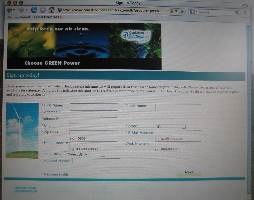
Check with your energy provider to see if there is a green or wind power alternative. Switching over to a clean energy provider is usually as simple as filling out an online form. Green power usually consists of a mix of energy created by low-impact hydroelectric sources and wind power. Natural sources of energy keep the carbon burned by traditional energy suppliers out of the air.

Energy-saving appliances and light bulbs
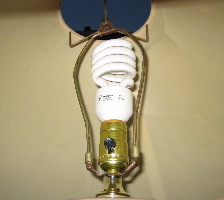
Buy and use energy-saving appliances like light bulbs, refrigerators, and televisions. The less oil-based energy you consume, the less greenhouse gases are released into the environment. Although energy-saving light bulbs are more expensive than traditional light bulbs, according to The New York Times, they last 10 times as long and use 75 percent less energy. The energy consumers can save with these bulbs has been creating an impact. The retail giant Wal-Mart is aggressively marketing the bulbs as part of their chief executive's commitment to reducing energy consumption. Internationally, under Cuban President Fidel Castro's "energy revolution" program, all Cubans will receive energy-saving appliances including energy-saving light bulbs to replace the old energy-inefficient incandescent ones. Castro's light bulb replacement program has also inspired Venezuelan President Hugo Chavez to distribute these energy-saving bulbs to his citizens.

Choose not to use energy
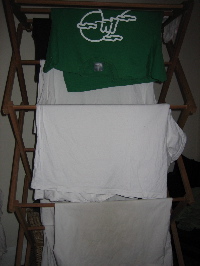
Energy use can also be limited by just not using itfrom walking up the stairs in your office building rather than using the elevator to using a drying rack for laundry instead of a clothes dryer.

There are many small, simple things that you can do to lessen your carbon-based energy consumption that leads to global warming. Change a light bulb, walk up the stairs, sign up for green energy. A small change in your habits now will ensure a better environment for those in the future.

keeping the earth ever green


Little Mosque on the Prairie

“If there’s an imam on Earth who resembles this one, I will convert to Islam, don the veil and catch the next plane to Mecca.”

— Margaret Wente, writing a somewhat gushing review in the Toronto daily The Globe and Mail of the new Canadian sitcom “Little Mosque on the Prairie.”

The show revolves around a small community of Muslims in a town in rural Saskatchewan, and the series premiere – which drew, by Canadian standards, a staggering 2.09 million viewers – tracked the group trying to set up a mosque in the town parish.

Zarqa Nawaz, creator of “Little Mosque on the Prairie,” explains the concept: “I want the broader society to look at us as normal, with the same issues and concerns as anyone else…We’re just as much a part of the Canadian fabric as anyone else.”


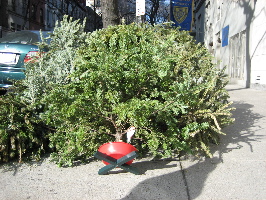
Abandoned Christmas trees: plastic stands still attached

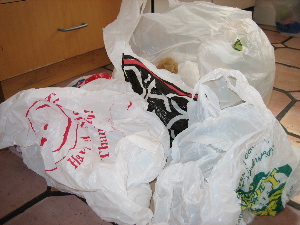
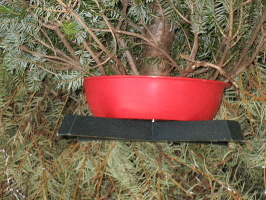
The holiday season is over. The most obvious sign is the dried-up, discarded Christmas trees thrown out onto the sidewalk. Most waste-disposal companies have tree recycling programs that pick up the trees easily, create natural compost, and leave biodegradable shavings behind. What poses a problem is when the tree stand is still attached.

For the next week anyone can walk down a random block in New York City and see piles of old Christmas trees waiting to be picked up and recycled. Look closer and notice that a few of these trees' owners couldn't be bothered to make a little extra effort to actually remove the tree stand. They just threw it away with the tree. Maybe they think to themselves that they can just buy another tree stand next year, what's another $20? And probably that's what tree stand manufacturers want because more sales for them means duh more profits.

The City of New York Sanitation Department has its own Christmas tree curbside recycling program. Their website specifically states that: "residents should remove all tree stands, tinsel, lights, and ornaments from holiday trees before they are put out at curbside for removal." A quick call to their public info office confirms that they will not pick up trees if they are not au natural — meaning if there is anything artificial still attached to the tree, it will not be collected. When the tree is not collected for recycling, that means it ends up in a landfill, cluttering up the world rather than being dispersed naturally.

In a few thousand years the tree might actually biodegrade, but the plastic stand attached to it will still be here. How many chemicals were leached into the air and water to make that plastic stand? How many chemicals will be leached into the air and water from that same stand when it is lying in the landfill?

If there are approximately five stands left on discarded Christmas trees on one block in Manhattan, with Manhattan compromising 6,718 blocks (according to survey work laid out by the Fund for the City of New York), that would be approximately 33,590 trees not recycled and the same number of tree stands left to clutter the landfills. If these owners had taken maybe five minutes of their time to remove the stands and stored them to use for next year, that would be $671,800 less they would have to pay collectively for a new stand next year plus 33,590 less plastic tree stands languishing in the landfill. Once landfills get filled up, new ones need to be created, which in turn creates higher taxes for you.

Recycling Christmas trees is good for the season, good for the environment, and good for the cities and towns with these types of programs. What's not good is a lazy approach to throwing a used tree to the curb without stripping it bare. The biggest loser here is you. You will ultimately pay for the higher taxes it will inevitably cost to build and maintain more and more landfills and all this because someone didn't remove their tree stand.

keeping the earth ever green


Mystery odor: what you can’t smell actually hurts you more

There was a scare in the air in New York City on Monday morning. The cable and local tv stations were all over the story. The cause was a so-called mystery odor permeating the air. Was it a biological weapons attack? Was it cancer-causing chemicals? Mayor Michael Bloomberg was quick to announce that the odor was not harmful, yet the actual source of the smell is still a mystery; fingers now point to New Jersey. But the media frenzy over this tiny blip of an environmental air concern was as usual overwrought.

The media likes to attract viewers and that means sensationalizing the so-called news. Only when it seems like there is some sort of instantaneous event, i.e., a bad smell, that vast media coverage is warranted. Cable and local TV news are the worst offenders because they have so much airtime needed to be filled. They jump on events like mystery odors because it actually gives them something to do, something to talk about, something to ahem fill the air with.

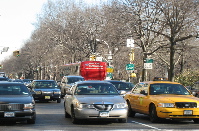
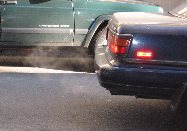
Every day there are more harmful, non-odorous toxic pollutants spewed into the air than during the few hours this mystery odor was smelled. Anyone living in the city is breathing in carbon monoxide emitted from the thousands of vehicles driven daily. Anyone who opens his or her apartment windows can see evidence of polluted air in the form of little black particles that blow in and dirty up the sill. These same black particles and toxic gases are breathed in every minute, every hour, every day that you are alive. Where is the media report about that?

According to the Environmental Protection Agency (EPA), there are six common air pollutants: ozone, nitrogen dioxide, carbon monoxide, particulate matter, sulfur dioxide, and lead. Breathing in any of these pollutants isn't good for you. They can cause anything from neurological disorders to asthma or ultimately death.

Carbon monoxide is a poisonous gas released primarily from vehicles. It is odorless yet you breathe it in everyday, and in concentrated amounts it can be fatal. Not only is this gas dangerous to you, it also has caused the "greenhouse effect" that has led to global warming.

The federal Clean Air Act of 1990 put caps on vehicle emissions levels and has had success in reducing the amount of carbon monoxide blown into the air. According to the EPA, in 1992 only 15 years ago carbon monoxide levels "exceeded" these emissions caps in 20 cities, which meant that more than 14 million people were overexposed to this harmful gas.

Even though emissions levels of carbon monoxide have fallen significantly under the Clean Air Act regulations, clean, non-polluted air is still not what the vast majority of Americans breathe everyday. What you don't smell is much more dangerous and definitely warrants more media coverage than one half-day mystery odor.

keeping the earth ever green


Mark Twain, American author and humorist

Man is the religious animal … He is the only animal that loves his neighbor as himself and cuts his throat if his theology isn’t straight. —Mark Twain, American author and humorist

Man is the religious animal … He is the only animal that loves his neighbor as himself and cuts his throat if his theology isn’t straight. —Mark Twain, American author and humorist

personal stories. global issues.