My War: Killing Time in Iraq

"This is a totally screwed up policy… The commanders are just really nervous because they can't keep control any more."

Colby Buzzell, winner of this year’s Blooker prize for his blog-based book, My War: Killing Time in Iraq, speaking about the recent Pentagon decision to restrict the soldiers’ freedom to post to blogs. Soldiers will need to present potential blog entries to their supervising officers before they may post their entries. Buzzell, a former machine gunner, recorded his year-long tour of duty in his blog, which today won the $10,000 annual Blooker prize.


The New World

Before the start of the shoot, Terrence Malick and Emmanuel Lubezki devised a series of photography rules or dogma that are to be used in film. They are:

  • 1) No artificial lights. All is shot in natural light.
  • 2) No crane or dolly shots, just handheld or Steadicam shots.
  • 3) Everything is shot in the subjective view.
  • 4) All shots must be "deep-focus shots," that is, everything (foreground and background) is visible and focused.
  • 5) You (the camera crew) are encouraged to go and shoot unexpected things that might happen in accident or if your instinct tells you so.
  • 6) Selective shots: any shot that does not have visual strength is not used. (From IMDB).

If only every film could be shot according to these rules. Some may marvel at the digital everything in blockbusters like 300. Give me scenery so pure and naturally colorful that I can almost touch it any day.

Give me simple touches  her hand to his, his hand running down her back  rather than the violent, gratuitous grinding that now passes for love scenes.

Give me simple statements the words for eyes, lips in a new language  instead of cliches, over-blown speeches, and last-minute happy endings.

Show me a young actress  still a child at 14  who can carry history and raw emotions, who can stand at the crossroads of love and death on screen. 

Show me a pure world that was once new but is not lost.

Show me a film so beautiful it haunts me.


Life gone wild

Yahoo headline: "U.S. divorce rate lowest since 1970." So could you please spare me all the talk about how the American family is in trouble, how gay marriage undermines the blessed union, etc.? Can we concentrate on some real problems? Aren't there people dying somewhere in the world?

Now, once you've tied the knot and had a child, take some advice from a Watery Tart: "A University of Washington study reports that 40% of 3-month-olds now watch television…They just don't need television, and we have only begun to understand how harmful it is for them: obesity, ADD and ADHD, decreased interest in math, science and reading have all been connected to over-consumption of passive forms of entertainment. And the people who produce and market these "baby-friendly" and "educational" programs will have you believe that you're doing your baby a benefit by beginning them on a steady diet of video entertainment as early as possible. Don't believe them. Listen to the doctors, the scientists, the ones who stand to gain nothing monetarily."

If you are lucky enough to have a daughter (aren't we precious?), she will grow up eventually, no matter how much you pray to God otherwise, so what's a parent to do? Nowadays, what with virginity pledge this and parental consent that, parents and government officials favor the idea of complete female control your body and life belong to them, not you, silly girl. But I'm a firm believer in this: if you raise your daughter with self-esteem and common sense, you won't need to enact laws that restrict her freedoms and decision making. You may want her to stay daddy's little girl forever, but she won't. Relying on church and state officials to keep her in line once you're gone won't work either.

What is so baffling about raising a female to be an autonomous individual, to believe she is capable of properly living her own life? Why do we feel the need to make a suggestion like this: "It is time to raise the age of consent from 18-21 –'consent,' in this case, referring not to sexual relations but to providing erotic content on film." This from Wall Street Journal Opinion Columnist Garance Franke-Ruta, who, while musing on Joe Francis and Girls Gone Wild, writes, "Is there anything to be done?" According to Ruta, the only thing to be done is control the girl. After all, how can a girl make a sound decision for herself, right? When we discuss laws restricting pornography in general and so-called filmmakers like Joe Francis, the First Amendment is always invoked, silencing all. We wouldn't want to be able to charge Francis and his ilk with something other than contempt of court or tax evasion. And why teach your sons to respect the other half of humanity when you can simply wag your finger at the female?

In general, I am not anti-porn. I also don't believe that raising the age of consent will have any effect on the GGW phenom. Think of how the age limit for drinking was raised and what good that did. Also, if you are legally of age to sacrifice your life for your country or vote for the leader of the free world, you're old enough to flash a camera man, whether you regret it or not.


The neighbor gets cuckolded

A few nights ago I was staying at my girlfriend’s apartment and we were having a bit of a fight. It was late, we were tired, and things were a little weird from an evening at the bars. Nothing too extraordinary, but at 2 a.m. we were each annoyed with the other.

In the middle of this, one of her neighbors returned home with a gaggle of older women laughing and talking in the same volume they would have used at the bar. More annoyance. Could these cretins not tell we were having a fight? Some people.

One in the group announced that she couldn’t find her key. Also, her husband is not opening the door, which is pissing her off a whole bunch. This is one of the neighbors: “Helen.” Her husband is a guy we’ll call “Dave.”

Soon everyone is bored of waiting for the door to open and decided that the party actually was over. Most of the gaggle left and we were left with a small murmur of conversation between two people  some guy and Helen. It wasn’t a very interesting talk for two drunks locked out of an apartment, so the girlfriend and I got back to our own argument.

At some point a bit later Helen and the guy start having a very nice conversation  I mean that in the “Borat” sense of the term “very nice.” They’re giggling and making groaning noises. Suddenly I was no longer concerned with our argument and, like a nosey jerk, I dove out of bed to wedge my face as close to a crack between the floor and the door (she lives in a studio). I can’t see anything, but I can hear everything better.

“We could go down that hall and no one would see us,” the guy said.

“No. No, we can’t,” responded Helen. All I could do was wave my hand to beckon the girlfriend to join me on the floor. She got there just in time to hear Helen say this: “Put that away. I’m not going to put that in my mouth here.”

This made my day. Here’s a married woman, outside of the apartment she shares with her husband, and she’s telling some guy she refuses to perform oral in the hallway. Screw Desperate Housewives; reality is so much better.

The back and forth  no pun  between Helen and the random guy continues for a few minutes with him offering and her denying. Then Dave arrived on the scene as the disgruntled lover.

He opened the apartment door and announced, “I think it’s time you leave.” The guy agreed, but Dave continued. “Seriously,” he said, “I own this f—ing apartment. Get out of here.”

“Yeah, whatever. You have fun f—ing that slut,” said the guy.

At this point, having been insulted by her would-be lover and caught by her husband, Helen entered the conversation with this: “It was nice to meet you tonight Waylon.”

Crouched on the floor trying to see someone, we could barely hold our laughter at what was a sad, but ultimately hilarious, event. And we learned something that night: no matter how crap things are going in your relationship, someone always has it worse. So really, your problems aren’t that bad. The girlfriend and I said some apologies to each other and went back to bed, our problem solved by Helen’s disregard for her mate.

Oh, but the best part is this: Dave and Helen are born-again Christians.

Guess those “Commandment” things are grayer than I remember…


Cats on TV

The Cats of Mirikitani will be on New York's Channel 13 tonight at 10 p.m. (and perhaps other PBS stations as well). As I said in my review, it's definitely worth seeing.

The Cats of Mirikitani will be on New York's Channel 13 tonight at 10 p.m. (and perhaps other PBS stations as well). As I said in my review, it's definitely worth seeing.

Victor Tan Chen is In The Fray's editor in chief and the author of Cut Loose: Jobless and Hopeless in an Unfair Economy. Site: victortanchen.com | Facebook | Twitter: @victortanchen


To love oneself

Reading the tale of Narcissus, the young man who fell in love with the image of himself, reminds us that human nature has perhaps not evolved as much as we would like to think. In the tale, Narcissus spurning his male suitors sends one over the deep end. The rejected young man, Ameinias, uses the sword given to him by Narcissus to commit suicide. His dying prayer is that one day Narcissus realizes the pain of unrequited love. Being a moral tale, the unfortunate Narcissus looks into a pool of water, becoming enchanted by his own reflection. Sadly for him, a second Narcissus fails to emerge from the pool, leaving Narcissus a victim of his own image.

The recent shootings at Virginia Tech bring the concept of narcissism to the forefront. Time's special report includes an essay supporting the idea that the serial killer's inability to focus on others and strong need to have the world revolve around himself plays a leading role in his evolution as a killer. While narcissism is a serious disorder that is estimated to affect .7 to 1% of the population, there exists the viewpoint that, at least in America, a healthy dose of self-love is not necessarily a bad thing. Child-development experts point out that young children who receive positive input about themselves, as well as opportunities to achieve mastery, learn to value themselves as well as their abilities. So why is it that as our youngsters mature, we fail them by promoting the outer instead of the inner beauty?

May's issue of Seventeen offers readers a chance to win a different pair of shoes each day. The graphic pops off the page, a calendar displaying an Imelda Marcus boutique of shoes. Not to be dismissed, the magazine also includes information on handbags, clothing, makeup, hair bands, jewelry, and perfume. Seventeen, of course, is geared to young women who, by virtue of their stage of development, are highly attuned to their physical appearance. Compare the smiling faces of the Virginia Tech victims, looking like a hallowed version of Hollywood Squares; it is easy to imagine that they, too, were concerned about the face that looked into the camera. Putting your best foot forward is simply the American way. Wanting success and the items that mark us as successful will generally not turn most into narcissists or serial killers. And yet…to the narcissist, other people are simply accessories, a bracelet, a dash of lipstick, a pair of shoes, just a little something to bring attention to the true draw, themselves.

In a society that is filled with opportunities to promote yourself, how do we encourage young people to reflect on the needs of others? Glancing through the headlines, it appears that there is a dearth of role models willing to put themselves second, let alone last. Headlines sell papers  the more outlandish the better — and our demand for the latest dirt will get us that and more. Filled with longing for that something just a bit better, are we blinded from the connection between television shows, magazines, advertisements, and songs that continually remind us that while we are special, just one more something can't hurt. People, things. Things, people. Linked by the common denominator of desire, do we accept responsibility for those who cross the line? As we contribute to the pool of materialism, whose faces are reflected? Cho Seung-Hui gunning down his classmates? Ted Bundy luring his victims? Another beautiful model peddling a pair of shoes? Surrounded by our desires, do we pull back to remember that denial can serve as a reminder that life is about more than ourselves? Things, people, people, things. To the serial killer, it's a world of one size fits all.        


The last time I’ll ever say the words “Don Imus”

For two weeks now, I've been biting my tongue about former CBS host Don Imus and comments he made on a broadcast regarding the Rutgers women's basketball team. The phrase "nappy headed hos" has been thrown around far too much, and as a journalist, I'm the last one who wants to give him any more unnecessary publicity.

Now Imus, who also works with WFAN-AM/New York is reportedly suing the corporation for $120 million. In the draft of suits, allegedly Imus argues that the network expected his content to be both controversial and irreverent, and that his comments did not violate FCC rules.

I'm a journalist, and I love the First Amendment. Because of it, I'm able to say what I've got to say, publish articles that people take offense to, and blog on this and other websites. But people need to expect that when they say things that are deviant from society's norms, an audience will get riled up.

I'm a college student, and an editor at my campus newspaper, and because of a story I ran and a source I used, it is likely that someone will be sued. I knew it going in, and Imus knew that his commentary about the women of Rutgers would cause some backlash. Did he think that he would get fired? That's unlikely. But unfortunately in this society, words have recourse.

I'm from Kansas City and have been following the Imus controversy through the sports columns of Jason Whitlock. My boyfriend said that he has made some of the most profound commentary on race and has emerged into this arena level-headed and with a fresh perspective. I agree.

Like Whitlock, I think we need to really, really open our eyes. As a black woman, I'm not threatened by Imus and don't feel like less of a person.

The women of Rutgers are still good basketball players and likely still good people. One ignorant comment did not change their season or personalities. I feel like by talking about this issue so much, we've just worsened the actual comment and magnified it.

If we're going to target one guy for an inappropriate comment, we should be targeting all of rap and hip hop for comments made in a similar vein. I'm not pissed off about Imus; I am simply disinterested.

Don Imus  please just shut up. I can't take another second of you in the spotlight, really. So you're out of a job, but you just got hours and hours of free publicity in exchange for espousing racist and sexist views on air.

I can't help but wonder what would happen if Imus tried to create a media circus and nobody came. Imagine a courtroom not crowded with reporters and interested individuals. Imagine if his face wasn't on our televisions and his voice didn't echo on the radio constantly…Imagine if Imus went back to what he was before  an insignificant, meaningless shock jock. I'd be happier.

So would everyone else.


Haunted remains

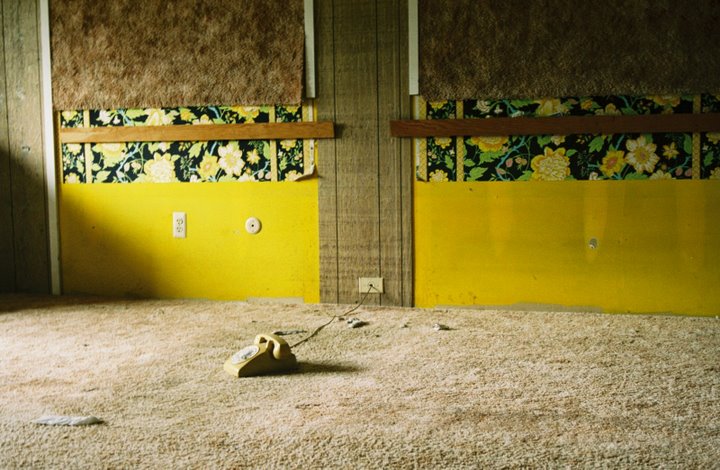
10.jpgImages inside abandoned Catskills resorts.
13.jpg

I became interested in these old hotels and resorts last summer, when I visited the Catskills for the first time to attend the Catskills Institute conference on the history of the area. The institute’s co-founder and conference organizer, Brown University Sociology professor Phil Brown (who is also the author of Catskill Culture), took participants on a bus tour of the abandoned resorts, and we stopped for a time at the Bethel Sunshine Camp. Brown had secured permission for us all to look around (all of these spaces are “No Trespassing” zones). I was amazed by how much of the interior is intact. The kitchen pantry shelves still have neat stacks of plates, cups and saucers as if meals are still served there regularly. The camp’s theater looks ready to host a new production: its stage is bare and clean, and rows of empty seats await an audience. Yet in the girls’ bedrooms, peeling paint dangles from the ceiling in giant sheaves of cream or white or light blue and the rusted bed frames stand like skeletons on rotted, fragile wooden floors. In some of the rooms, objects remain, discarded or forgotten: a bouquet of now-shriveled roses, a red and white teddy bear, a track trophy. Here, as in all of the spaces, the few remaining objects make these spaces so eerie and so discomfiting — they disturb not because they are empty, but because so much was left behind.

When I went back to the Catskills this spring (which was actually more like winter — there were snow flurries in the air, and the temperatures hovered in the thirties), I returned alone to the Bethel Sunshine Camp and explored the Pines, La Minette and other abandoned resorts in the area. Near La Minette, a drive-in movie theatre stands empty, its parking lots covered with weeds, its blank screens clean, sheer white. In a La Minette bungalow, children’s number and letter magnets lie scattered on a rusted refrigerator, and on front lawn of the Pines, a pillow covered with shards of hay rests on a sea of dried, overgrown grass. Telephones, many with their receivers off the hook and upturned, sit on the floor of every room of the Pines as well as in the lobby, and in the office, overgrown with mold and moss. In these silent spaces, these remains disturbed me the most. It was as if each telephone was yearning to communicate with something and someone who was long gone and could never return. And in this way they stood like stark metaphors for lost communication and time’s rapid, constant fleeting. Here and elsewhere, the spaces haunt: stinging reminders of what we lose, what objects and experiences we choose to keep and which we leave behind.


[Click here to enter the visual essay.]


A society under constant stress

200705_Interact.jpgA conversation with Raphael Cohen-Almagor on the prospects for Israeli peace.

Raphael Cohen-Almagor is a is a world-renowned political scientist (D. Phil., Oxford) who published dozens of books and articles on education, free expression, media ethics, medical ethics, multiculturalism, Israeli democracy and political extremism. An organizer of the international “Gaza First” campaign, a campaign for the withdrawal of Israeli settlers and soldiers from Palestinian territories beginning with the Gaza Strip, he was the founder and director of the Center for Democratic Studies at the University of Haifa. At a peace education conference in Turkey, Cohen-Almagor discussed with ITF contributor Aditi Bhaduri his disenchantment with Israeli politics, the Middle East peace process, and what motivated him to establish the Center for Democratic Studies.

The interviewer: Aditi Bhaduri
The interviewee: Raphael Cohen–Almagor

You founded the Center for Democratic Studies at the University of Haifa. What inspired you to do that?

[T]he idea for the institute came up on November 5, 1995, the day after the assassination of Yitzhak Rabin. I was one of those who saw the writing on the wall — and I warned against political assasination. I was teaching then at the University of Haifa, at the Faculty of Law and Department of Communication. When Rabin was murdered, this was not a shock to the mind, but a shock to the heart. I started thinking, what could I do to help the decision-making process — as a scholar? Realizing that there is a large gap between Israel as a democracy and the public that does not understand what democracy is all about, I decided to establish a center designed for the study of democracy and its underlying values:liberty, tolerance, equality and justice. These values are clear to students in United States or in England. I ask students what … liberal democracy is, and they will give me a detailed answer in ten minutes. In Israel, however, the discussion may last an hour until a full answer is provided. The center serves as a meeting point for people from all walks of life: Christians, Muslims, Jews — those who are religious and those who are not. It is a platform for discussion; of pluralism, of tolerance, of mutual recognition. For the past four years since the founding of the center in , what I tried to do is promote awareness, in Israel and outside the country, of democratic virtues, to promote justice, pluralism, multiculturalism, freedom, peace. People at the center do this through seminars, conferences, education. My dream is that the Israel Ministry of Education will [embrace] democratic studies … and introduce these studies into the curriculum both at the primary schools as well as at high schools. Presently, there are no studies on democracy in Israel — and there should be.

What are the challenges to Israeli democracy?

Israel, being the only Jewish democracy in the world, suffers from intricate symbiosis: we would like to be Jewish and we would like to be democratic. But when you look at the values that underline these two concepts — Judaism and liberal democracy — they are difficult to be reconciled with each other because the first premise of liberalism is to put the individual at the center of attention:, everything stems from the individual and returns to him or her … you allow the individual maximum rights … to develop to his or her fullest potential so long as [he or she] does not harm others. [C]onsequently, the individual will contribute to the development of society. But in Judaism, the belief is that you owe your freedom to God, and you owe an explanation about your life to God. There is no autonomous freedom. Freedom is given to you to serve God and His aims. Now, the zealots within Judaism (this is just a fraction of Judaism) believe that we are all sailing in the same boat, and if there are secular people like me in that boat, who follow the maxim “live and let live,” we will make holes in the boat, and we all sink down to [the bottom of] the ocean. So, they cannot let me live by that maxim. Therefore, coercion is going to be used to make me toe that line.

Israel is a secular country. The religious people make [up] 20 to 25 percent of the population. Still, Israel is following Jewish law, Jewish values and norms are infiltrating every aspect of one’s life as an individual. In the most private issues of your life, religion interferes even though Israel is a secular state, and this creates a tension between Judaism, on one hand, and liberal democracy, on the other. That's a major problem that we have to address.

The other major problem is our relations with the Arabs — the Palestinians living inside Israel — which constitute about 20 percent of the population, about one million people. They don't believe in the raison d'etre of a Zionist state. They are in Israel because their forefathers were born there, they were born there, and for them Israel is actually Palestine. And this, of course, creates tension and problems.

And then we have Palestinians outside of Israel — some of them Hamas who don't recognize Israel, don't recognize Israel's right to exist, and believe that I should return to Bulgaria (that's where my family came from) or preferably I should drown in the sea. They don't recognize me, [which makes it nearly impossible for us to have a discussion.] … So as long as there is terrorism and as long as there is war between us and Palestinians, then this … creates a major challenge for Israeli democracy.

Israel is a society under stress, where security plays a considerable role in its daily life. In a liberal democracy, you have to invest in the people, in the individual worker, health, education, etc., and that's difficult to do so when security consumes 30 percent of your budget … there's not much left for other purposes.

Given the current international scenario, where religion is playing an increasingly larger role, do you think it will be easy for Israel to sever completely religion from state?

Israel is a secular country. There is a lack of separation of religion from state, but but I don’t think that is because of the rise of religion in world politics. Separation between state and religion is an Israeli decision in Israel’s interest, but you need a courageous leader to take that decision. Right now, because of narrow political interests, and the fact that all governments in Israel were coalition governments, most of them included a religious component, those in power were afraid to take a drastic step and and separate religion from state. This was the only consideration.

I believe that it’s better to separate religion from politics, but unfortunately the religious parties believe otherwise. … Anyway, we live in separate communities — we don’t eat together, we don’t live together, we don’t study together. So [why] does it bother them if I want to have a civil marriage? [B]y making this an issue, … I think it weakens them because all it does is create alienation. People don’t like to be coerced. True, the majority of Israelis don’t care so much about these issues, but a significant part of us does. The state is there to cater for the interest of 100 percent of the population, not just the 70 or 80 percent. There should be more freedom for people to lead their lives the way they want to.

So what do you think the solution is [for] the conflict over Israel and Palestine?

Unfortunately, peace is not something that you can do alone. It’s like dancing the tango alone — you need two to tango. From 1993 onwards, the Rabin government, the Barak government, and the Sharon government were willing to take significant steps to build an independent Palestinian state. What we got in return was terrorism. We did not get any reciprocal recognition of Israel, of our needs or interest[s], and a willingness to create a two-state solution from the Palestinians.

When this is the [situation], there is not much we can do. My hope is that the Palestinians realize that Israel is here to stay, that the two-state solution is the only way out of the impasse. Not one state called Palestine at the expense of Israel, but a two-state solution, meaning deserting what Hamas is upholding now, and instead going through reconciliation steps and accommodation of [each] other [so] we will have a partner to talk to. And then I am sure that the Israeli government will be willing to take the necessary steps to build upon trust between the two nations and build a Palestinian state. But we cannot do it alone, and we cannot subject ourselves to Qassem rockets. Would India allow daily rockets and missiles to fly from Pakistan and hit Kolkata, New Delhi, and other Indian cities daily? No, there will immediately be war.

You began a “Gaza First” campaign. Tell me about how it started and what it is.

In 2000, I began an international campaign for “Gaza First.” I nagged the government, wrote letters to all parties, to the prime minister, and also campaigned outside of Israel in every place I could.

The plan was adopted by Sharon in 2003 and implemented in 2005. I campaigned for Gaza first, meaning this was the first step towards reconciliation between the two sides, and then [we were supposed to give up] the West Bank, when, in return, we got Hamas and the Qassams, we [cannot] proceed further. Israel is a very small country … it’s only 40 kilometers between East and West and all the major cities, including Tel Aviv, Jerusalem, will be easily covered by Qassams from the West Bank. Therefore, no sane prime minister can do that because this is suicidal. Great opportunity is lost. The Palestinians have one of the most dovish government[s] in the country's history. Minister of Defense Amir Peretz has been working for peace all his life.

What do you think of Israel's recent war with Lebanon? How will that affect politics in Israel?

Again, almost from the beginning I said this was insane. Prime Minister Olmert made a mistake — the government went into war without realizing that it was opening war. I call it the “Hezbollah War.” This unnecessary war was a big blunder and Olmert is going to pay a big price for that. The Israeli public will not forgive him [for] this misconduct. Observing how the events unfolded, the Hezbollah did a nasty thing: they kidnapped two soldiers and killed eight. Now what’s the way to retaliate? First of all I think, take your time and ponder. [That] doesn’t mean you won’t have to do anything. But the retaliation came within 24 hours [with] the bombing of Southern Lebanon and … the capital city of an Arab state, Southern Beirut. Now, if Olmert knew that the Hezbollah [was] going to answer by non-stop rockets on the North of Israel, then he made a tragic mistake. And if he didn't know, then again he made a tragic mistake. If you are going to such a war, then you have to prepare the North for the barrage of rockets that might come in and out on a daily basis.

There is a growing movement in Israel calling for elections and calling for Olmert, Amir Peretz and Chief of Staff Dan Halutz to resign because of this costly mistake. Some 160 people were killed and hundreds were wounded. I believe that this public voice will gain momentum, and that ultimately Olmert will be forced to resign or to call upon elections.
[Chief of Staff Halutz had resigned since the time of the interview. A.B.]

And what is your prognosis?

Well, I am not a prophet, but we may envisage the following scenario: there will be three leading contenders fighting for elections. One is Olmert, head of Kadima, [the political party] founded by Sharon. Next is Bibi Netanyahu of Likud, and third is Labour. Within [the] Labour [party], I presume Peretz is going to face severe challenges. One of the leading contenders is Ami Ayalon, who was the admiral in charge of the navy. He is calculating his deeds in a sensitive and political way, and might be able to challenge Amir Peretz and to take over. So at the end of the day, we may have Ayalon, Olmert, and Netanyahu. At this stage, Bibi Netanyahu is leading in the polls, but the polls are not real elections. Anyway, we do not know yet when elections will take place. According to [the] official timetable, it should be within three-and-a-half years. I can't believe that this government will survive more than a year. It may collapse any day.


History lessons

Years ago, former German chancellor Konrad Adenauer described history as “the sum total of the things that could have been avoided.” But must history always be something we regret, something we’d rather bury and forget?

Not necessarily, suggests writer Pearl Buck, who explained, “If you want to understand today, you have to search yesterday.” In this issue of InTheFray, we attempt to do just that. Matthew Fishbane begins by exploring The culture of being, when a transnational adoptee returns to her native Colombia in search of clues to her identity, only to discover that reconciling her two selves — American and Colombian — is both harder and easier than she’d imagined.

Meanwhile, poet Rae Peter looks at the joys and limitations of one’s female heritage in Shapes that brush against you in the dark. And ITF Books Editor Nikki Bazar uncovers Something borrowed, something new in Jonathan Lethem’s novel You Don’t Love Me Yet, the novelist’s newest venture in cultural borrowing.

We then journey to Cuba, where Lita Wong learns to trust the locals during a walk to San Diego de los Banos Alone in the forest. And halfway around the world, Aditi Bhaduri chats with Raphael Cohen-Almagor, organizer of the “Gaza First” campaign, about living in A society under constant stress and the prospects for a resolution to the Israeli-Palestinian conflict.

Speaking of conflict, former ITF Commentary Editor Zachariah Mampilly recounts the first 20th century genocide — it is probably not the one you’re thinking of — and discovers how difficult The labeling of genocide can be when it comes to Western interests and that hazy line between “violent conflict” and so-called ethnic cleansing.

Thanks for partaking in this history lesson with us!

Coming next month: ITF gives up the skinny on the 21st century’s obsession with FAT.

Laura Nathan
Editor
Buffalo, New York


Shapes that brush against you in the dark

A legacy of women.

Mother, grandmother, great-grandmother,
a legacy of women who hand-smocked
lawn gowns, embroidered in silk thread,
bottled rows of pineapple-cucumber chutney,
plum sauce, and rhubarb jam
with the seasons.

Looking through mother’s things
I find a tiny satin-covered shoe
saved from grandmother’s wedding cake,
and a lock of lover’s hair in a silver snuff-box
curled atop a blind man’s photograph.

Sifting her memories
cold scales of the fear fish scrape my leg:
that my dream will die, stillborn lips unkissed,
that I’ll fail to make a French knot, or daisy stitch,
just as I failed to birth a daughter,
that my passion pushes love away,
replete in its own shiny orb.

Guilt or innocence a state of mind,
my thumb is up to hitch a ride,
that stitch, or nine, dropped in time
down patchwork highways
inlaid with symbols raised to make me trip.

The needles of many women gleam,
complete each seam on which I step.
I tread upon grandmother’s hands —
how easily they take my weight,
willing me to find my path.
Though I can’t sew worth a lick,
maybe I can fish.

personal stories. global issues.