After the birth of his daughter Adeline, Dustin Davis became a “work-at-home dad”—picking up his design career after a layoff by doing freelance work, but making his daughter his chief priority.

Men at Work at Home

Today’s stay-at-home dads have little in common with Mr. Mom. Responsible, nurturing, and home by choice, they are eager to prove that—aside from the breastfeeding—they can do whatever a woman can.

Father holding laughing toddler at bottom of bouncy slide
Like many of today’s loud-and-proud stay-at-home dads, R.C. Liley has no qualms about saying he is good at running a household—something he’s done since the beginning of his marriage to his wife Kelley. After their daughter Avery was born, Liley chose to put a hold on his career as an accountant in order to care for her.

W

e’re gonna be on this airplane,” R. C. Liley says, showing his two-year-old daughter a pink, two-seater toy plane. Twenty-nine, Liley is tall and fit and towers over Avery, a toddler in a light-green T-shirt with the words “Never Mess.” “We’re gonna start from the ground, and w-o-o-o-o-sh!” he says, mimicking the sound of the jet engines as he lifts the plane higher and higher.

Liley ends his demonstration. “Okay, Avery, that’s an airplane,” he says. “We’re gonna fly on it—are we gonna be good?”

“Yes,” Avery says, a bit hesitant, her dimples sinking into her cheeks as she smiles.

Liley is a stay-at-home dad. He looks after Avery when his wife Kelley, Avery’s mother, is working at the finance department of a large corporation. Unlike some stay-at-home dads, who feel awkward about taking on a role that many people still consider feminine, Liley is open about being the primary caretaker for his child—so open, in fact, that he regularly shares his experiences on his blog.

Since 1989, the number of stay-at-home dads, or SAHDs, has nearly doubled, according to the Pew Research Center. About two million fathers in America now care for children younger than eighteen while not working outside the home. They account for 16 percent of at-home parents. Likewise, across Europe and even in more traditional cultures around the world, men who take on this role are increasingly visible.
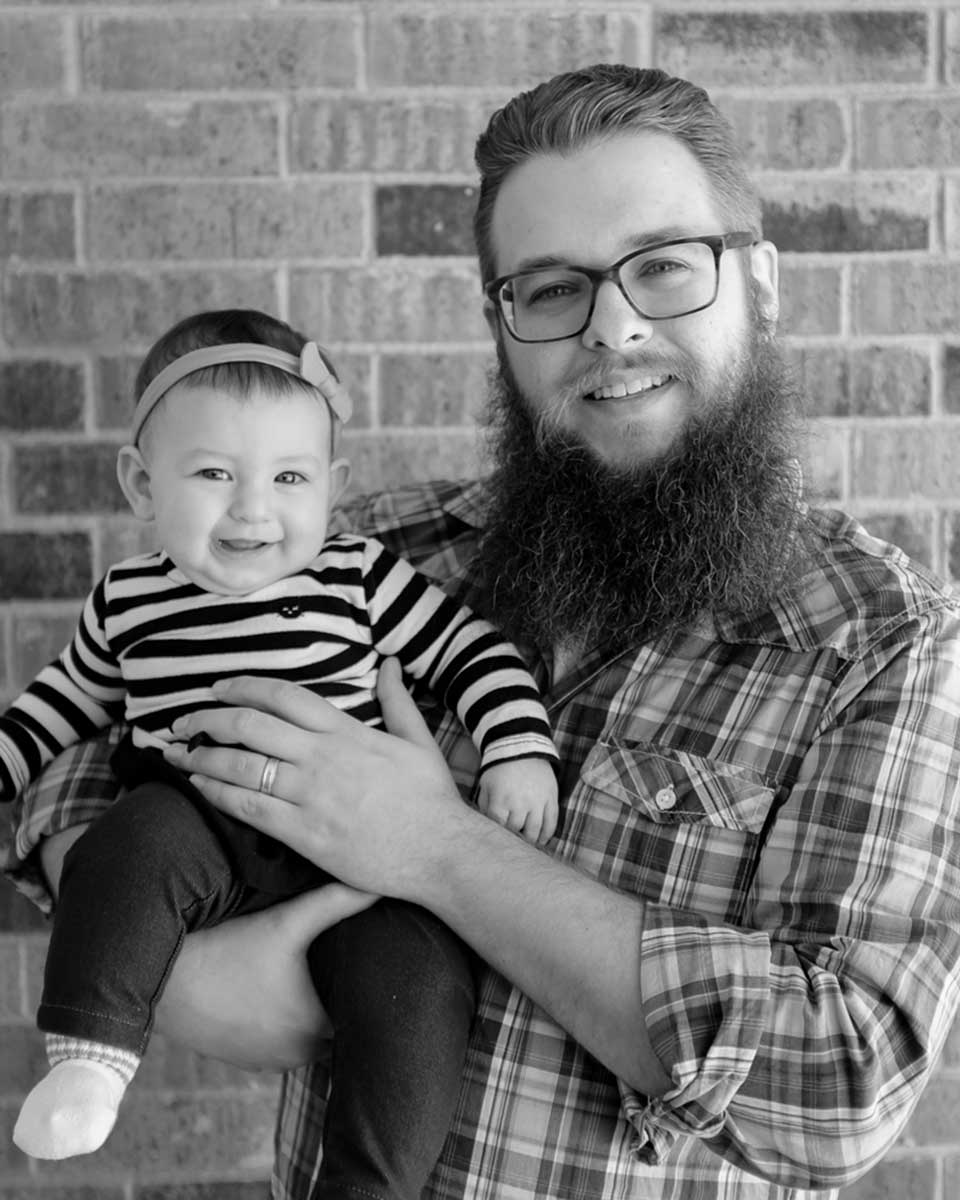
Black-and-white portrait of stay-at-home dad and his baby daughter
After the birth of his daughter Adeline, Dustin Davis became a “work-at-home dad”—picking up his design career after a layoff by doing freelance work, but making his daughter his chief priority.

In the United States, many men who lost their jobs during the recession wound up staying at home with their kids, at least temporarily. For a growing number of men, however, their choice to become stay-at-home dads is actually that—a choice. Surveys support this view that fathers’ attitudes are changing. For example, just 5 percent of stay-at-home dads in 1989 said that the main reason they were home was to care for their home or family; today, 21 percent do.

These fathers have little in common with Jack Butler, the hapless stay-at-home dad played by Michael Keaton in the 1983 comedy Mr. Mom—still the cultural reference many people turn to when thinking of men at work at home. Forced to care for his kids after being sacked, Butler seemed bent on wreaking havoc in the house.

Today’s more gender-equal generation of stay-at-home dads shoulder domestic tasks more responsibly. For his part, Liley grew up in an upper-middle-class family in Texas. He studied finance and got a well-paying job as an accountant at a mutual fund. But in 2013, he decided to quit his job and care for Avery. “My wife always made more,” he says. “I was already the one doing the cooking and the rest of the household.” Staying home with Avery wasn’t something Liley felt forced into. Quite the contrary, he says—“I was counting down the days till I became a SAHD.”

But as much as attitudes about parenting have changed, stay-at-home dads still find themselves facing skepticism and derision, often subtle in form—the ways that stay-at-home moms steer clear of them at the playground, or the media portrays them as clueless and dumb, or friends and family drop hints that what they’re doing is strange.

“Being the man, it sounded crazy for me to quit my job,” says Matt Dudzinski, thirty-six, a former interior designer for an architectural firm in Detroit who now cares for his two daughters, six and three. He and his wife Aya, a trim engineer for an automotive company, had each thought—to themselves—that having Dad at home would work best for them as a couple. But they avoided talking about it. “We were both worried about being judged—her, for wanting to keep her career while being a mother, and me, for not being a breadwinning man.”

Then Dudzinski was laid off. “The arrangement we both knew we wanted, but were afraid to voice, was decided for us.”
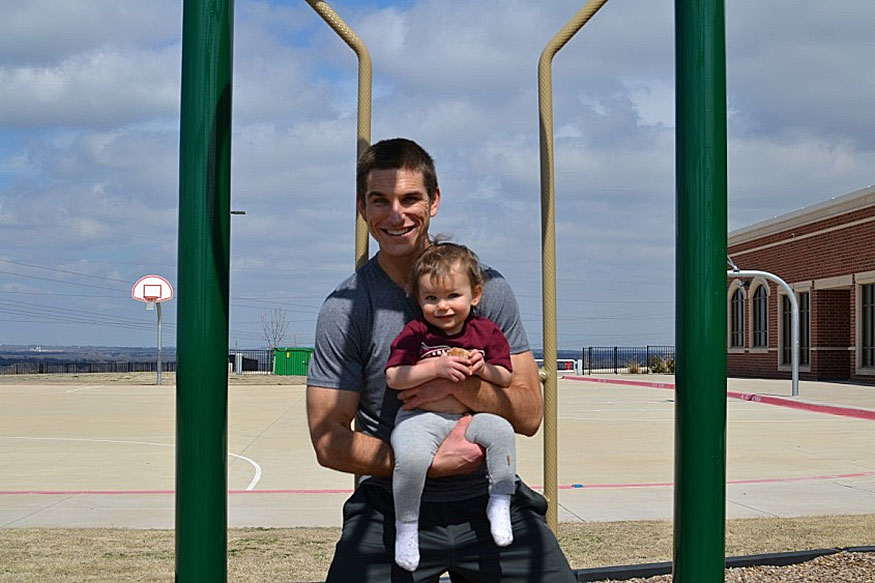
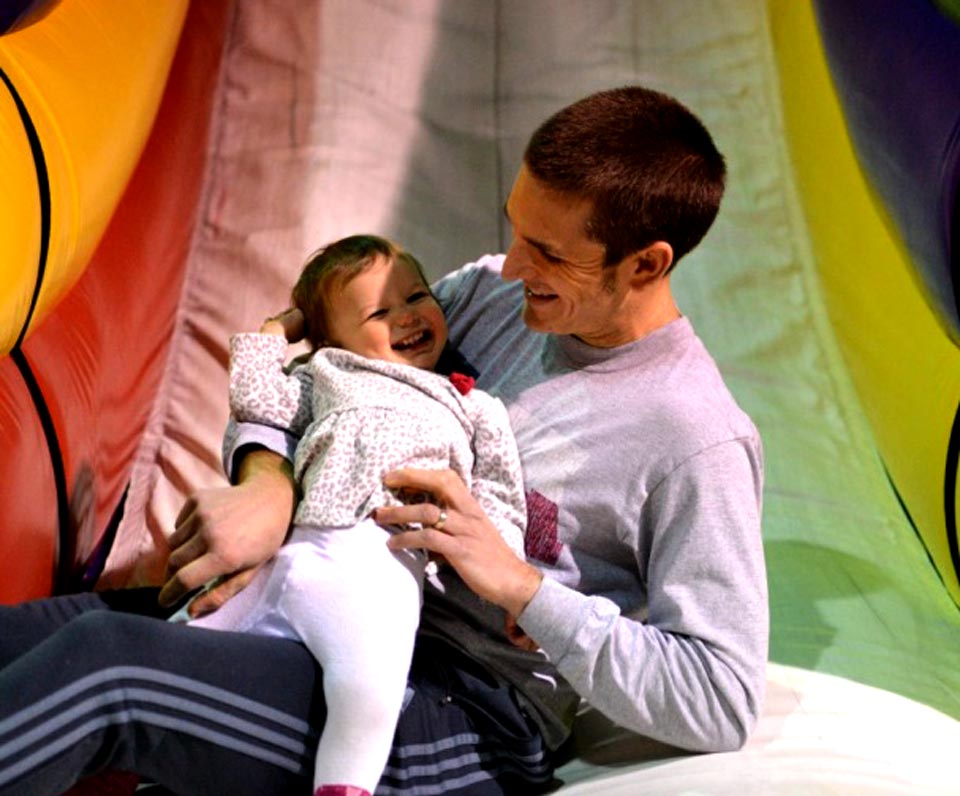
Father and toddler smiling as they sit on a swing
“My daughter will get more physical growing up with me,” Liley says. “She will get more practical, more assertive.”

In certain parts of the world, men (and women) have an easier time staying at home with their kids. For more than two decades, Canada has granted paid leave to fathers who want to be the primary caretakers of their children. In Japan, a country known for its stark gender divide, the law nonetheless requires employers to give their workers—men and women—time off after the birth of a child. In Sweden, one of the most SAHD-friendly countries, both moms and dads can receive government benefits for up to 480 days if they choose to care for their kids at home.

In America and Australia, there is much less in the way of support. Stay-at-home dads have fewer role models or resources to help them, and when government policies do exist to assist families with young children, they tend to treat these men as second-class parents.

Regardless of what their governments do, however, broad economic and cultural shifts seem to be pushing new dads in all these countries to consider what their own fathers would not.

In the United States, the number of stay-at-home dads peaked at 2.2 million in 2010, but then fell slightly once the economy picked up. Clearly, household decisions about who does what have much to do with the state of a family’s finances: in an uncertain economy, men who wouldn’t otherwise stay home are willing to do so when it seems practical. The massive unemployment of the economic downturn is only part of this story, though. Years after the official end of the recession, the typical American household makes less income, adjusted for inflation, than it did in 2007. Having a parent stay at home sometimes makes more sense than paying for a nanny or daycare—and now that women often make more than their partners, the sensible choice in some cases is for the dad, not the mom, to stay home.

Changing values may also be drawing men out of the workplace and into the home. Today, parenting is seen as both the cause and solution to a wide variety of social ills, says writer and sociologist Tiffany Jenkins, while “work is not as important as it used to be for one’s identity and purpose.” As work inside the home becomes, as Jenkins puts it, “professionalized,” more men may think of it a worthy life calling.

In turn, some of today’s new fathers may be reacting to what they think their own dads got wrong. GenXers and millennials, who grew up at a time when dual-income families were the norm, are already more comfortable with the idea of a woman breadwinner. Like every generation before them, they are finding their own ways to rebel—and in the case of the stay-at-home dads among them, this may involve rejecting their fathers’ workaholic schedules, which left little time for children. “I think a lot of people from my generation grew up without dads, or without good dads, and we are trying to change that—showing that we can be great dads,” says Josh Hardt, twenty-eight, a stay-at-home dad in Durham, North Carolina.

For his part, Hardt never felt close to his biological father, he says. After he moved away from home, he did find a fatherly role model in his stepdad, who was a more hands-on parent. Now that he’s a father himself, Hardt works on a freelance basis as a filmmaker but focuses on caring for his two-year-old daughter. His wife works as a retail store manager and provides most of the family’s income.

Hardt enjoys his role at home. The idea of a woman supporting a man financially isn’t that far a cultural leap for someone young like him, but Hardt knows that others—especially the older generation—think otherwise. “They come from a different time, so I understand why it’s hard to understand,” he says.
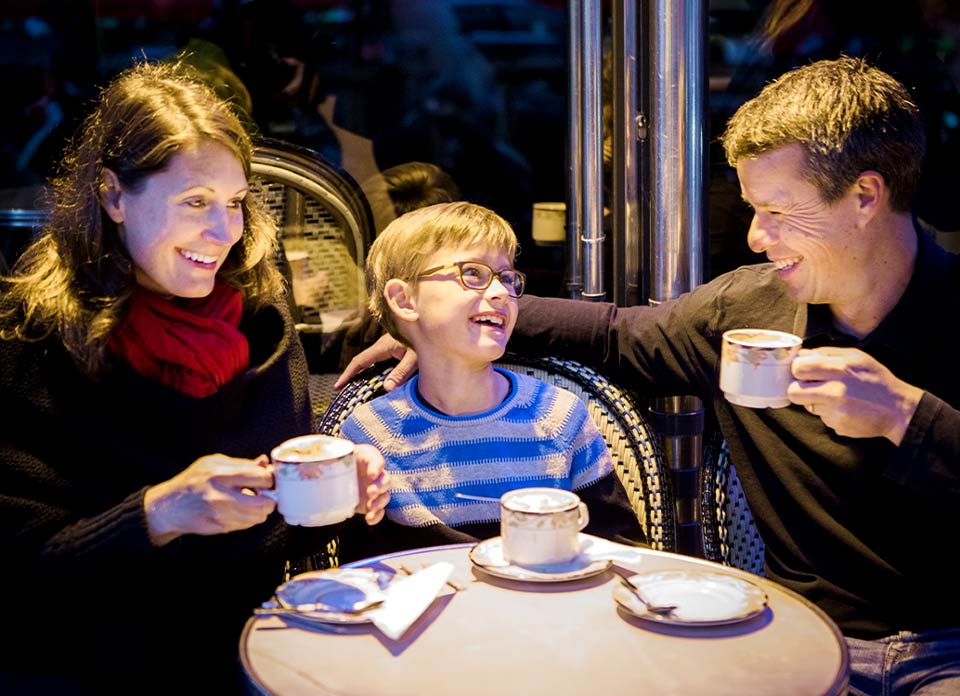
Parents laughing with their young son at a cafe
Stay-at-home dad Paul Schwartz with his wife Amy Wilson and son Malcolm. “I felt like a social movement of my own when I quit my lawyer’s job to stay at home with my son,” he says. Photo by Catherine O’Hara

If capable stay-at-home dads like Hardt are growing in numbers, though, you wouldn’t know it by watching TV. From Fred Flintstone to Homer Simpson, from Al Bundy to Alan Harper, the most popular on-screen dads of the past several decades have been roundly portrayed as doofuses. And the stay-at-home dads among them have not been spared the low expectations that both men and women have concerning male parenting skills. Even when TV dads are praised for being practically minded problem solvers in the home, the compliments are woefully backhanded—in a controversial 2011 detergent commercial, for instance, the savvy stay-at-home dad has to qualify his competence by calling himself a “dad-mom.”

Paul Schwartz knows the stereotype of the bumbling dad well: he was asked to play one on TV. Schwartz, a forty-two-year-old former labor lawyer, has gained a large following on his blog, which chronicles his adventures as a stay-at-home dad in Paris. A few months ago, a cable channel asked him if he wanted to be in a reality show they were developing about stay-at-home dads. The idea was interesting, but in the end Schwartz backed out. “They insisted that we act like morons,” he says.

Perhaps the negative portrayals of stay-at-home dads in the media aren’t so surprising, though, given how prevalent these stereotypes are in the public at large. It needs to be stressed that perceptions of stay-at-home dads tend to be much more hostile outside of America and Europe: in China, SAHDs often hide their status, fearing humiliation, and in many Muslim nations, such a role for men is considered religiously subversive. Nevertheless, large numbers of people in rich Western countries continue to have a lopsided view of who should be taking care of the kids. In a 2013 Pew survey, for instance, 51 percent of Americans said that children are better off if their mothers are home, while only 8 percent said the same of fathers.

Stay-at-home dads are regularly reminded that other people see them as, at best, an oddity. “I usually get one of two responses when people ask what I do for a living,” Dudzinski, the stay-at-home dad from Detroit, writes in an email. “‘Oh, that’s great’ (with a straight face, changes subject and stops talking to me). Or: ‘That’s awesome! If I didn’t have to work, I’d totally stay home all day!’ (assuming I watch TV and order pizza every day).”

Schwartz has stayed at home with his son Malcolm for a decade, but he still gets his share of clueless and patronizing questions from people he meets—inquiries along the lines of, “How does it work? Do you do laundry, too?” “Most are a bit shocked to learn that I have been a stay-at-home parent for all of Malcolm’s life,” Schwartz says. At PTA events, parent gatherings, and playdates, Schwartz is still frequently the only man in the room. “I don’t have a problem with it, although it occasionally means that my sense of humor doesn’t go over well.”
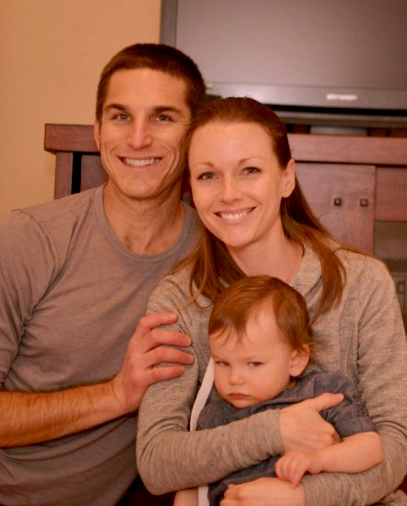
Toddler looking suspiciously at the camera as father and mother pose with her
Liley with his wife Kelley and daughter Avery. “My wife always made more,” says Liley. “I was already the one doing the cooking and the rest of the household.” But staying home with Avery wasn’t something Liley felt forced into. Quite the contrary, he says—“I was counting down the days till I became a SAHD.”

Schwartz and his family used to live in San Francisco. After Malcolm was born, he quit his job as a lawyer to take care of him. Then, in 2013, an international software company offered his wife Amy an executive position in Paris. She decided to take the job, and the family relocated overseas. Once in Paris, Schwartz immediately set to work establishing a new support network for Malcolm. He reached out to a local moms’ group about joining—only to learn that he, as a man, wasn’t invited.

When he did meet other stay-at-home parents, their interactions were “a bit weird,” he says. At a coffee for parents new to Paris, the group talked for half an hour about breast feeding, vaginal births versus C-sections, and similar topics. “You’d think that sitting around with a bunch of women talking about their intimate body parts would be terribly exciting, but to tell you the truth, I was bored.” To find more parents he could relate to, Schwartz eventually turned to the SAHD networks that have sprouted up around the globe in recent years. The people he’s met in this virtually connected community have been an important source of support, he says.

There is some irony to the fact that stay-at-home-moms can be some of the least understanding people whom SAHDs encounter. One obvious reason for the distance these women keep is apprehensiveness about sexual tensions—fears, for instance, that SAHDs must get lonely and want to hit on them. “Women are afraid they are forming a relationship that’s more [than] a friendship, so they don’t want any part of that,’” says Michelle P. Maidenberg, president and clinical director of Westchester Group Works, a community center in New York focused on group therapy.

The awkwardness, however, may have to do with more than just unwanted sexual attention. Women may see stay-at-home dads as threats—interlopers in a domestic sphere they thought was theirs alone, Maidenberg says. Or, they may see the SAHD as a sign of their own inferiority. The modern woman faces a daunting work-life balancing act: the need to juggle a thriving career and a thriving family. Meeting a stay-at-home dad, then, might raise some unsettling questions about how others have succeeded where she has failed—questions like, “Who is the high-powered female married to this man? How incredibly successful and rich is she that she has her husband at home?”

There is a joke going around his circles, Schwartz says. “The new status symbols for women are driving a hybrid car, and having a stay-at-home-dad for a spouse.”
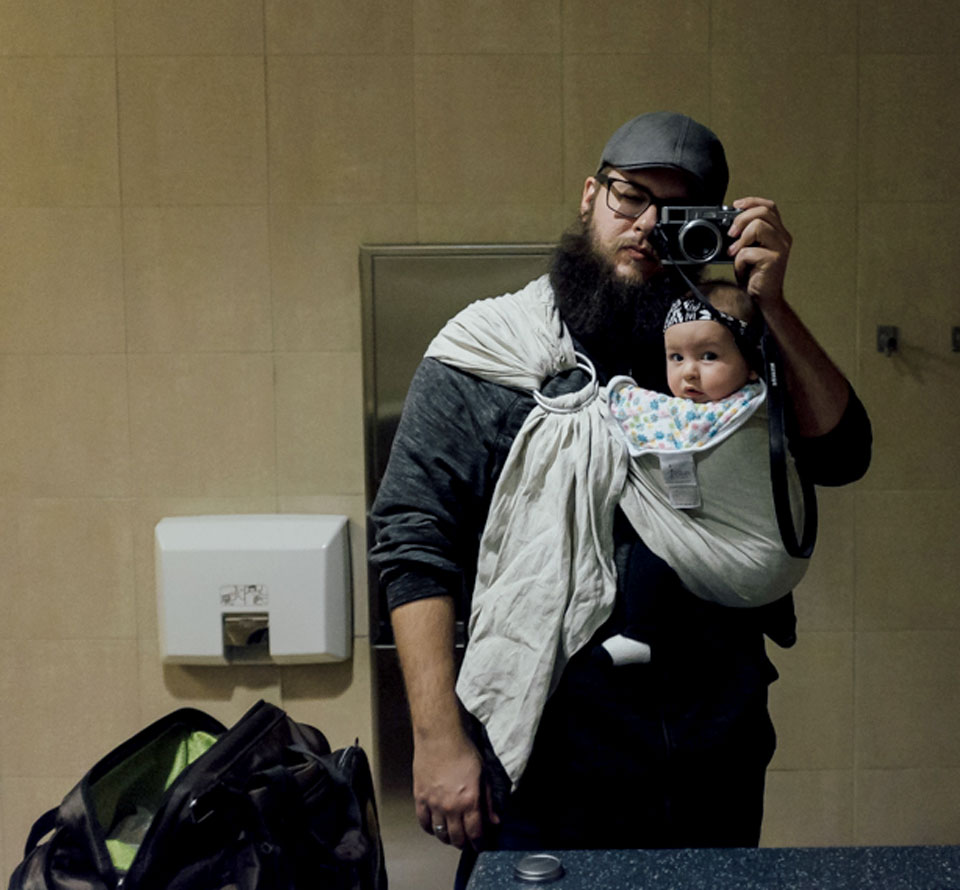
Father with baby in sling snapping photo in the mirror of a bathroom/changing room
During the day, Davis cares for Adeline in their St. Louis home while his wife Jessica works as a designer at a marketing agency.

Among other things, skepticism about stay-at-home dads is rooted in the widespread view that women are just more caring and empathetic than men, and thus better suited to be caregivers. Science backs that view up—though the degree to which it does, and the degree to which any gender difference is due to nature or nurture, are hotly contested.

Women tend to have higher levels of activity in their mirror neurons, brain cells linked to the workings of empathy. But scientists disagree whether empathy is determined by mirror neurons alone. Furthermore, research finds that these mirrors neurons can be altered through simple and brief training tasks. This suggests that empathy is not impervious to the power of culture, and that the gender differences we see may be due, at least in part, to the way children are socialized, not their innate traits. Indeed, studies of infant boys and girls find that boys are equally sensitive and attentive to other people at this early stage in their development.

What happens, then, when men care for their kids at home? Not surprisingly, studies find that it is a good idea for fathers to get involved, generally speaking, in their children’s lives. For example, one British study gathered a sample of 11,000 adults and asked their mothers how often the children’s fathers had read to them, gone out with them, and otherwise spent time with them during their childhoods. The researchers found that, on average, adults whose fathers had been more involved when they were growing up had higher IQs, were more sociable, and enjoyed a healthier sense of self. Perhaps being raised by the most involved kind of father—a stay-at-home dad—can lead to even more benefits for children’s sense of self-worth.

That is a hypothesis that researchers are evaluating, says Dr. Michael B. Donner, president of the San Francisco Center for Psychoanalysis. Another is that men who care for their kids have personality traits that distinguish them from other men. For instance, there is anecdotal evidence that stay-at-home dads are more connected to, and comfortable with, their feminine side, Donner says. (For their part, many stay-at-home dads delight in the idea they are different: they want to show other people—especially their own children—that masculinity is also about compassion and nurturing, they told me.)

As interesting as this research can be, Donner is quick to add that the debate over gender differences can obscure the larger point: children just need supportive parents. “It’s not about gender or testosterone levels, or who nurtures or challenges. It is about feeling safe and secure in your parents’ hands, and these properties have no gender.” The bottom line is that children raised in nurturing environments exude confidence when they become adults, he says. “Two can play at that game, moms or dads.”
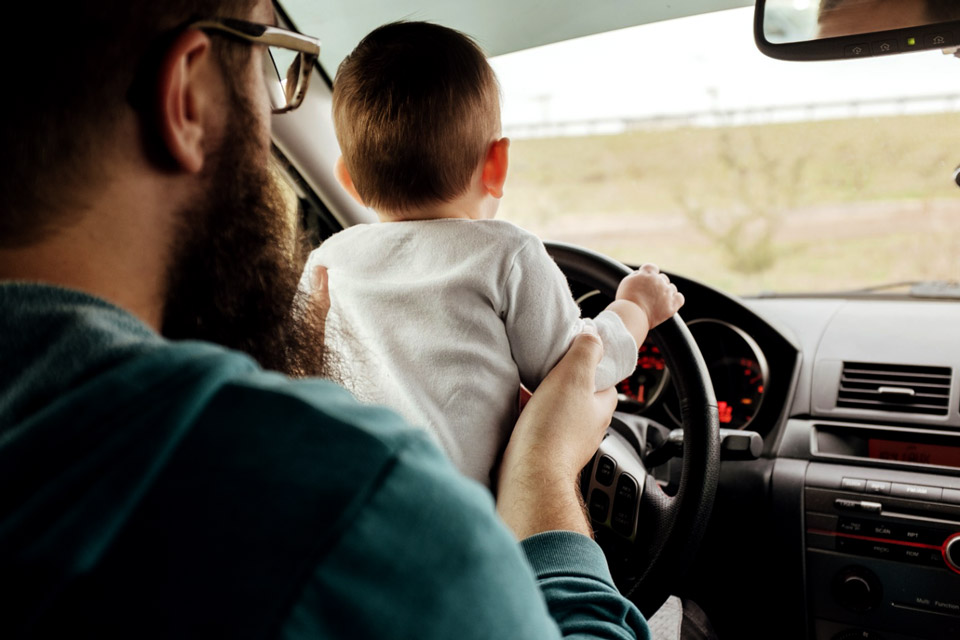
Don't worry, she's not actually driving the car.
Don’t worry, she’s not actually driving the car.

Dustin Davis has spent the last few years proving just how nurturing a dad can be. In 2013, Davis was laid off from his job as a designer. When his daughter Adeline was born two years ago, he decided he would use the opportunity to become—as he puts it on his personal blog—a “work-from-home dad.” During the day, his wife Jessica works as a designer at a marketing agency, while Davis cares for Adeline in their St. Louis home.

Davis, thirty-three, is as manly as you can get, as evidenced by his impressive ZZ Top beard. But like any stay-at-home parent, he revels in the milestones he’s been able to see first-hand—the other day, it was the five steps Adeline took, in a moment of particularly good coordination. Like many stay-at-home dads (and for that matter, like many stay-at-home moms), he has a career he continues to pursue. But now he is a freelancer working part-time from home, and his chief priority, he says, is Adeline.

“While I cannot breastfeed a child, I can do everything else a woman does. I can be nurturing and loving. I can raise a child.”

Stav Dimitropoulos is a writer and journalist whose work has appeared in major US, UK, Australian, and Canadian outlets. A native of Greece, she received the Athens Medal of Honor at the age of seventeen and went on to receive a master's degree. She experimented with journalism along the way, and has been writing ever since. Facebook | Twitter: @TheyCallMeStav

At a vigil in Paris the night after the November attacks. Garry Knight, via Flickr

Helpers

It was the last night of my conference in Paris, and I was sitting with some new friends in a Brazilian restaurant near the Avenue de la République. We had just wrapped up a day of panels and presentations on the topic of race at the Sorbonne, and the six of us—two Dutch scholars, an Italian, a Belgian, a French woman, and me, the American—had gone out to celebrate. I felt a bit sheepish, as an American, to be eating food from the Americas in Paris, but a few drinks erased that feeling.

We had just finished eating and were sitting around chatting when the once emptying restaurant became full of people again. A young French couple hurriedly slipped into the restaurant and sat down at the table next to us. The man spoke English to us. “Don’t go outside,” he said.

The people at my table huddled anxiously around him. People were running in the streets away from something, he told us. I glanced around the restaurant and saw that everyone was already staring at their phones. Looking at my own, I saw a news alert that said that several bombs had gone off in the Bataclan concert hall.

“That is just 1,000 meters from here,” the French man said, eyes wide. Some of the women around me gasped.

“How far is that?” I, the American, asked.

“Very close, very close,” he said.

Continue reading Helpers

Chinyere Osuji is the author of Boundaries of Love: Interracial Marriage and the Meaning of Race, uses social science to understand how Blacks interact with ethnic and racial “others,” and has watched Something in the Rain five times. Site | Instagram | Twitter | Clubhouse

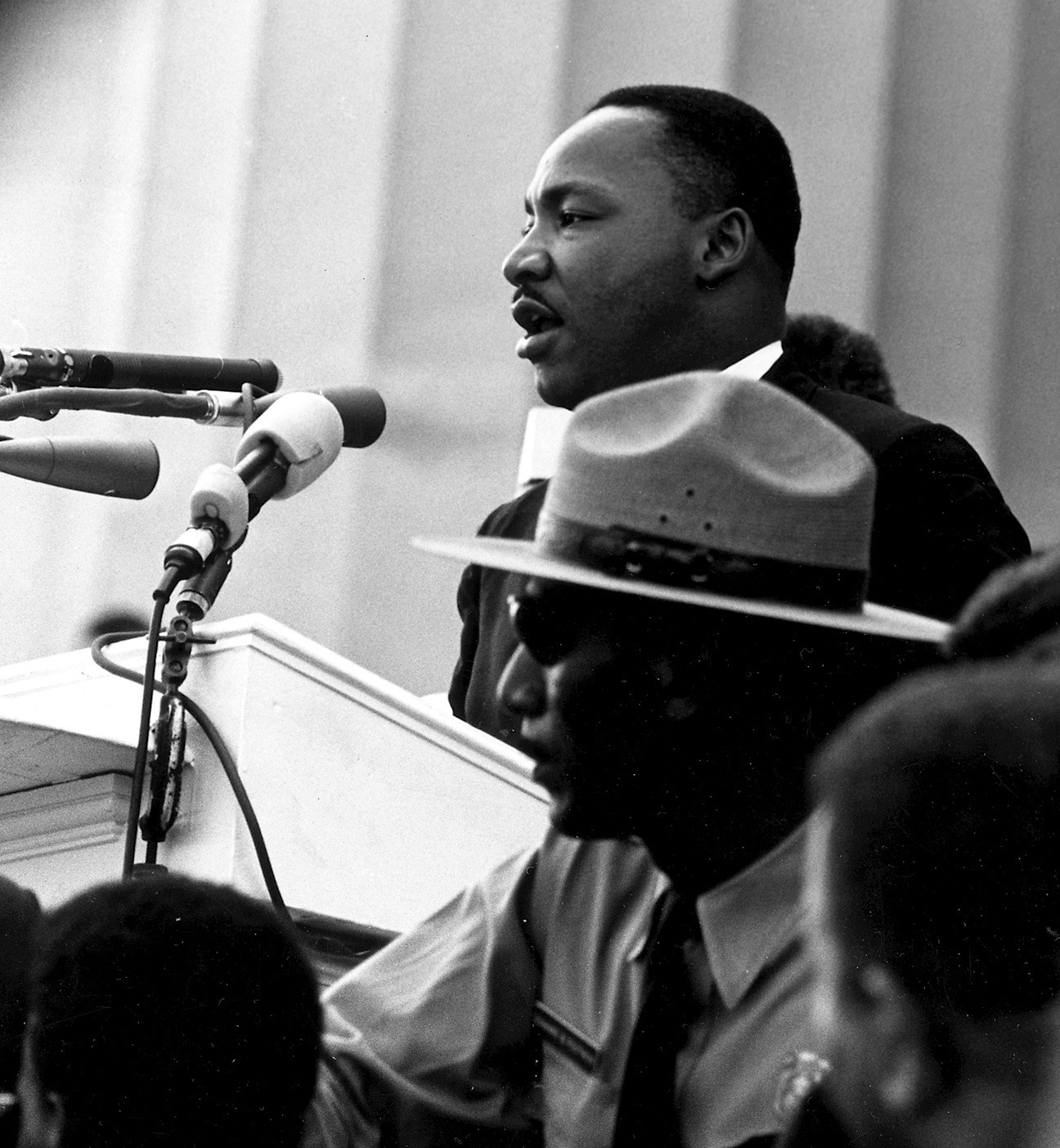
Dr. Martin Luther King delivering his "I Have a Dream" speech in Washington on August 28, 1963. National Archives and Records Administration, via Wikimedia

Progress for African Americans? Yes, and No

Martin Luther King at podium
Dr. Martin Luther King delivering his “I Have a Dream” speech in Washington on August 28, 1963. National Archives and Records Administration, via Wikimedia

All the discussions today of how much racial progress we’ve made since Dr. Martin Luther King was alive reminded me of a disturbing point about the black−white health gap mentioned in recent research, some of which I discussed in an Atlantic essay over the weekend.

According to the Centers for Disease Control, African Americans have been catching up with whites in terms of life expectancy at birth. So things are looking up, right?

Yes, and no. To a sizeable extent, what explains the narrowing of the life-expectancy gap in the last couple decades is not just that things are better for African Americans (though they have improved), but also that things are worse for whites—working-class whites above all.

A New York Times piece over the weekend highlighted this fact. “A once yawning gap between death rates for blacks and whites has shrunk by two-thirds”—but that’s not because both groups are doing better, according to the article. Overall mortality has declined for African Americans of all ages, but it has risen for most whites (specifically, all groups except men and women ages 54-64 and men ages 35-44).

Furthermore, younger whites (ages 25-34) have seen the largest upticks in deaths, largely because of soaring rates of drug overdoses, and those who have little education are dying at the highest rates. The mortality rate has dropped for younger African Americans, a decline apparently driven by lower rates of death from AIDS. Together these trends have cut the demographic distance between the two groups substantially.

For middle-age African Americans, the progress in improving health outcomes implied by the shrinking black−white mortality gap is also less cause for celebration than it might seem at first.

A much-discussed study last year by the economists Anne Case* and Angus Deaton found that huge spikes in deaths by suicide and drug poisonings over the last couple decades have meant that the trend of declining mortality rates we’ve seen for generations actually reversed for whites ages 45-54 between 1999 and 2013. Again, those with little education were hit the hardest.

In my Atlantic piece, I pointed out that the growing social isolation and economic insecurity of the white working class might explain some of these trends. One of the caveats I mentioned is that death and disease rates remain much higher among African Americans and Latinos. (I should have been more precise in the article: although Latinos have higher rates of chronic liver disease, diabetes, obesity, and poorly controlled high blood pressure, they have lower rates of cancer and heart disease, and lower or at least equivalent rates of death).

But it’s not just that the black−white gap persists. Here’s an important passage from Case and Deaton’s paper:

Over the 15-[year] period, midlife all-cause mortality fell by more than 200 per 100,000 for black non-Hispanics, and by more than 60 per 100,000 for Hispanics. By contrast, white non-Hispanic mortality rose by 34 per 100,000. CDC reports have highlighted the narrowing of the black−white gap in life expectancy. However, for ages 45–54, the narrowing of the mortality rate ratio in this period [1999−2013] was largely driven by increased white mortality; if white non-Hispanic mortality had continued to decline at 1.8% per year, the ratio in 2013 would have been 1.97. The role played by changing white mortality rates in the narrowing of the black−white life expectancy gap (2003−2008) has been previously noted. It is far from clear that progress in black longevity should be benchmarked against US whites.

Let me reiterate their point: for Americans ages 45-54, the narrowing in the black−white gap in life expectancy in recent decades was “largely driven” by more deaths among whites.

It’s heartening that overall life expectancy is increasing for many Americans, including African Americans. But it’s also important to remember that, almost a half century after King’s death, people of all races continue to be left out of this country’s progress, and some—whites and nonwhites—may, in fact, be seeing an unprecedented step backward.

* I want to apologize to Dr. Anne Case for mistakenly identifying her as “Susan Case” in the original version of my article in the Atlantic. (The only reason I can think of for why I made that dumb mistake is that a friend of mine is named Susan Caisse.) This brilliant scholar has already suffered the injustice of having her study erroneously called the “Deaton and Case study” rather than the “Case and Deaton study” (for better or worse, first authorship is everything to us academics), and here I’ve added insult to indignity. My sincere apologies.

Victor Tan Chen is In The Fray's editor in chief and the author of Cut Loose: Jobless and Hopeless in an Unfair Economy. Site: victortanchen.com | Facebook | Twitter: @victortanchen

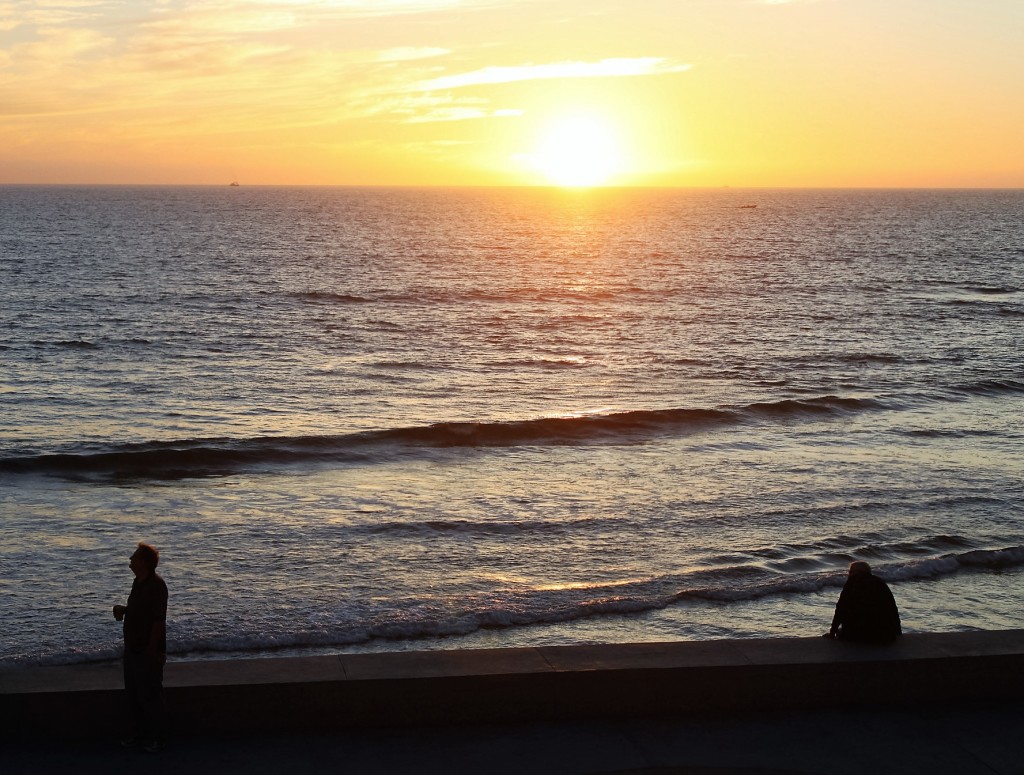
Mazatlán. Eli Duke, via Flickr, edited

Mazatlán

The sun was sinking, the day finally ending. I sat on the beach in Mazatlán, propped against my pack, swim trunks still damp under my jeans. At this hour, the beach was empty.

The night before I’d stopped in Mazatlán, a city on Mexico’s northwestern coast, to break up the long bus trip from Tijuana to Guadalajara. Back in Seattle, the Sunday travel section had made the place sound like paradise. All I’d found was a gloomy hotel room, an ocean too hot for swimming, Gila monsters splashing in an open sewer nearby, and a couple of scrawny teenagers humping alongside a broken concrete path near the beach.

Continue reading Mazatlán

Paul Michelson lives and writes in Davis, California.


Best of In The Fray 2015

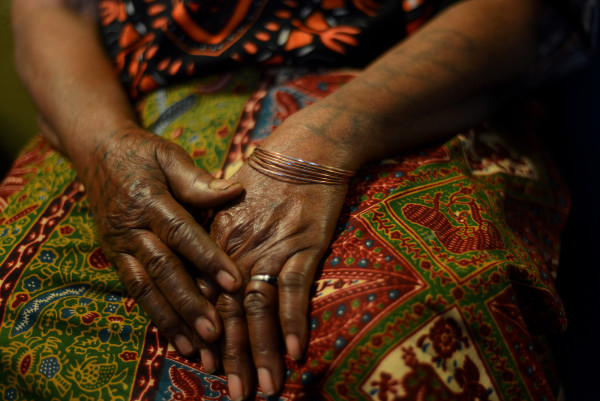
Monah Smith's hands, which she had tattooed as a young girl in Liberia
From Age of Isolation: Portraits of Older Immigrants. Photo by Dana Ullman


We need your help.

Our nonprofit magazine very much needs donations from readers like you if we’re going to continue publishing in 2016. Please support our efforts to produce the kinds of content you don’t find elsewhere—stories that further our understanding of other people and encourage empathy and compassion—by making a tax-deductible donation to our nonprofit magazine.

And while you contemplate the importance of independent media, check out some of the great articles from around the globe you might have missed in our pages this year. Here are the In The Fray pieces that our editors judged to be the best.

News: The War within the War, by Jo Magpie

Commentary: Cold Peace, By Chris Schumerth

Photo Essays: Portraits of Older Immigrants (Part 1: Age of Isolation, and Part 2: I Can Only Pray), by Dana Ullman

Interviews: Lost and Found: A Conversation with Writer Philip Connors, by Susan Dunlap

From all of us at In The Fray, we wish you and yours the best in 2016.

Victor Tan Chen is In The Fray's editor in chief and the author of Cut Loose: Jobless and Hopeless in an Unfair Economy. Site: victortanchen.com | Facebook | Twitter: @victortanchen

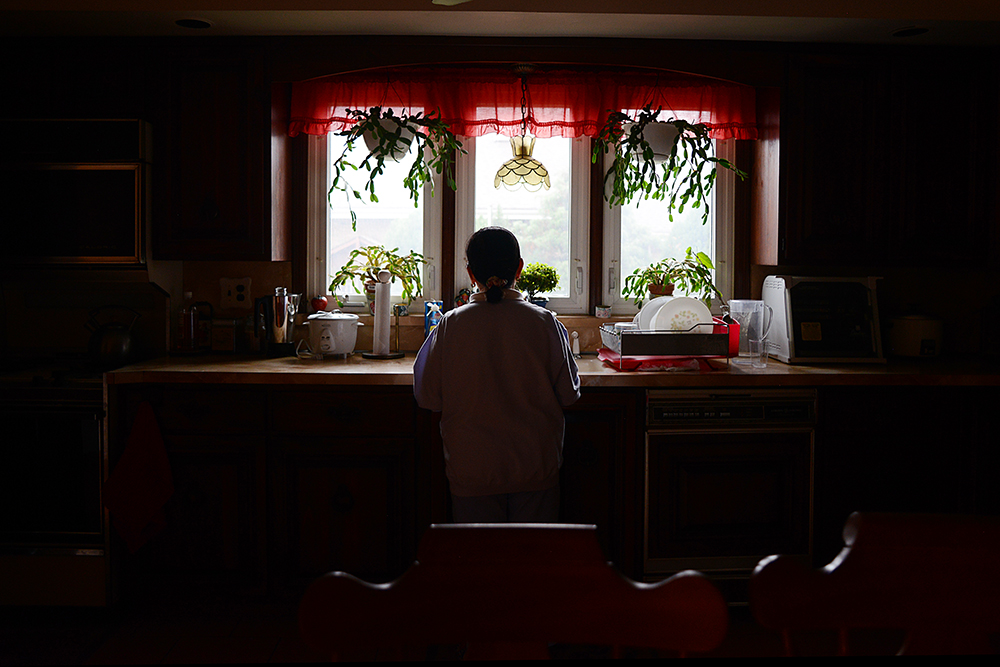
Myra, an undocumented Filipina immigrant, looks out the kitchen window of a friend's home on Staten Island.

I Can Only Pray: Portraits of Older Immigrants

Best of In The Fray 2015. As they head into what should be their golden years, many older immigrants still work low-wage jobs and remain undocumented. Unable to save up or receive benefits for the elderly, they can do little but hope they stay healthy and employable. Part two of a two-part series.

Part 1: Age of Isolation

“Nursing homes are sad places. People are abandoned there,” says Gloria Murray, sixty-six, a Jamaican immigrant who worked for more than two decades as a health aide at a nursing home. Over the course of her career, Murray became close to many of her clients. It was important to her that they be shown kindness and respect. In Jamaica, she says, “we take care of our old.”

Yet as Murray grew old herself, she quickly learned that no one was going to take care of her. In 2010, a fire destroyed her home in New York. Homeless for two years, she struggled to navigate the city’s shelter system. Life there was unbearable, she says: “It was drugs, pimps, the whole lot. I never knew it would come to this.”

Continue reading I Can Only Pray: Portraits of Older Immigrants

Dana Ullman is a freelance photographer based in Brooklyn. Her photography is focused on social engagement: chronicling everyday epics, investigating subjects crossculturally, and humanizing faceless statistics through storytelling. Site: ullmanphoto.com


Age of Isolation: Portraits of Older Immigrants

Best of In The Fray 2015. Embracing the last stage of life is a challenge for all, but especially so for those growing old outside their homeland. Part one of a two-part series.

Part 2: I Can Only Pray


Tucked away in Staten Island’s Clifton neighborhood is a fourth-floor apartment painted in drowsy greens and browns. A blend of savory aromas—fish gravies, okra, fufu, stewed bitterballs—fills the air as brightly dressed women chat over bowls of chicken stew with rice.

Monah Smith, a small, wizened woman with a quiet smile, has been cooking for them. Smith sells home-cooked meals from her apartment in Park Hill, a low-income housing complex. The place never seems to be empty. Staten Island is home to the largest Liberian community outside of Africa, and many of Smith’s fellow immigrants drop by—at almost any hour of day—for the traditional, slow-cooked dishes she makes.

Continue reading Age of Isolation: Portraits of Older Immigrants

Dana Ullman is a freelance photographer based in Brooklyn. Her photography is focused on social engagement: chronicling everyday epics, investigating subjects crossculturally, and humanizing faceless statistics through storytelling. Site: ullmanphoto.com

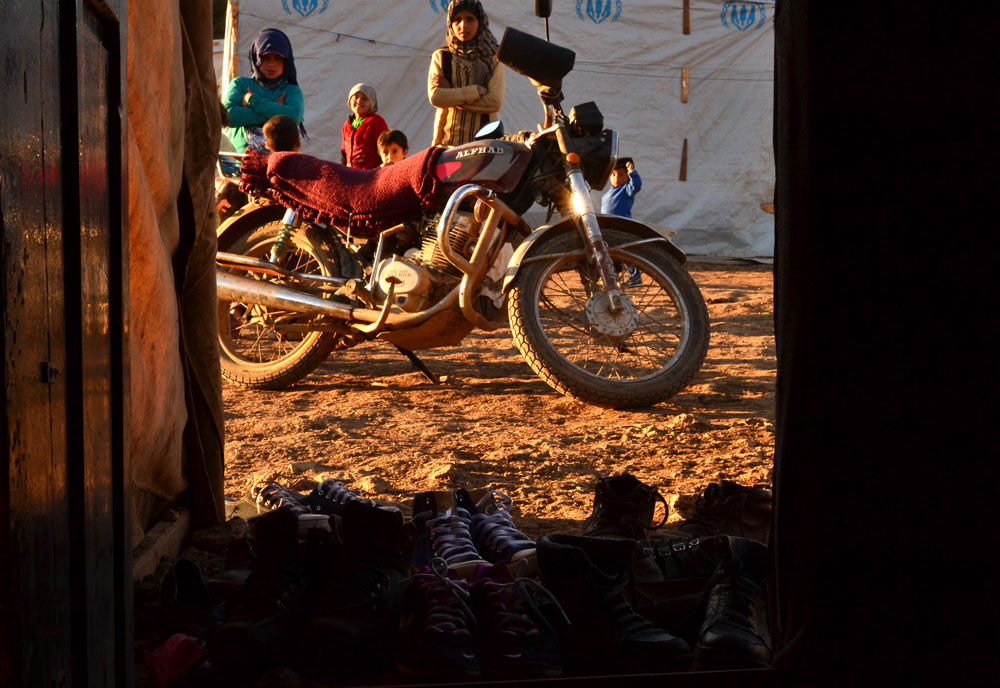
A motorcycle in front of United Nations-issue tents and their residents in a refugee camp in Bekaa, Lebanon.

Sleeping under the Rocket Trails

The civil war in Syria forced her to leave her home for another in Armenia, her ancestral homeland. Three years later, the war rages on, and the situation in the refugee camps in Lebanon and elsewhere remains grim.

Four years of a raging civil war in Syria have displaced more than eleven million people, ushering in the largest exodus since World War II. Of those forced from their homes, four million have fled the country. While the crisis has now reached Europe in a very visible way, the majority of Syrian refugees are not (yet) risking the hazardous journey to its shores. Instead, they are staying in countries not far from Syria’s borders: Turkey, Jordan, Iraq, Egypt, and—most noticeably—Lebanon, where an estimated one in three people is now Syrian.

Anahid, an ethnic Armenian woman from Aleppo, escaped Syria in 2012, soon after the country was engulfed in fighting between President Bashar al-Assad’s authoritarian regime and various rebel factions. She fled to Yerevan, the capital of her ancestral homeland, which borders Turkey. Later, Anahid moved to Lebanon, where she has relatives. There, she worked with Syrian refugees in their overcrowded camps. Last year, she traveled back to Syria with her British husband, Joseph Bailey, and witnessed the country’s presidential election. (Anahid is an alias. She has asked that her real name not be used because her father is still in Syria.)

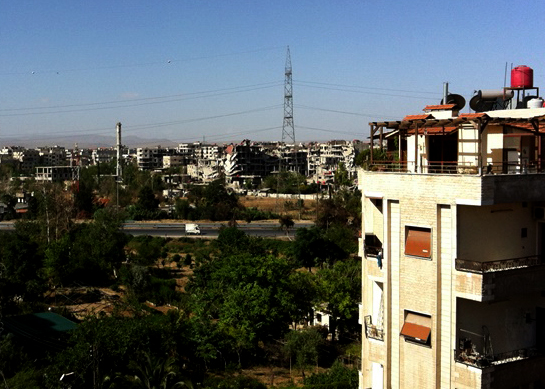
Ruined buildings along the length of a highway
The Highway of Death in Damascus, as viewed from the top floor of the house where Anahid and her husband Joseph Bailey stayed. “It’s the highway of the airport, but they call it the Highway of Death because one side is the rebel-held area and the other side is the government’s, so they keep shooting each other, especially when there are military buses or cars passing through.” The neighborhood on the left—the Free Syrian Army’s side—is completely destroyed; on the right is the government’s territory, where the buildings are still intact.

A vivacious woman in her late twenties, Anahid studied tourism in Aleppo but currently works as a freelance translator. When the war broke out, she and other Syrian Armenians were able to find refuge in Armenia because the government recognized them as citizens. Nevertheless, some of the Armenians already there did not welcome them at first, Anahid says. Culturally, the two groups are distinct. The modern Republic of Armenia, a Soviet state for eighty years, has developed a Russian-influenced dialect that is very different from the Armenian spoken in Syria. Most of those who are now “repatriating” to Armenia are descended from the Armenians who were relocated during the 1915 Armenian genocide, which took place in what is now modern Turkey and involved the killing, forced migration, and starvation of an estimated 1.5 million men, women, and children. (Anahid’s grandfather was one of the survivors: a young boy when he left Anatolia on his own, he was adopted by a Kurdish family in Aleppo and never learned what happened to his family back home.)

Aleppo until recently had an ethnic Armenian population of 60,000—one of the largest in the Middle East. Today, the city’s Armenian district is a fraction of its former size, with only a handful of hangers-on. Located inside a government-controlled area, it continues to be bombed by rebel forces.

Unlike Anahid, many ethnic Armenians and other Christian minorities in Syria supported the country’s secular socialist regime even before the conflict, believing that Assad offered them a degree of protection against Islamic extremism. Recently, Russia joined the conflict on the side of the government, providing air cover for a massive, ongoing push to retake rebel-held areas of Aleppo. While its actions have rankled Washington, Russia’s support of the Assad regime is seen more positively by some Syrian Armenians, who fear that the Islamic State, and not the US-backed rebels, will control the country once Assad falls.  If that happens, there may not be a home for them to return to.

In The Fray contributing writer Jo Magpie interviewed Anahid about the events that drove her to leave Aleppo, her life as a “repatriate” in Armenia, and the refugee camps that she worked in while living in Lebanon—whose desperate conditions are pushing some Syrians to brave a perilous overseas journey to Europe.

Looking down on the refugee camp tents
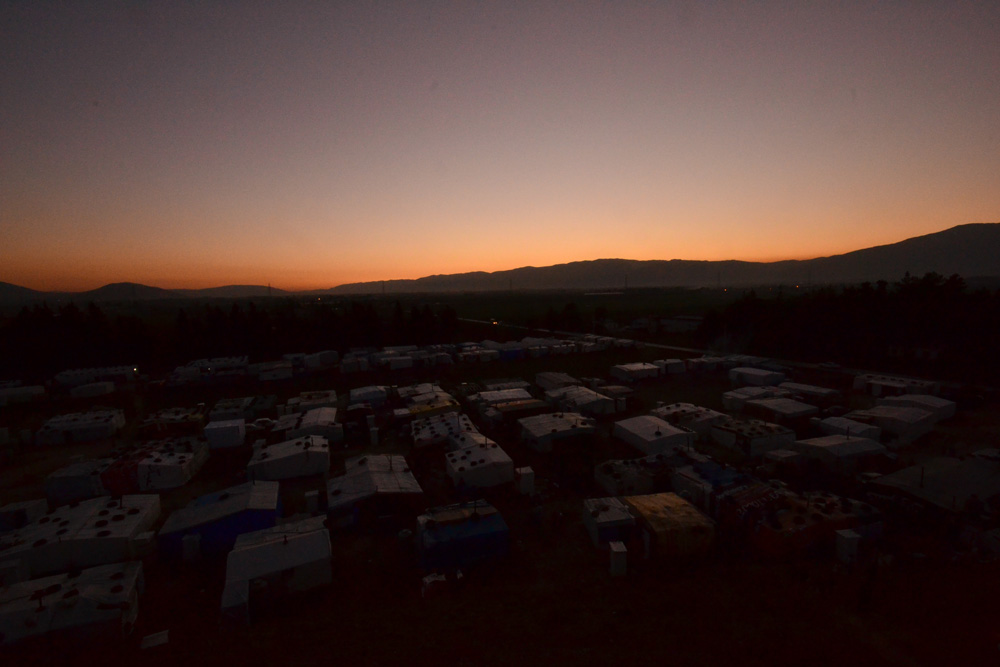
Aerial shot of the Bekaa refugee camp.

When did you leave your home in Aleppo, and how easy was it to get out?

I left in 2012, in the last week of June. It wasn’t as bad as now, it was just the beginning of the problems in Aleppo. There had already been three big explosions before I left. The first one was on a Sunday. Me and my friend went to have breakfast near our house, and the minute we got out, there was this huge explosion. We didn’t know it was an explosion, so we started looking around. Then we saw that the building right in front of us was full of dust, and the glass was falling. People were running, and ambulances started to come.

A week later we were like, “Okay, everything looks safe, the city is calm, let’s go and have breakfast in front of the Citadel.” After fifteen minutes, while we were waiting for food, a protest started nearby in the Umayyad Mosque, and they [the government forces] started shooting at them. [The mosque’s famed minaret was destroyed in fighting in 2013. —ed.] We just had to run. My friend had to carry me because I was too scared to move. We just took the first bus that was getting out of there.

We didn’t plan to leave Aleppo. We were going to go back, but we heard that it was getting worse there.

How was your reception in Armenia? Was it easy to settle in?

It was more difficult for Syrians to be accepted here at that time. When I got a university scholarship, a group of kids would come to me at breaks and say, “You shouldn’t be studying here. Our parents save up money for years so that we can come to university, and you guys came like a month ago, and now you can come here for free.”

If you knew a local, people would accept you more. But if you were on your own, it was very hard. First the language barrier, and second that they were not feeling comfortable that people from another country were coming, and they thought their government was helping the Syrians—which was not true.

What’s your impression of how Yerevan has changed due to Syrian Armenians coming?

It’s helped the economy here a lot. They opened businesses that the locals weren’t able to, which means hiring more people. So the change is not bad, it’s mostly good—leaving aside the racism. A really small number of locals still consider us Arabs, or consider us to have betrayed the country—[we] left while the genocide happened and never came back. “You’re only here now that your country is in a war,” and stuff like that. But most people are very warm here now. They aren’t like they used to be three years ago.

You spent some time visiting refugee camps in Lebanon. What happened?

We moved from Armenia to Lebanon because my mum’s parents are there, and we thought we would have an easier life. It’s closer to Syria, a lot more aid organizations and the UN are there. I worked for a nongovernmental organization for three weeks as a volunteer. We would go to the camps and talk with women, to see how they were coping with life. When I stopped volunteering with the NGO, I decided that I wanted to go and visit with my friends sometimes. We would take candies or toys for the kids.

From the day we left Syria, me and a group of friends would always collect clothes and ship them to Syrian refugee camps in Turkey, Lebanon, or Jordan. Some Syrian musician friends did a benefit concert, and they made $5,000. It was very cold in the camps, so the title was “A Bag of Wood.” The donations and the ticket money made enough for 300 families—for wood to burn in the winter—and we bought some extra stuff, like rain boots for the kids. Me and Joseph decided to do some crowdfunding to make more money for blankets, and collected almost the same amount.

A pair of shoes in the foreground, tents in the background
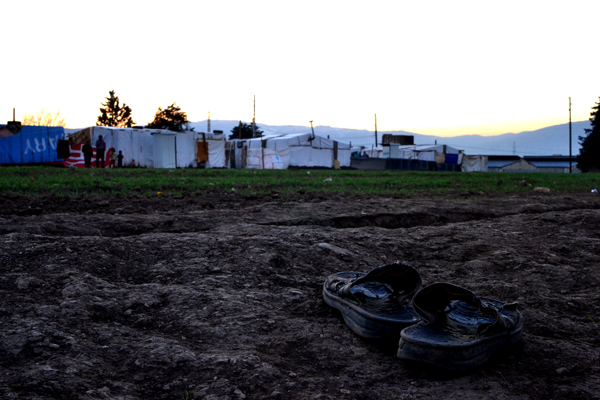
The tents of Syrian refugees in the camp in Lebanon.

What was the situation like in the camps you visited?

Back then I would always get shocked, but now it’s normal for me. The tents are basically a few pieces of wood. Sticks. And then big plastic sheets that the UN gives to them. Some use paper sheets from the billboards. They basically steal them, so they can cover more, because the UN only gives them six or eight sticks and three or four pieces of plastic, which is not enough to make a tent big enough for a family. There was this one woman who has nine kids, without her husband, because he was killed. Then she has her mum, dad, brothers, sisters, their families—they live in one tent.

Some of [the refugees] have heaters inside. Some of them have water, some don’t. In every camp there is one person who has a car, and most of the time this person becomes the leader of the camp. He goes to get water, and they bring barrels and fill them. The water containers that the UN gives to them are very small. It’s not enough for a family.

[The UN] would give them $30 a month for bread. Then they made it $28. They give you some flour, some rice. They would tell them that their kids can go to schools, but the schools are very far away. Nobody can drive them, and they cannot afford to take them, so they stay there.

They don’t have bathrooms. Each camp has one or two bathroom spaces outside somewhere, where they have made tents with these plastic things. This one camp had 100 or 150 families, and I didn’t see more than six or seven bathrooms.

There are unrecognized [private] camps. The owners often make demands, like “I want rent for the floor that you’re putting in your tent.” You can register for a UN-recognized camp, but some of [the refugees] are scared to go there. Some of them want to be closer to the city or to places where they can have a chance to work in a factory—but for a quarter of the wages a local would get.

It’s hard in Lebanon. Syrians are not very accepted there. The last few months I was there it was even more difficult for Syrians to find a job. Even if you can afford to rent a flat, you can’t afford to go to school.

Do you think that’s because of the amount of people that are coming now?

That has a very big influence. A lot of people say, “When there was war in Lebanon, Lebanese people also came to Syria.” But Lebanon is like four million [people]. [Including refugees, Lebanon’s population is now estimated to be six million. —ed.] If half of them came to Syria, Syria is big and it’s not so noticeable. But now half of Syria came to Lebanon. Lebanon is like a quarter of Syria’s size. They don’t have space. Cities were already overcrowded. It was already difficult for Lebanese people to have a job. Now Syrians are also looking for jobs, so that makes them a bit defensive.

How is the situation out of the camps—like, in Beirut, the capital?

In the city center you see a lot of Syrians who regret leaving [the camps]. They leave with the hope of moving to the city to find jobs and have a better life, but they end up homeless there, and nobody helps them.

Most of them are kids. At the end of the day, when they finish what they’re doing on the street—begging, selling flowers, or whatever—they go and sleep in the buildings. I would see one of them every day. He would sleep in a cardboard box with his little brother. They’re not older than twelve years old. During the day they sell flowers, and they sleep in the same spot.

We would ask [the homeless] where they’re from in Syria, to make sure they’re Syrians, and we would give them some money. Some of them were so excited that they didn’t believe it. We were in the car because we didn’t want a pile of people climbing on us when we were giving money. One of them took the money and ran away, then started running back, saying “You gave me too much!” He expected us to take it back.

Person in a hammock on a rooftop
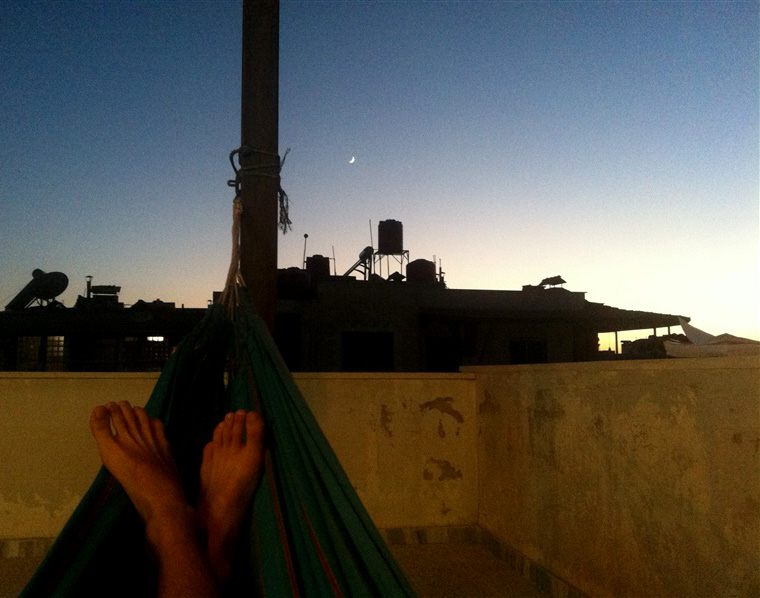
The view from the balcony of the house where Anahid and Joseph stayed in Damascus. “I thought it would be scary for Joseph, but he kept insisting to sleep on the balcony on the top floor. We would watch the rockets every night.” During their stay one of those rockets hit the building right across from their room.

You went back to back to Syria recently. How was that?

I didn’t go to Aleppo. It wasn’t safe, especially when I have my husband, a foreigner, in Syria.

We stayed in Damascus for a few weeks, and it was normal, but right in front of [the house] was the ruined neighborhood. And then you have the Highway of Death. It’s the highway of the airport, but they call it the Highway of Death because one side is the rebel-held area and the other side is the government’s, so they keep shooting each other, especially when there are military buses or cars passing through.

We got there on the day of the Syrian election results. [Assad was reelected by a wide margin in 2014, but the opposition and many Western leaders called the election a sham. —ed.] There were celebrations, because we were in a government-controlled area, but you could see rockets flying to the other side.

I was used to it. I thought it would be scary for Joseph, but he kept insisting to sleep on the balcony on the top floor. We would watch the rockets every night.

This interview has been condensed and edited.

Jo Magpie is a freelance journalist, travel writer, and long-term wanderer currently based in Granada, Spain. Blog: agirlandherthumb.wordpress.com


Don’t Blame Canada If They’re Doing What America Should Be Doing

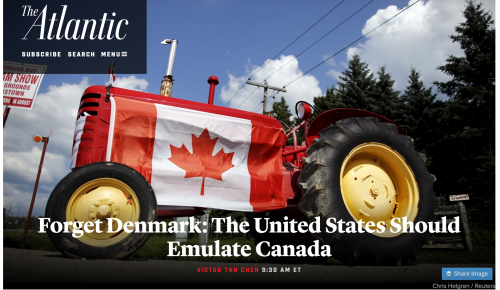
Photo of tractor with Canadian flagI wrote an essay that appeared in the Atlantic yesterday. Based on the research for my book on unemployment, the piece talks about the debate over Denmark in last week’s Democratic presidential debate—and how the real debate should be over Canada:

Clearly, America won’t expand its social safety net to anywhere near the scale of Denmark’s over the next president’s time in office. Judging from their rhetoric in the debate, though, Clinton and Sanders both agree that government can and should play an important role in extending economic opportunities more broadly. Canada’s approach to policy shows us some of the practical ways a country can do that—without having to go far from our roots as a New World society of dreamers and strivers.

Today’s federal election in Canada should be interesting: will Canada move in the direction of America, or vice versa? (That said, as my friend Barry Eidlin reminded me, the provinces have a lot of say in putting forward policies of their own—to help the employed and unemployed alike—and so some things probably won’t change, regardless of the outcome.)

Unfortunately, writing the headline for this post put the South Park song “Blame Canada” in my head. Here is the video, so that you can share in my pain (NSFW, obviously):

Victor Tan Chen is In The Fray's editor in chief and the author of Cut Loose: Jobless and Hopeless in an Unfair Economy. Site: victortanchen.com | Facebook | Twitter: @victortanchen


Page 99 of My New Book on Unemployment

I participated in Marshal Zeringue’s Page 99 Test at the Campaign for the American Reader. The blog is based on a quote by the writer Ford Madox Ford: “Open the book to page ninety-nine and read, and the quality of the whole will be revealed to you.” New authors talk about the ninety-ninth page of their book and what it says about its larger themes. Here’s what I wrote about my book Cut Loose:

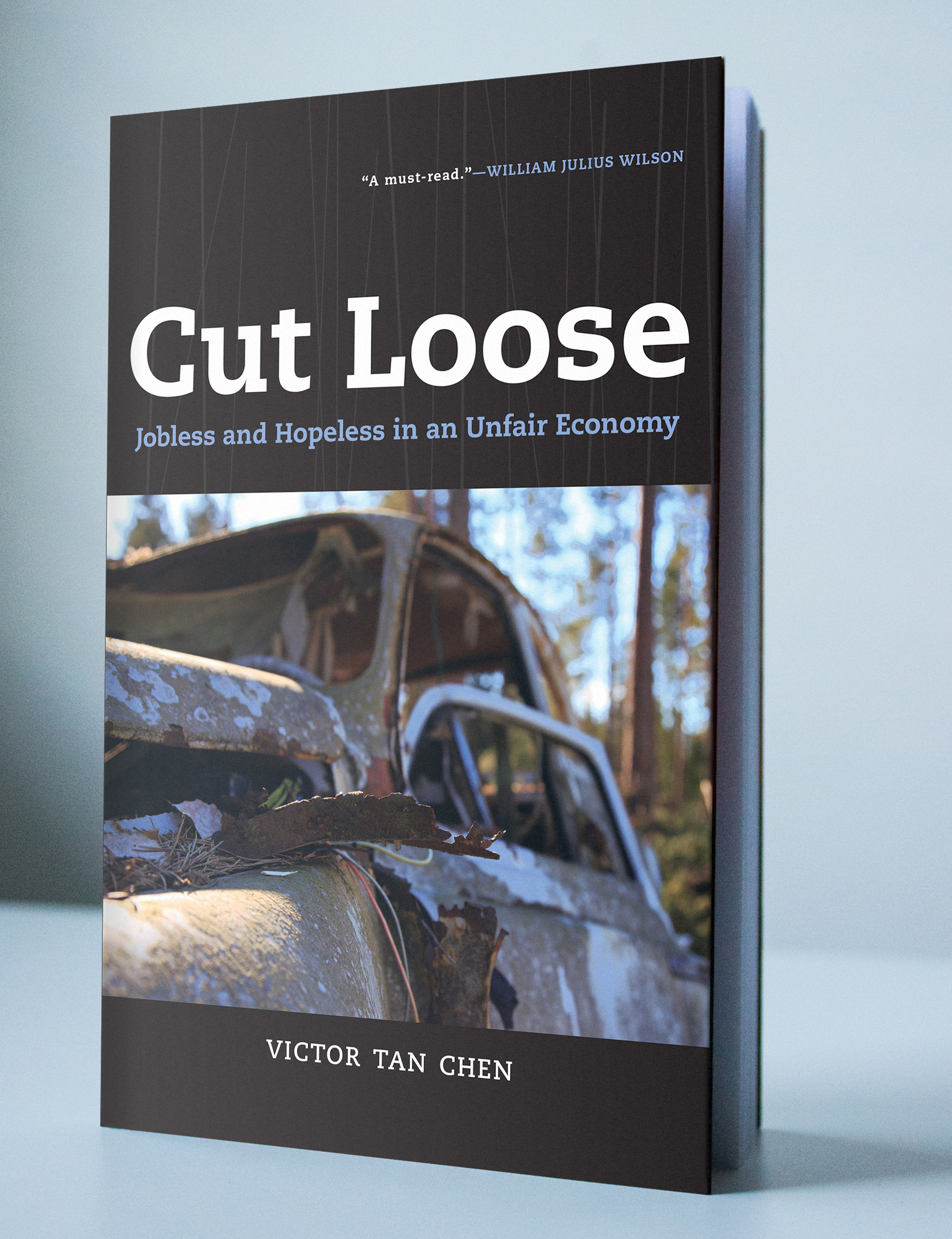
Cut Loose book coverPage 99 talks about how the unemployed deal with the depression and anxiety that come from losing part of their identities. Work is central to our sense of self—it’s often the first question we ask someone we meet—and during the workday we build friendships that sustain us throughout our lives. Many of the people I interviewed felt isolated. Friends could no longer relate. Relationships with spouses and children became strained. Unable to provide the way they used to, they found themselves mired in blame and doubts.

One smart way to help the unemployed is used extensively in Canada: action centers. When a layoff hits, the government sets up a help center for the company’s workers and trains some of them to work there. Unlike strangers at a government agency, peer helpers can assist their former coworkers with a personal and personalized touch. Lynn Minick of the National Employment Law Project points out that America’s social safety net for the unemployed largely helps the assertive and self-reliant. For those who might otherwise fall through the cracks, it makes a big difference if they have someone willing to step up for them, he says.

While policies are important, they’re not enough. As I write on page 99:

Individuals internalize society’s belief that being unemployed is degrading, and their mental health and social ties suffer as a result. Regardless of how much they receive in benefits, the unemployed are less satisfied than those with jobs. Even in countries with generous unemployment insurance, the unemployed tend to die at a younger age.

Society treats the long-term unemployed—whose numbers have remained at unprecedented levels since the recession—as lazy and useless. My book focuses on unemployed autoworkers, many who had worked hard for decades and, thanks to good wages and benefits, achieved a middle-class lifestyle. Now, suddenly, they are failures. Some became suicidal because they felt they had let their families down.

Our society attacks the “takers” who live off government aid or the “pampered” union members who had the gall to attain a decent quality of life. It’s obsessed with performance and proficiency, self-improvement and success. But in a culture that values winning at all costs, the long-term unemployed are the ultimate losers. The solution, I argue, has to involve changing that culture.

Victor Tan Chen is In The Fray's editor in chief and the author of Cut Loose: Jobless and Hopeless in an Unfair Economy. Site: victortanchen.com | Facebook | Twitter: @victortanchen


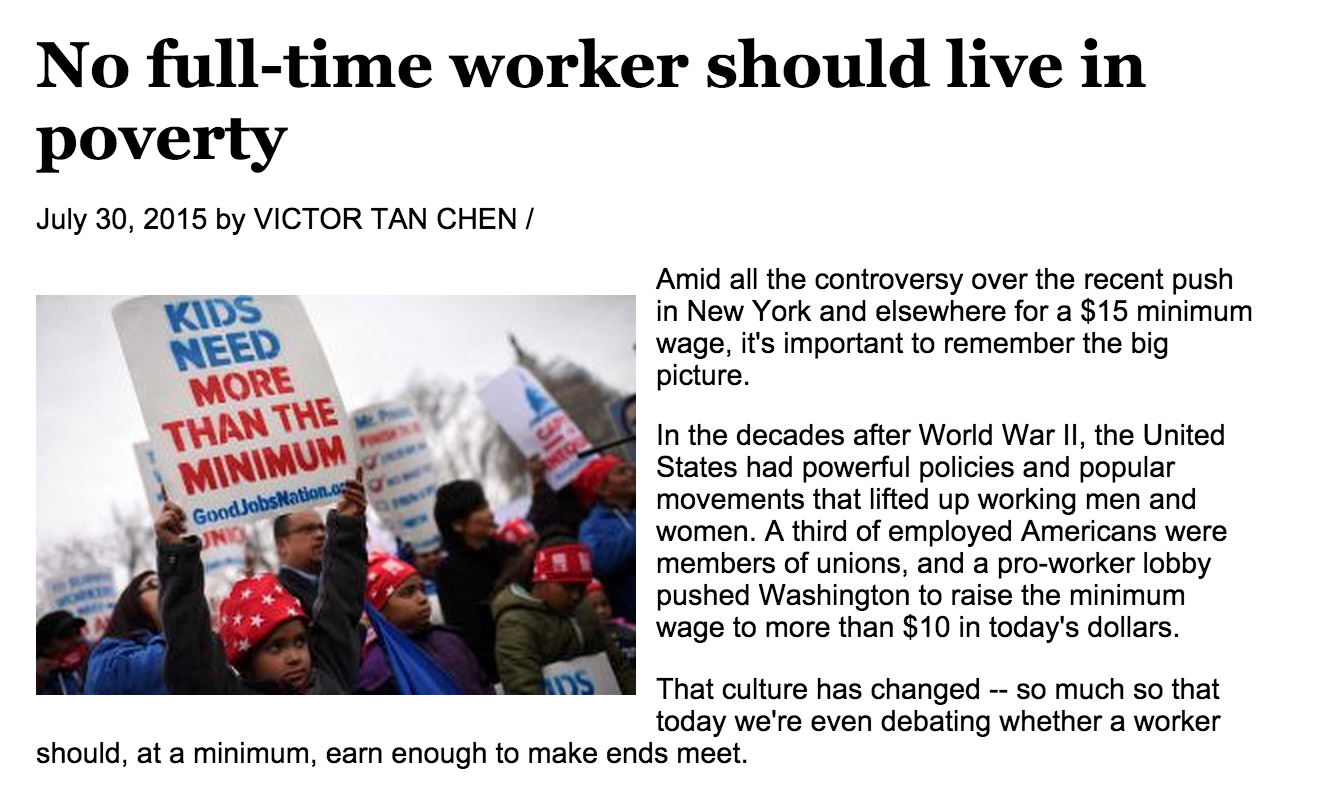
Op-Ed on the Fight for a $15 Minimum Wage

Newsday has published an essay of mine that puts the fight for a $15 minimum wage within the big-picture context of my new book, Cut Loose: Jobless and Hopeless in an Unfair Economy:

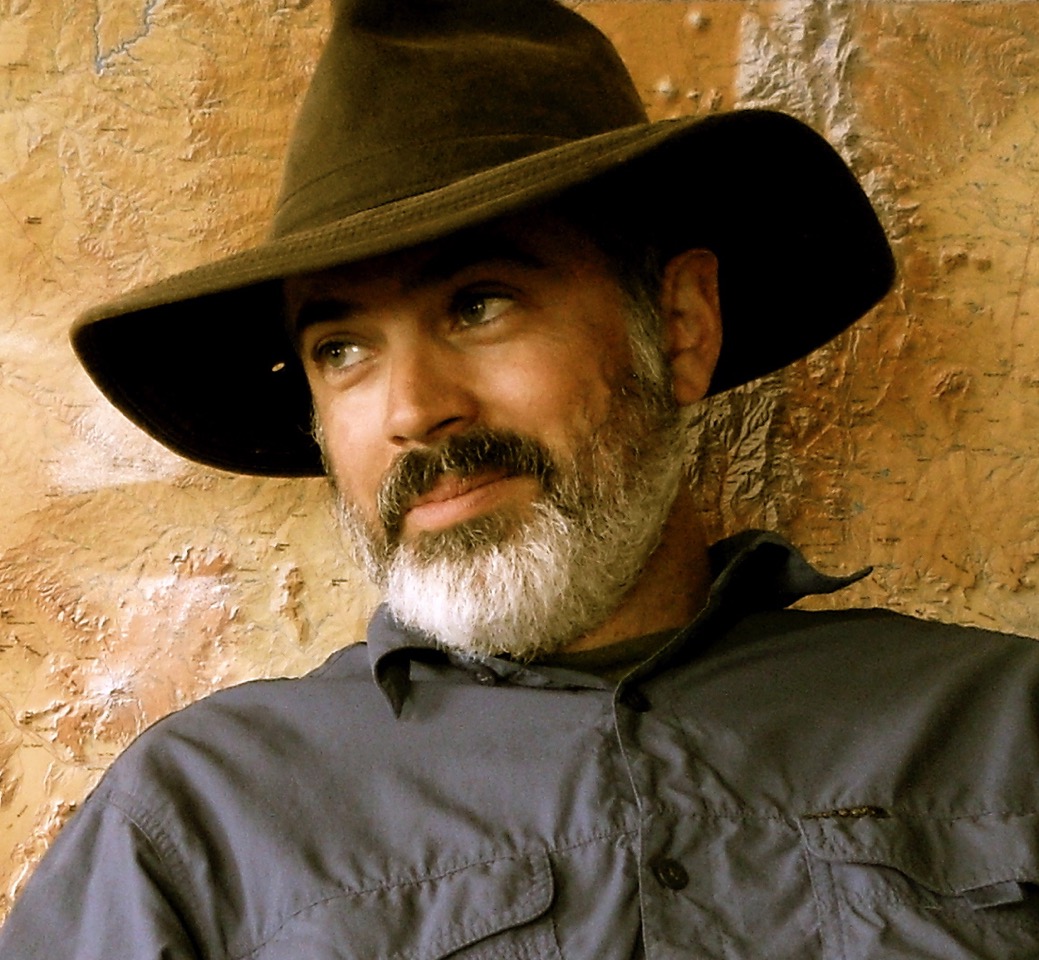
Headline of Newsday op-edAmid all the controversy over the recent push in New York and elsewhere for a $15 minimum wage, it’s important to remember the big picture.

In the decades after World War II, the United States had powerful policies and popular movements that lifted up working men and women. A third of employed Americans were members of unions, and a pro-worker lobby pushed Washington to raise the minimum wage to more than $10 in today’s dollars.

That culture has changed—so much so that today we’re even debating whether a worker should, at a minimum, earn enough to make ends meet.

Read more here. The paper’s sister publication amNew York has also published the piece.

I’ll also be doing a radio interview with Shep Cohen on The World of Work today at 4 p.m. ET. Listen live at WDVR (89.7 FM in Sergeantsville, NJ, and 96.9 FM in Trenton, NJ) or WPNJ 90.5 (Easton, PA).

This post was crosspublished on my site, victortanchen.com.

Victor Tan Chen is In The Fray's editor in chief and the author of Cut Loose: Jobless and Hopeless in an Unfair Economy. Site: victortanchen.com | Facebook | Twitter: @victortanchen


Lost and Found: A Conversation with Writer Philip Connors

Best of In The Fray 2015. In his first book, Philip Connors went to the woods to learn what it had to teach. In his latest work, he delves into the dark memories of his family’s past, rooting out the meaning of a tragedy.

Philip Connors wearing a fedora

Earlier this year, forest-fire lookout and nonfiction writer Philip Connors came out with his second book, All the Wrong Places: A Life Lost and Found. It’s a beautifully wrought memoir about his brother’s suicide, which happened when Connors was only twenty-three. In the Fray’s Susan Dunlap talked with Connors over email in the spring about the way his brother Dan’s death shaped the trajectory of his own life, the approach he took to writing about a taboo subject, and the comforts of solitude.

You started out as a journalist and avoided getting an MFA degree. Were you daunted when you first set out as a creative nonfiction writer?

I first started writing nonfiction because I tried and failed to write quality fiction. A good deal of my apprenticeship—aside from working for newspapers—involved writing terrible short stories that no one has ever read, nor ever will. I just couldn’t write a good one. I couldn’t seem to finish a story without getting bored with it. And I never had the desire to subject myself to the torture of the MFA workshop, which Louis Menand memorably described as “a combination of ritual scarring and twelve-on-one group therapy.” At some point, having failed for years to write any decent fiction, I thought, “Why not try to write a true story? The thing happened; I know how the story begins, I know how it ends.” And my first attempt was decent enough to be published in a little magazine, the Georgia Review, which was, of course, encouraging. I haven’t written a word of fiction since.

All the Wrong Places is a very personal book about a dark chapter in your family’s life. You say that you felt inspired to write about your brother Dan because your mother shared her diary with you. Was it hard for your family to see the entire story when it went to print?

Parts of it were very difficult for my parents to read, as they would have to be: I’m writing about their only other son, who chose to end his life with a bullet from an assault rifle. But they’ve been remarkably supportive of the book. My sister told me she loved it. That meant a lot. My mother told me she couldn’t put it down, even as she cried through the whole second half.

As you mentioned, it was her brave act of connection and sharing that originally unlocked the book for me. She’d been keeping a diary of her thoughts about Dan, and in one of our rare moments of conversation about him, she had the impulse to share what she’d written. I found it very moving that she would offer up something so intimate. By then I had come to understand how difficult it is to talk about suicide—so difficult that it’s among our last taboos. It was not something we talked about much in our family, even though it sat there like the elephant in the room. And after my mother shared what she’d written with me, I thought maybe I could also write something that chipped away at the taboo.

It feels like you are saying in the book that your brother’s suicide shaped your adult life, both in the mistakes you made but also in the fact that you became a nonfiction writer.

It happened when I was still in the process of crafting an adult self, so I think it’s only natural that it affected everything that came afterward in my life. And I do think it’s a major part of what made me the sort of writer I became. Because the subject of suicide is so taboo, I found that the only place I could talk about it was in my own private notebooks. For years and years I had a running conversation with myself about it; if I didn’t, I feared the fact of Dan’s death would eat me alive. In some perverse way, the fact of his death ordained my becoming a writer. In order to live, I had to write—and so I did.

The sense of lost connections, or a failure to connect, gives the book a sense of poignancy, without it ever becoming maudlin.

Yes, that was a trap I wanted to avoid. I didn’t feel a need to accentuate the tragic nature of suicide. The reader is going to get it. What I wanted to do was write a quest story—a quest for how to be in the world after something like that has happened in your family.

The suicide of a family member is like a bomb going off, and it leaves everyone left behind with a lot of shrapnel and a lot of questions. How could my brother have believed that a bullet in the brain was the answer to what troubled him? And what was the thing that troubled him? For years, I didn’t know. It took some searching to unearth a plausible story, and in the meantime the fact of his death was close to unbearable. I thought about it every day for years, and it made me what I suppose a doctor would call clinically depressed.

But finding a way to live with the unbearable can result in comedy, at least in retrospect. Making the unbearable bearable is a real-life run at improvisational burlesque, and often a massive exercise in self-deception. I made counterintuitive choices. My life became deeply weird, sometimes even farcical. I managed to work myself into the wrong situation—the wrong neighborhood, the wrong job—over and over again.

The details of that impulse allowed me to laugh at some of what I had made of my life in those years, and that was crucial in writing a readable book, one that didn’t take the reader by the scruff of the neck and rub her nose in endless misery. I like to think that parts of it are pretty funny, perhaps unexpectedly so.

Part of the book is also about clandestine phone sex, which adds a touch of ribald humor but also is closely tied to the theme of an inability to connect. Was it hard to write about something so personal?

Not really. Those parts of the book were among the first I wrote, and they came pretty easily, because the experience was so strange and vivid, and so rich in narrative potential. If you’re going to write a memoir, you’ve got to be willing to confess. Having grown up Catholic, I know a thing or two about confession.

I was especially riveted by the story of your friend who developed a phone relationship with a dying man. I think that could fall under the “you can’t make this stuff up” category of nonfiction. Yet with this book you managed to do what I think good fiction generally tries to do—capture an emotional truth through telling a story.

Life is almost always stranger than fiction. How to capture some of that strangeness in a true story—and how to impose a certain shapeliness and beauty on the chaos of lived experience—is a motivating challenge for me. In both of my first two books, I wanted to write nonfiction that had a depth of feeling and an emotional impact similar to the best fiction.

Was there another memoir writer you’ve met or read who inspired you to think about your own book the way you did?

[The semi-autobiographical novel] A River Runs Through It always spoke to me because it mingled the comic and the tragic so beautifully, and deftly managed big jumps in time. But as a memoirist I was dealing with the raw material of my own life, so the challenge was to sift through my experience to discover what about it had the shape of a story. I wanted the book to have a kind of relentless narrative drive. The goal was to create that unlikely thing: a page-turner about a suicide. Mostly that involved writing and rewriting, again and again, and stripping away anything extraneous so that all that was left was essential.

Your first book, Fire Season: Field Notes from a Wilderness Lookout, could be called a modern-day Thoreauvian account of a solitary life in the wilderness. Solitariness is also a theme in All the Wrong Places. Do you think solitude is a necessary condition for you as a writer?

I’m not sure solitude is a necessary condition, but it is without question helpful. Back when I lived and worked in New York, I wrote in the mornings before setting off on my commute. I think what I’ve written since then is better, deeper, and more thoughtful for the time I’ve been given as a Forest Service fire lookout, living and working in solitude, with plenty of mental elbow room for thinking or not thinking, being creative, allowing things to bubble up unexpectedly. Part of writing, for me, is sitting and doing nothing. In order to write for an hour, I often find I have to sit doing nothing for three. Then a phrase comes, and I’m off.

What’s next for you?

Check back in six months and perhaps I’ll have an answer. This book left me feeling that I’d scraped from the bottom of the well. Now I need to allow the well to fill again. I hope to be pleasantly surprised.

You’re about to head back into the Gila National Forest to work as a fire lookout for another season. Are you looking forward to a respite from the pressures involved in being a public person?

Absolutely. I’m far more comfortable sitting alone in a lookout tower than I am speaking in front of strangers in bookstores. I’m very much looking forward to sitting quietly, communing with the birds, studying cloud shapes. It’s what I do best.

This interview has been condensed and edited.

Susan Dunlap is the natural-resources reporter for the Montana Standard

Correction, August 10: Due to an editing error, an earlier version of this story mistakenly said All the Wrong Places is Connors’ third book; it is the second he has written, though he edited and contributed an essay to a third book. The story also said the suicide of Connors’ brother occurred when he working as a reporter; he was actually a college student at the time. We regret the errors.

personal stories. global issues.