Not all millennials are this damn good-looking—and not all of them are struggling in the ways that working-class millennials generally are. Photo via Flickr.

Adulting While Poor

Not all millennials are struggling to reach the traditional milestones of adulthood, but some are—and America’s growing inequality is the reason.

Why can’t millennials afford their own homes? Reading much of the popular press, one is led to believe it’s their unrealistic expectations, indulgent spending, and general allergy to adulthood that have trapped them in a renter’s purgatory. Nebraska senator Ben Sasse wrote a whole book, The Vanishing American Adult, in which he argued that young people today are stuck in a Peter Pan–like state of carefree childhood, spending their time playing video games, buying stuff, and snapping selfies—even posting ironic memes about “adulting”—rather than seeking meaning in career, family, and a stable home.

It is true that millennials have been slower to reach various milestones on the way to an all-American adulthood—including buying a home—than prior generations at the same point in their lives. For example, Americans ages eighteen to thirty-four are now more likely to be living with their parents than in any other housing arrangement, according to 2014 data from the Pew Research Center (which defines millennials as those born between 1981 and 1996). That has never been the case before, according to census data going back to 1880.

A more rigorous explanation for their failure to launch is that the Great Recession stunted millennials’ economic lives at a critical age. As a result, they’re still struggling to obtain gainful employment in a more demanding labor market, or find affordable housing in a contracted mortgage market. In other words, it’s not their lousy values—it’s their lousy economic prospects.

But this line of argument, too, misses something crucial. Its focus on middle-class, if downwardly mobile, millennials obscures just how diverse a generation millennials are. Not all of them are into Snapchat and kombucha juice, that’s for sure, but what’s less appreciated is that not even a majority of them are college-educated. Barely four out of ten Americans between ages twenty-five and thirty-four—members of what will be the most academically credentialed generation ever—have a bachelor’s degree. Thanks in part to the country’s widening income gap, the picture of “how millennials are doing” is dramatically different depending on which segment of the population you happen to be looking at. And to an overlooked degree, what determines whether, when, and how members of this generation attain the traditional markers of adulthood—a house and career, marriage and kids—is one factor: class.

Continue reading Adulting While Poor

Victor Tan Chen is In The Fray's editor in chief and the author of Cut Loose: Jobless and Hopeless in an Unfair Economy. Site: victortanchen.com | Facebook | Twitter: @victortanchen


Back to the Wall

Along the US–Mexican border in Arizona, the drug trade persists, but the jobs have long gone. Would building a border wall change anything?

It’s noon during an Arizona July, the temperature upward of 115 degrees, and I’m in the middle of my shift at a neighborhood bar off I-10 in Marana, just north of Tucson. The screen door bangs, startling me. I look up from behind the counter, where I’m putting beers on ice, and see a man wearing cowboy boots, dirt-stained jeans, and a striped blue-and-white dress shirt. “Sorry!” he blurts out in Spanish—he hadn’t known the door would slam so violently behind him. Sweat is pouring down his face, running into his eyes.

Right away I know that he has been crossing the desert. I hand him napkins to wipe away the sweat and motion for him to head over to the bar. He settles onto a stool where he can easily catch the breeze from the fans and swamp cooler. Continue reading Back to the Wall

Anna Chan is a writer based in Florida.

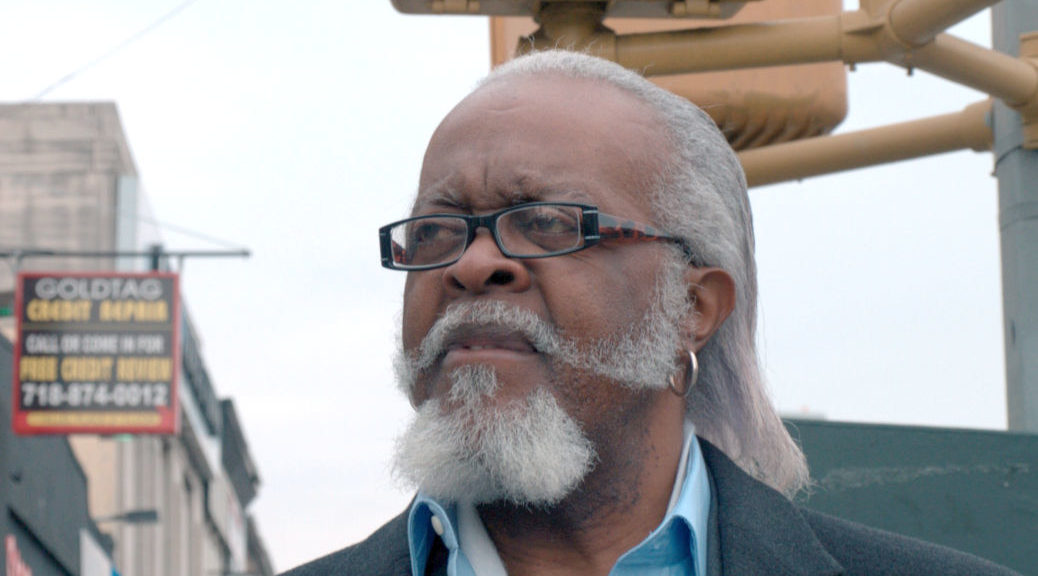
Jimmy McMillan, too, wants to put a stop to rent-seeking. David Shankbone, via Flickr

Rent Control: A Review of Brink Lindsey and Steven Teles’s Captured Economy

Maybe we shouldn’t put too much faith in the hope that the rich will want to rein in their bad behavior.

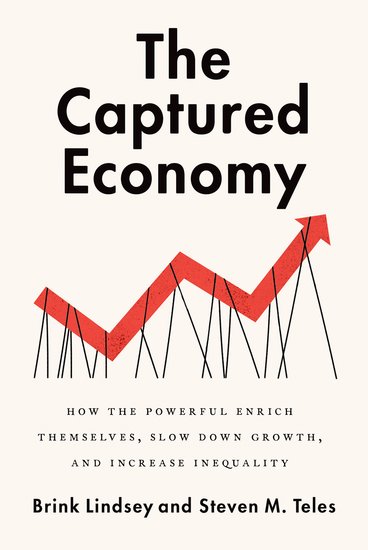
The rents are too damn high. That’s the conclusion of Brink Lindsey (of the center-right Niskanen Center) and Steven M. Teles (of Johns Hopkins University and Niskanen) in their book The Captured Economy: How the Powerful Enrich Themselves, Slow Down Growth, and Increase Inequality. By “rents,” Lindsey and Teles don’t mean what you’re late in paying your landlord, but rather “rent” as economists understand it: profits in excess of what a free market would normally allow. In recent years, they argue, large corporations and wealthy individuals have taken larger and larger slices of the economic pie not by creating things of value—inventing the next iPhone-like innovation, say—but by using government policies to quash competition. This involves not just “regulatory capture” (a social-science term for when the industry fox watches the consumer henhouse) but a broader takeover, with all levels of the government—both those who write the rules, and those who enforce them—bending the knee to particular business interests or organized elites.

Continue reading Rent Control: A Review of Brink Lindsey and Steven Teles’s Captured Economy

Victor Tan Chen is In The Fray's editor in chief and the author of Cut Loose: Jobless and Hopeless in an Unfair Economy. Site: victortanchen.com | Facebook | Twitter: @victortanchen

Palmyra's Great Colonnade, photographed in 2007. Alper Çuğun, via Flickr

Waiting for Syria

Sand continued to drift in through the open doors. The overhead fan swirled the grit into our clothes, hair, eyes, teeth. The women wore their hijabs tight across their faces, their eyes cast down, stealing glances at James and me. It was hard to tell what they thought of us, the only white people at the crossing. Certainly they were suspicious—mostly of me, I sensed, even though my head was also covered.

Continue reading Waiting for Syria

Dian Parker is a freelance writer who has published in a number of magazines and literary journals. She is currently working on a collection of narrative nonfiction. Email: dianparker9@gmail.com

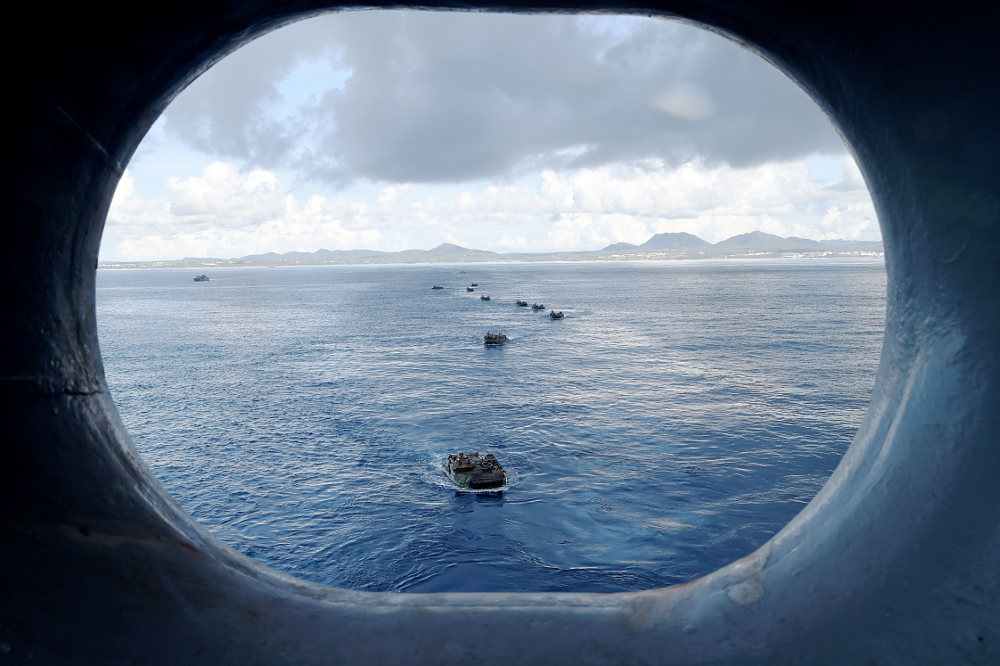
US Marine Corps amphibious assault vehicles approach the USS Peleliu in Oura Bay, Okinawa. Joshua Hammond (US Navy), via Flickr

All Your Bases Belong to Us: A Conversation with Japanese Activist Hiroshi Inaba

US military bases occupy a fifth of the Japanese island of Okinawa. The latest round of base construction, says activist Hiroshi Inaba, threatens not only the environment but also the idea that the Okinawan people have a real say over what a foreign military does on their land.

More than six decades after America’s post-World War II occupation of Japan officially ended, more than 50,000 US troops remain there. Over half of them are stationed on the southern Japanese island of Okinawa, an island with a population of 1.3 million, which the United States values as a strategic base close to China and North Korea.

Continue reading All Your Bases Belong to Us: A Conversation with Japanese Activist Hiroshi Inaba


Collateral Damage: A Review of Helen Benedict’s Wolf Season

Helen Benedict’s novel Wolf Season describes how old wounds from the Iraq War linger on in the lives of three women.

In her latest novel Wolf Season, Helen Benedict tells the stories of three women in a small town in upstate New York coping with the trauma of war—not just the direct experience of violence and death, but also the collateral damage it inflicts on loved ones. Rin is a rape-scarred Iraq War veteran who has returned to her hometown of Huntsville. Naema is an Iraqi refugee who lost her husband during the conflict and now works in the town as a doctor. Beth is a military wife dealing with an abusive husband and a troubled child.

Continue reading Collateral Damage: A Review of Helen Benedict’s Wolf Season

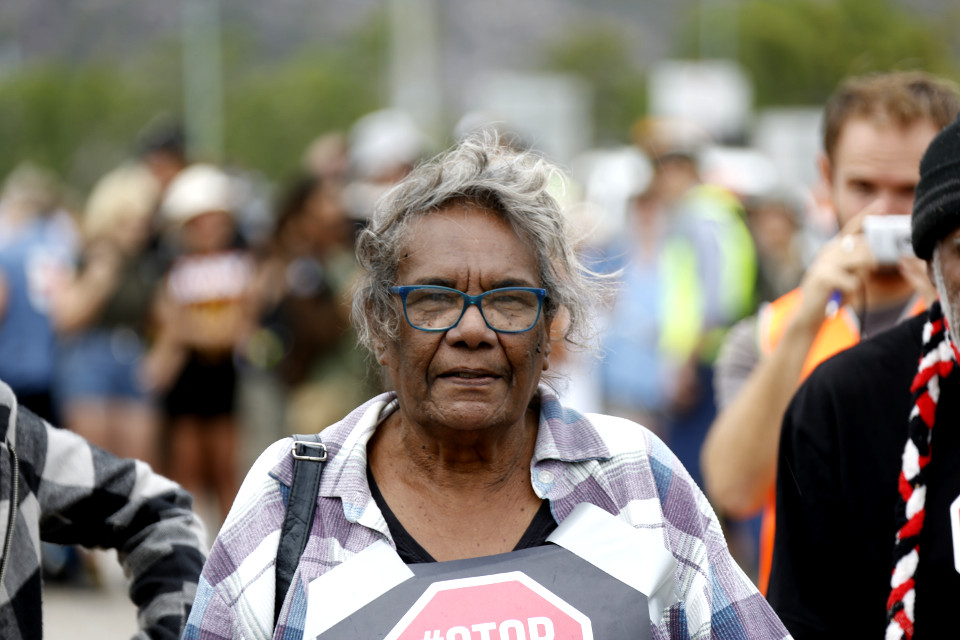
Carol Prior, a key activist in a grassroots movement to stop the Carmichael mining project in Australia. Photo by Alex Bainbridge, Green Left Weekly.

Canary in the Coal Mine: A Conversation with First Nations Activist Carol Prior

The Indian corporation Adani is establishing one of the world’s largest coal mining operations in Australia, affecting Aboriginal lands as well as the Great Barrier Reef. The toll on the land and sea, says Juru elder and environmentalist Carol Prior, will be felt around the world—in the loss of a rare and beautiful ecosystem, and a rare and beautiful culture.

In Australia, a new mining megaproject threatens to devastate the Great Barrier Reef and the land of First Nations peoples. The planned Carmichael mine, set to be one of the world’s largest, will be located in the northeastern state of Queensland, within the vast Galilee Basin. It will be owned and operated by the Indian conglomerate Adani, which plans to export most of the coal to India by sea, via a soon-to-be-expanded port that sits on the Great Barrier Reef.

Continue reading Canary in the Coal Mine: A Conversation with First Nations Activist Carol Prior

The city of Oaxaca's zócalo, or central plaza. M. Thierry, via Flickr

Ghost Lives

Mira! Erika wagged a slim forefinger toward vendors, gawkers, and ice cream-smeared toddlers moving through the city of Oaxaca’s central plaza as she turned to face me. “You think you’re seeing people but they’re not people, they’re ghosts!”

Erika had taught high school for nearly thirty years and was a member of the state teachers’ union. She had recently participated in a strike for better salaries and working conditions—a strike that the government had crushed just months earlier. “Ghosts,” she repeated with a sigh. “Oaxaca exists in the past. Maybe all of Mexico does.”

Continue reading Ghost Lives


The Dual Economy

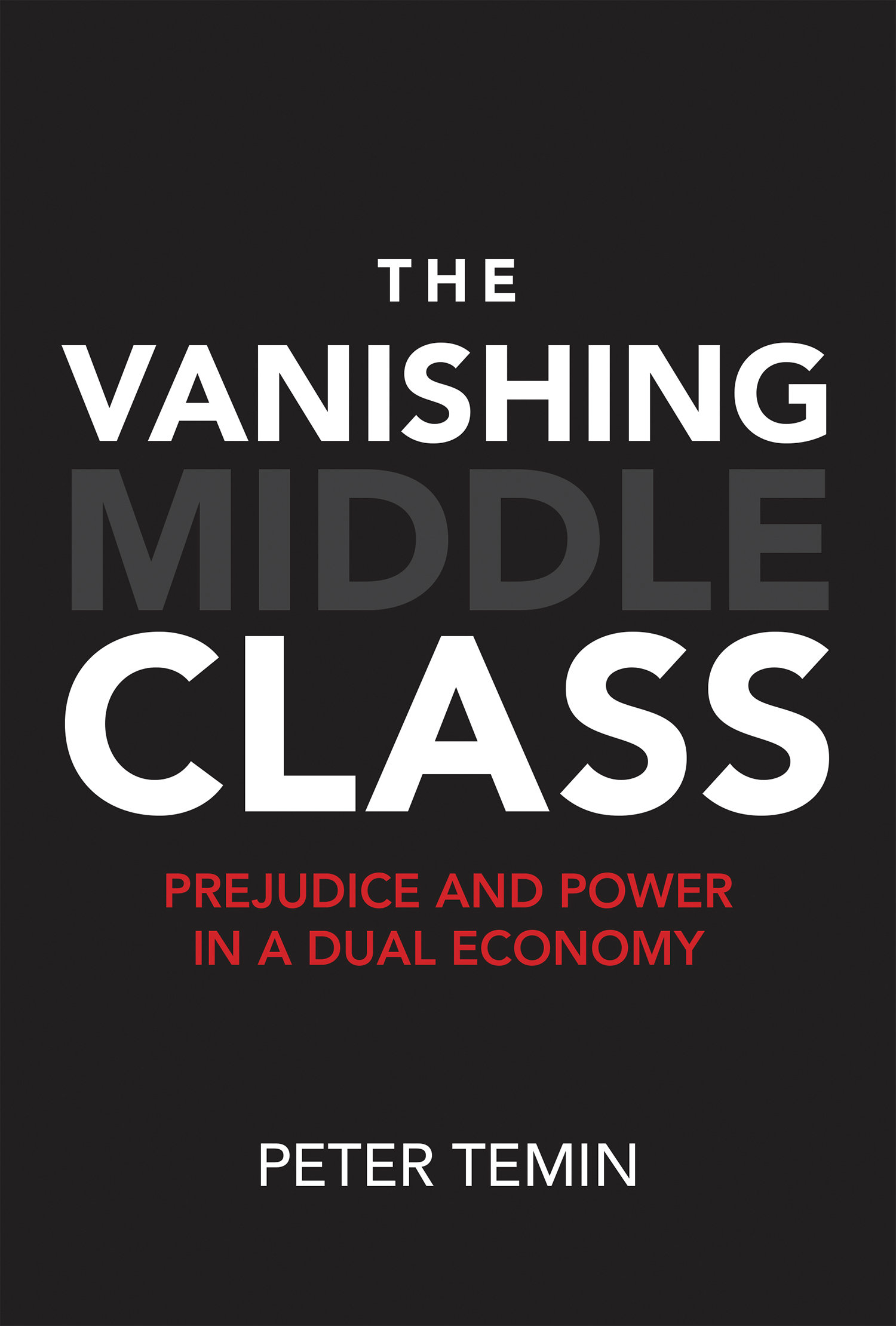
In his new book The Vanishing Middle Class, MIT economist Peter Temin provides a short and accessible take on this country’s deeply unequal economy, which he argues now represents two different Americas. The first is comprised of the country’s elite workers: well-educated bankers, techies, and other highly skilled workers and managers, members of what he calls the “finance, technology, and electronics sector” (FTE)—the leading edges of the modern economy. A fifth of America’s population, these individuals command six-figure incomes and dominate the nation’s political system, and over the past half-century, they have taken a greater and greater share of the gains of economic growth. The other America, what he calls the “low-wage sector,” is the rest of the population—the dwindling ranks of clerks, assemblers, and other middle-income workers, and an expanding class of laborers, servers, and other lowly paid workers.

Continue reading The Dual Economy

Victor Tan Chen is In The Fray's editor in chief and the author of Cut Loose: Jobless and Hopeless in an Unfair Economy. Site: victortanchen.com | Facebook | Twitter: @victortanchen


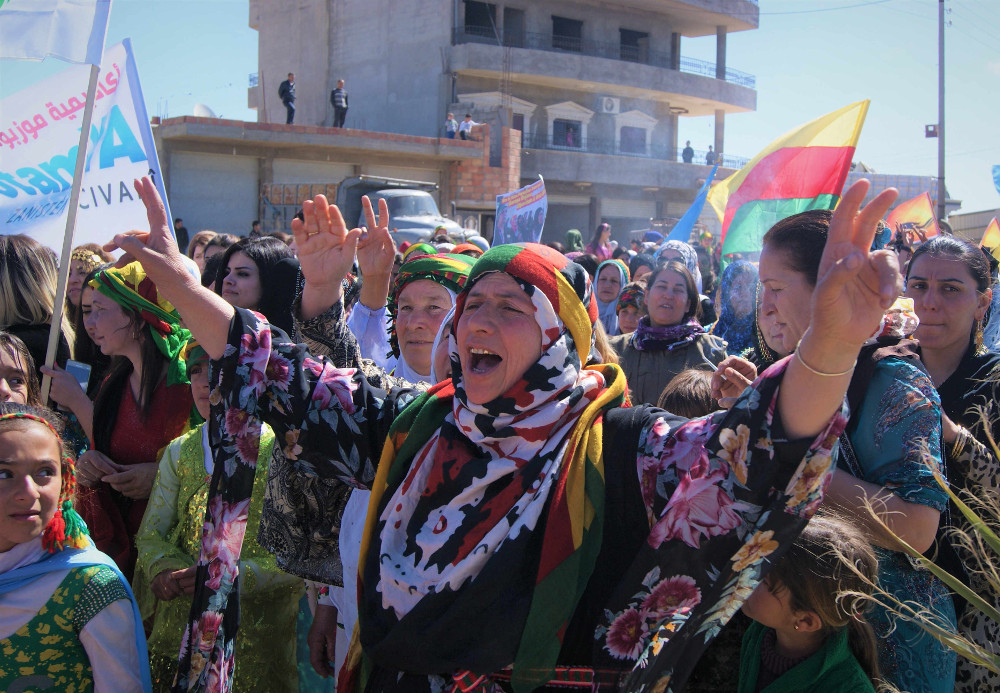
Women’s March

Amid war and ruin in Syria, a Kurdish-led movement has established a society ruled by radical democracy—of, for, and by women.

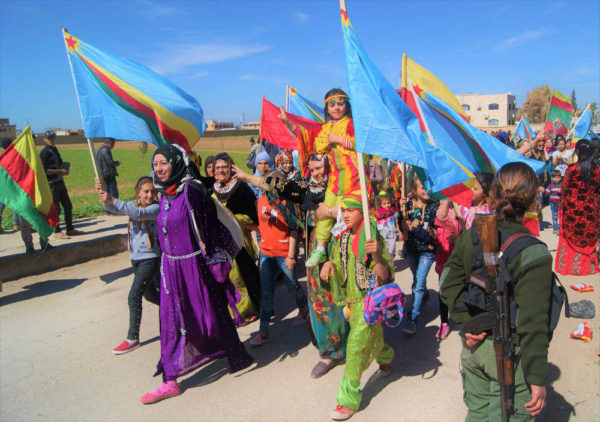
Women and girls marching with flags
Women and girls march through the village of Derbesi to celebrate International Women’s Day 2016.

A few years ago, I began hearing remarkable stories about a social movement in northern Syria. Not far from the wreckage of Aleppo, a society founded on principles of direct democracy and women’s rights has taken root in the predominantly Kurdish region known as Rojava. There, in defiance of the Islamic State’s brutal patriarchy, women are leading the way in political decision-making and fighting on the frontlines in their own battalions.

Continue reading Women’s March

Jo Magpie is a freelance journalist, travel writer, and long-term wanderer currently based in Granada, Spain. Blog: agirlandherthumb.wordpress.com

Photo by Amy, via Flickr

Human Subjects

In 2013 I moved to Ndola, a city in northern Zambia, to work on an HIV research project. Ndola is the hub of the country’s copper mining industry, a bustling commercial center that draws entrepreneurs from South Africa and beyond. My organization worked with government clinics in villages around the Ndola area to provide HIV and family-planning counseling, care, and education. I’d recently graduated from a master’s program in public health, and a US-based research organization had hired me to co-lead a year-long study of HIV infection among women.

Continue reading Human Subjects

Photo by Patrick Emerson, via Flickr

Failing Grades

I was torn about failing a fifth-grader. In a poor, predominantly black school, there were plenty of tests but few right answers.

“Man, I don’t know any of this stuff!”

It was Lamar, one of my fifth-grade students. He and his classmates were taking a reading assessment. Within minutes, Lamar had given up.

“Mister Schuma, I ain’t doing this!”

“Lamar, you need to be quiet while your classmates are testing,” I said. “I’m sure you’ll do fine if you give it a shot. No more talking.”

Continue reading Failing Grades

personal stories. global issues.