The crucifix of the matter

Why Madonna's latest religious performance means nothing.

When it comes to raising religious ire, the Pope has nothing on Madonna. Madonna has made a career out of mussing the collars of the clergy and horrifying the holy. Given her long career, seeing Madonna on a cross might seem almost hackneyed at this point. Her use of a Christian symbol is like George Foreman naming one of his children George – it comes with the hubris. However, her latest stunt consists of donning a crown of thorns, lowering herself onto a sparkly cross, and singing “Live to Tell” as pictures of impoverished children appear on a screen behind her. The performance has prompted Christians to denounce her as a “blasphemer.” Madonna claims the imagery is intended to encourage concertgoers to donate to AIDS charities.

NBC has decided to air the concert on November 22, 2006 — without the crucifixion scene.

As humans, we are driven to find meaning and significance; literary critic Roland Barthes deems us Homo significans, or meaning-makers. In the death of Steve Irwin, the famed “Crocodile Hunter,” we see the revenge of the animal kingdom. In Madonna’s performance on a cross of Swarovski crystals, we see a sinner or a saint. In truth, she is neither. By putting herself on a cross (a move that has been so overdone that future generations are in danger of thinking that Jesus is Kanye West), Madonna is no more impious than she is a benefactor of the needy.

To be a blasphemer one must, through word or actions, deny the divinity of God or exhibit gross irreverence toward an object worthy of esteem. Madonna’s antics, though they may seem to invoke the holy, are anything but blasphemous. Her use of the cross is not intended to replace God or to deny his divinity, but rather to express unjust pain and suffering through a universal symbol. This interpretation is reinforced by the synchronous use of footage showing unjust suffering in developing nations. Instead of being flattered by the use of such imagery, which acknowledges the importance and predominance of Christian symbols in our culture, the Christian community responds with anger, under the reasoning that the use of a Christian symbol by someone who does not profess to be a Christian is an insult. But, if that logic holds, Confucianism could have a great case against Winnie the Pooh (that unrepentant blasphemer) for his work, The Tao of Pooh. The use of a common symbol comes nowhere close to blasphemy, even in the loosest sense of the word.

Madonna’s excuse for the symbolism is weak at best. While the song is reportedly about abuse, the song’s meaning is lost in the shadow of the Madonna media machine. At the end of the day, it’s not about the children on the cross. The show is Madonna herself, in a mixed message of self-promotion. The media spin is further reinforced by Madonna coming down with a wicked case of the Angelinas in adopting a child from an impoverished nation.

In Sartor Resartus, Scottish essayist Thomas Carlyle tells us that symbols are evocative of the infinite, and that “by symbols, accordingly, is man guided and commanded, made happy, made wretched.” While Madonna’s crucifixion certainly makes Christians wretched and Madonna happily rich, it does not guide, command, or even evoke the infinite. It is simply another tale told by a marketing machine, full of sound and fury, signifying nothing.


When winning a Fulbright means having to hide your face

Iraqi scholars find studying in America brings infamy.

Hussain and his Fulbright fellows from all around the world visit a high school in Phoenix, Arizona, in February.

Hussain, like many of his compatriots, uses only his first name because he fears violence directed at himself or his family. For the same reason, he decided to stay at his university campus in Arkansas last January when the State Department invited him to meet President George W. Bush in Washington D.C. to mark Iraq’s first democratic election. “I don’t want to submit myself to death,” he says. “I am very recognizable in photos.” Hussain has heard enough about terrorists simply opening fire at people whom they identify as having gone to the United States or the United Kingdom.

Compared with the first group of Iraqis who were granted Fulbright scholarships in 2004 to study in the U.S. after 14 years of interruption — all met President Bush and Colin Powell at a White House reception their first year — only a handful of people in the second group showed up to the latest meeting with the president last January. Hussain said most of them come from southern and northern Iraq, where it is safer.  

The State Department blamed limited attendance on short notice and said that not all current Iraqi Fulbright recipients — 34 of them — were invited to the informal event.  However, according to some of the Iraqi intellectuals, many stayed home either in fear for their lives or to avoid the tormenting questions about the conflict taking place in their motherland.

The Fulbright scholarship is a cornerstone of U.S. public diplomacy, credited with forming a network of leaders around the world that are knowledgeable about, and sympathetic to, the U.S. government. But for many current Iraqi students — men and women ranging in age from their mid-20s to their late-40s — studying subjects such as public health, journalism, international affairs, and English at top American universities, the award is also a bit of a curse. Years of embargo make studying in an American university a lifetime opportunity for ambitious young Iraqis looking to obtain the education they need to help rebuild their country (Fulbright requires grantees to leave the U.S. after studying). But an association with the U.S. could also mean death for them and members of their family.

Although all of them seem uniformly happy that Saddam Hussein is no longer in power, they are painfully watching the news from home for signs of civil war. And many blame unfair, insensitive, and poorly designed American policies for the clashes among Sunnis and Shiites and the way post-dictatorship democracy in Iraq seems to be going awry.

Worry and wait

It was hard for Dr. Ali Fadhil, a 29-year-old medical doctor turned filmmaker who is studying journalism at New York University, to shake his mind of the image of American soldiers after he arrived in New York City in January. His three-year-old daughter runs to grab him in fear whenever a garbage truck stops outside their apartment in Brooklyn. The sound from the truck is similar to that of the explosives that U.S. troops used to shatter the door to his Baghdad house in January. Soldiers mistakenly suspected the award-winning filmmaker was involved in the abduction of the American journalist Jill Carroll. “I know that people on the streets here are different from the U.S. army in Baghdad,” he says. But it seems he has to keep reminding himself of that fact.

Tucked away in America’s most elite campuses, Iraqi scholars remain safe for now. But with grim thoughts and the shadow of omnipresent danger looming larger in their lives, the biggest group of Iraqi Fulbright students still call each other to share feelings of warmth and worry. They place phone calls from New York to Philadelphia, Kansas to Ohio, anytime they hear about a bombing at home to make sure their families are safe. Last year, a brother of a Fulbrighter was killed by insurgents.

Mohamed, a Fulbright scholar from Baghdad who is studying in Kansas, is worried because his elder brother wants to continue working as a policeman, even though he was shot and seriously wounded by insurgents last November. “He wants to show them that he is not afraid. But I don’t want him to do that. The situation is too dangerous now.”

With three of his children in Baghdad, another student, Hussain, feels sad when he imagines them seeing corpses on the sidewalks on their way to school. He observes that many Iraqi women now wear a veil because of threats made by fanatical groups, a precaution that they never had to take during Saddam’s regime. Friends at home tell him that the number of flies and sandstorms have increased rapidly in Baghdad due to the deteriorating environment.

However, Hussain doesn’t have any hatred toward the U.S. “I feel sad, the same way when I hear either Iraqi people or American[s] die,” says the 46-year-old with a salt-and-pepper beard. His sunburnt face has a look of calmness and wisdom. “I hate violence. I hate war. I love all people to live, not to die. I understand the American army as a tool to manipulate the policies designed by politicians here in the White House.”

Questions for the president

Hussain doesn’t hate Bush. “Bush is good [for his country]. He attracts terrorists from all over the world to Iraq in order to make them forget about attacking America. Iraq becomes a battlefield for terrorists.” The master’s degree candidate in comparative literature at the University of Arkansas says Iraq is a laboratory for the Americans to study terrorism. He expects the war to end in six to eight years. “The U.S. opens Iraq’s borders intentionally. All extremists in the world can go to Iraq to join terrorist cells without any papers.” He said the American army is well shielded, so few of them have been killed. But the Iraqi people are not shielded and Iraq is bleeding. “About 15 Iraqis die every day. Why should war exist in Iraq?”

Dr. Fadhil says he would love to meet the president. “I would thank Mr. Bush for removing Saddam; at the end this is the only major achievement that all Iraqis agree on,” said the filmmaker, who became a journalist by chance when a Guardian reporter asked him to work as a translator in 2003. “But it is not worth it for hundred[s of] thousands of Iraqis to die. We got nothing after Saddam — no jobs, no security, and no better life.”

Fadhil was chosen the U.K. Foreign Press Association’s Young Journalist of the Year in 2005 for his coverage of the Fallujah aftermath on Channel 4 news, which the association said “was the first independent witness account of the battle and questioned the U.S. military’s claim that the city was getting back to normal by confirming that no aid agencies were operating inside the city. His footage shows images of bodies rotting in the streets, open sewers, and refugees living in tents.” He would like to ask President Bush ten questions from “ordinary Iraqis who had their homes destroyed by the U.S. troops, and people who lost their beloved ones for the sake of the so-called democracy that is not there in Iraq now.” He would like to ask what President Bush thinks about the fact that human lives in the “shredded” Iraq are so cheap, except those of Americans and top officials.

Another Fulbrighter from Baghdad, who declines to be named, says, “I hate when the Americans say that they are shifting the anti-terrorism battlefield to Iraq. It really pisses me off. This is the city where I live. Why is there terrorism in my city? They didn’t think about me or about my people when they declared that. Who gave them this authority?” He laments, “Don’t they think of [the] 25 millions people living there, who are killed and being killed everyday? Nobody cares for Iraqi civilians.”  

Open borders

Hussain and Mohamed believe that fanatic Islamism has come through the borders, brought in by foreign fighters. They say that border security is miserable and that people can easily transport money and weapons to support terrorists into or out of Iraq.

Hussain said that Iraqis would not plan suicide bombings or kill their neighbors, and cites the fact that terrorism was brought to Iraq after the war, not under Saddam Hussein. More proof is that three months after the war, Iraq was stable, apart from theft, robbery, and kidnapping “which have nothing to do with terrorism,” before the terrorists infiltrated Iraq.  

He said that some Iraqi people — most of them former Baath and intelligence members who lost the benefits they had under Saddam — are helping the foreign fighters. Hussain blames it on the American decision to dissolve the former Iraqi army. “This is one of the biggest mistakes made by the U.S. in Iraq,” he says, “These people are well-trained to protect Iraq and guard the borders. They lost their job[s] but need to feed their families. Foreign terrorists are clever enough to pay them good salaries and make use of them.”

Sectarian division strategy

Most Fulbrighters interviewed tend to think that the Americans trust people according to how much they endured under Saddam’s regime and that this creates further divisions between ethnic groups and sectarians.

“When the Americans first came to Iraq in 2003, most translators, subcontractors, or anyone closest to the Americans was Kurdish. They took the people who Saddam tortured most as their best allies. They did not trust all people. They did not know enough about Iraq,” said an Iraqi Fulbrighter from Baghdad who declined to be named.

“The U.S. is creating enemies day by day, not friends,” says Hussain. He and Ali believe that the malicious divisions in Iraq now are the result of the Americans’ sectarian division strategy. Ali describes the sight of many Sunnis waiting along the international highway to welcome American troops. But according to him, their attitude toward the U.S. cooled down after the Americans gave their support to the Shiites who held government power. “The Sunnis were close to the U.S., but now they are enemies because the U.S. supports the Shiites and the Kurds at the expense of the Sunnis. They consider Sunnis as supporters of Saddam,” says Hussain, “The Americans don’t know our country enough. They treated the sects of Iraq unfairly and wrongly.”

Dr. Fadhil suggests another reason for the chaotic situation in Iraq: 30 years of powerlessness and isolation from the outside world. “Iraqi people live[d] inside Saddam’s prison for many years and the Americans freed them, like opening a cage for the criminals,” said Fadhil. “Everyone wants to be on top of each other. Everyone is Saddam now.”

There is no consensus among Iraqi Fulbrighters on the subject of American troop withdrawal. Mohamed believes that American troops should stay. “If the U.S. troops pull out, the country will be controlled by fanatics and extremists. There is already a small-scale ‘civil war’ carried on by some armed groups against civilians from both sects,” he said.  

But Dr. Fadhil thinks things will only improve after U.S. troops are gone. He sees the deadly drift of Iraq into a civil war as having already begun. “But yet it will cure Iraq afterward,” says Fadhil. With a Sunni father and a Shiite mother, Fadhil doesn’t believe that people from the two sects can continue to hate each other because they have been living with each other for thousands of years. “The civil war will upscale when the troops pull out. But the American cannot solve this malicious legacy. The only way to solve it is to let the Iraqi find [his] own way to get out of the manipulation.”  

Understanding Iraq’s “own way” — its culture and history — is a problem for the American troops in Iraq, some of the Fulbrighters contend. Hussain says that Iraqis find it offensive when U.S. soldiers say “hey” to them, a greeting that in Iraq is used only to call animals. “More seriously is the way the U.S. army seems to have little regard for the life of Iraqi civilians. They kill civilians on the street,” he asserts, as a result of overreaction and fear of insurgency. “[America’s] tanks sometimes tread on civilian cars in traffic jams and the like,” says Hussain.

“Do you think Iraq is a primitive country?”

The sadness and tension in Hussain’s face temporarily disappears as he sips a glass of California red wine at a reception in Phoenix, organized by the U.S. State Department to introduce Iraqi scholars to America last February. The sky is clear, lighted by a full moon. The desert air is warm and comfortable, although the area hasn’t had a drop of rain for four months.

“What do you think of America?” asks his host, an American woman who is a member of Phoenix’s City Council. “I should not say anything because my judgments may be wrong now. I cannot judge other culture from my own cultural background. I should live more with American people before I can say anything,” Hussain replies. His face has a look of experience. “Do you think Iraq is a primitive country?” he asks. “No, no,” the woman responds in a hesitant, almost nervous, voice.

Hussain’s wide eyes present an expression of pain. “We are a civilized country. We have 500 registered scientists. One of them is working for NASA. We can build two-storey bridges, construct refineries and chemical plants, and the like.”

Hussain is angry about how the Western media portrays Iraq. “They do that to show the world that Iraq desperately needs the American help. But Iraq is full of energy. It can restructure the country on its own in a secure atmosphere.”

The feeling that American people are ignorant about Iraq motivates him to study translation. “Translation is a problem between cultures. I would like to learn how to convey meaning in all senses, helping [to] remove all cultural problems that stand between countries. I am happy to understand people from the other side and make my people understand them, too.”  

After going home in 2007, he plans to work as an interpreter to help reduce misunderstandings between the Iraqis and Americans.  

Hussain becomes sad when he thinks about his five-year-old son, Baqir. Every day, the boy with big brown eyes waits behind the wooden door to receive a banana from his father as usual. He waits for hours and hours until the sunlight dies over the window, the streets, and the Baghdad International Airport nearby. His mother is cooking in the kitchen. But Baqir wants to wait and eat with Hussain. Whenever his father calls, Baqir asks why he hasn’t come home for a long time even though he still talks to him on the phone like he is in his office. Hussain has not told his son where he is.

“If he knew, he would tell everybody that I am in America,” Hussain says with a sad voice, horrified to remember how his children were often asked in kindergarten if their parents ever said anything bad about Saddam Hussein. “The terrorists consider anyone who goes to America a traitor or a secret agent. They cannot wait for me to come home. They will kidnap my child and kill him.”  

Although he misses his family very much, Hussain has a single entry visa, and cannot leave the U.S. until he finishes the two-year program. He was stunned when he found out that all Fulbrighters could bring family with them to the U.S. except Iraqis. Like most Iraqi Fulbrighters, Hussain prays at home and avoids Muslim mosques in America or events where he may be recognized by other Iraqis.

Although the Fulbright is often considered one of the most competitive and prestigious scholarships in many countries, only the Iraqi Minister where Hussain worked knows Hussain received it. He told his neighbors and colleagues that he would be studying in Canada “because Canada doesn’t send army to Iraq.” His friend, Mohamed, has told people he studies in Germany.  

Now, as the situation at home deteriorates, Hussain tells family members to build a big steel gate to protect the house. He intends to cut short his studies to return to Iraq early, even though it may be dangerous if his status as a Fulbrighter is revealed.

The first five Iraqi Fulbrighters went home recently. “There is lots of reluctance to leave,” Hussain says, “Half of the Iraqi Fulbrighters may face death when they go home. Nobody likes to die. But we have to go back to change our country.”

For Dr. Fadhil, who plans to return to Iraq to continue filming after finishing his studies, death is not beyond his everyday expectation. He says he can imagine dying in the street in Iraq, because “holding a camera there is like holding a gun.”

At a Fulbright event in February in New York, two Iraqi scholars seemed happy to meet each other. But after a passionate conversation, one woman in traditional black dress, who is studying at Columbia University, left without giving her contact information to the other Iraqi woman from Baghdad. The fear is so deep that some Iraqis have kept strict anonymity, even among fellow scholars.

Hussain, for his part, cannot stop thinking about terrorism. “Terrorism could not be fought by arms, but by mind. We should convince the mind of people about love, peace, respect for all sects, religions through culture and education,” he said, “Iraqi people should be treated with love, not hostility.”


Searching for spice

One American’s adventures in pursuit of the famed spices of Sichuan Province, China.

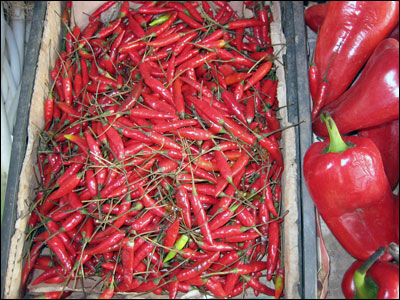
Markets are a still a big part of life in rural China and are usually the main place that people buy their groceries. The Zoiige market sells quite a few varieties of colorful peppers.

It didn’t start as a slow burn, or a tingle, or even a twinge. I had expected the hotness to build up gradually, the supposed intricate balance of heat and flavor to melt in my mouth. I had expected to douse the fire with cold beer and kick back feeling satisfied by finally eating an authentic spicy meal. Instead, the food instantly numbed my mouth, I could barely eat it, and I had immediate heartburn.

I was sitting in a huoguo, or hotpot restaurant, in Chengdu, the capital of China’s Sichuan Province. I came to Sichuan searching for spice, and knew that this was the place for it. My guidebook gave me high hopes, proclaiming Sichuan to be an authentic source for spicy food. The book even included a Chinese saying, “Shi zai Zhongguo, wei zai Sichuan,” which translates into: “China is the place for food, but Sichuan is the place for flavor.” Sichuan cuisine — or Szechuan, as it is more commonly known — is renowned for its hotness, which is something that I have always sought but was unable to find in American Chinese restaurants. Back home in the United States, I always needed to order the food “extra spicy.” I craved spice, so I came to the source.

Sichuan Province is located in the southwest of China and is about the size of France. Its unique positioning has the natural beauty of the high mountains of Tibet on one side with the Yangtze River creating the border with other neighboring provinces. The authentic Sichuan pepper originates in the Himalayan region and is sometimes called “mountain berry” in Chinese. It is a hearty small peppercorn that has medicinal anesthetic qualities.

This is contrary to the belief that the red chili peppers inside Szechuan dishes in the U.S. are real Sichuan peppers. Sichuan cooking incorporates both the Sichuan peppercorns and red chili peppers to create fiery and mouth-numbing dishes. Because Sichuan is home to 53 ethnic minorities, including Tibetans and Hui (Muslims), there is a wide range of cuisine. But spice, I find, is the universal language here. I start my journey through Sichuan in the Tibetan town of Langmusi and wind my way down to Chengdu, sampling the variations of spice along the way.

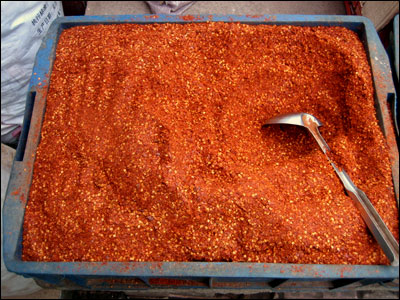
Fresh peppers are often used in Sichuan cooking but sometimes dried or powdered spices are just as good. Many varieties of dried pepper are sold at the Zoiige market.

A spicy sort of satisfying

Langmusi straddles the border of Gansu and Sichuan provinces with the White Dragon River splitting the two, but most of the town lies on the Sichuan side. Because it is a growing tourist spot, many of the signs are in English, and the restaurants have English menus. And since the town is mostly Tibetan-speaking anyway, knowing Chinese isn’t an advantage here.

In the restaurant attached to the Langmusi Hotel, I ordered “spicy chicken” in English, not exactly knowing what would arrive. The dish came out pretty straightforward: strips of chicken with sliced green peppers and rice. The taste was definitely spicy, not bland like the Chinese food back home in America usually is. The sauce was delicate, garlicky, and had no traces of peppers except the green ones in the dish, but they were mild. Soon the taste began to build up. It was hot and satisfying. I left the restaurant relatively pleased by my first encounter with Sichuan spice.

The Tibetan food I encountered was not spicy at all, even though the Sichuan pepper originates in the Himalayas. My short experience with it on a two-night stay with Tibetan nomads near Langmusi proved it to be hearty, filling, and salty. Tibetan nomads live off the land, herding yaks and sheep and living in tents. Their lives are filled with physical labor and the harsh conditions of their high cold grasslands, so heavy food helps them sustain life. Most of the Tibetan meals I had consisted of potatoes, cabbage, and a little mutton fried up in a big pot and served with rice.

However, one of the best meals I had was during my stay at the second nomad tent. The daughter-in-law of my guide cooked noodles with cabbage and mutton into a stew. It seemed like the same thing I had been eating at the last tent—tasty and filling but not zingy. But at this tent, there was something special; after I was served, I was given a little pot of hot oil. I eagerly added the spicy oil to the dish and started eating, the spice adding the perfect zip to the food. This proved to me that the taste for spice could be found anywhere in Sichuan, even in a black yak-hair tent on a grassy hill 12,000 feet high in the mountains.

Noodles are eaten at any time of the day in China. Around nine in the morning, passengers on a packed bus from Songpan to Chengdu stop for a rest to eat spicy noodles, prepared by the steaming bowlful.

A spice like never before

Zoiige is another Tibetan town in Sichuan that lies between Langmusi and the tourist town of Songpan. I made a stopover on the way to Chengdu. Not many signs were written in English, and so I entered a restaurant with a little trepidation. Most of the restaurants in China are specialty places, meaning some places serve only noodles, while others serve only dumplings. Walking by this particular restaurant, I noticed that another customer was busy with a huge bowl of spicy noodles, making it easy to decide what to order. I walked in and pointed to his bowl and said “mian tiao” (noodles), feeling pleased that I could order in Chinese. The waitress then asked me a question, and I shook my head and said “wo bu dong” (“I don’t understand”). So she went in the back and brought out a big pot of spicy oil. At this I smiled, shook my head yes, and gave her the thumbs-up sign. This was definitely understood. A large bowl of noodles swimming in spicy sauce with beef chunks and scallions was soon put before me, and I began to eat. It was very spicy and, at first, easy to eat. Another waitress came out to see how I liked it while she refilled my teacup. Soon it began to taste a little too spicy and maybe even a little greasy. Then it definitely became too spicy and my mouth was too hot to finish the bowl. I left feeling a little silly that I couldn’t handle the spice that I had so eagerly pursued. But this, I figured, was a one-time occurrence.

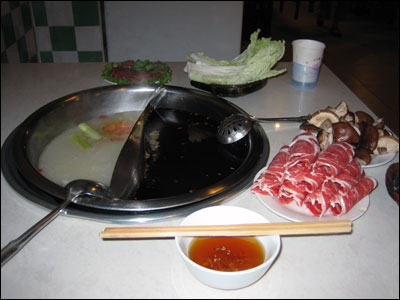
The author eagerly anticipates dishes cooked in a classic Chengdu “hot pot,” a split pot with mild fish broth on the left and spicy oil on the right.

I finally made my way to Chengdu and the hotpot restaurant. Hotpot is a Sichuan specialty, and it’s the one thing visitors shouldn’t miss. There are numerous hotpot restaurants around, easily identifiable by the burner in the middle of the table. I entered hesitantly and ordered mostly by pointing at other people’s tables. The waiter walked me through the process and I waited eagerly for my super-spicy meal. The restaurant was beginning to fill up with large groups of people gathered around their tables, chatting loudly. A large metal pot split down the middle was put on the burner on my table. One side had red oil with lots of red chili peppers and Sichuan peppercorns floating around, the other side had a milder fish broth. The liquids began to boil, and I was brought dishes of sliced meat and vegetables. You cook these by putting the morsels in the oil or broth, snagging them with chopsticks, and dipping them in a sesame-flavored sauce on the table.

The cooking part was actually the most fun. I happily dipped my meat and vegetables in the boiling oil and then put them on a plate to cool before tasting. I ate the first piece of meat and it was numbing, absolutely searing; I could barely taste anything. I tried to clean off the meat by dipping it into the fish broth, but the spice had already been seared into it. Eating the food was actually painful, and my stomach was beginning to feel upset. I decided to cook the rest of the food in the broth side, but the fire from the first few pieces of meat hadn’t yet dissipated. In fact, it felt more intense. I sat in the restaurant for quite some time trying to finish the rest of my meal. I managed to barely finish the vegetables cooked in the broth, and only consumed half of the meat cooked in the oil.

As I left the restaurant feeling a little defeated by the heat of the meal, the waiter gave me a look that I took to mean, “you foreigners can’t handle real spice.” And I agreed with him and felt humble. I came to Sichuan looking for spice, and I certainly found it. But in the end, my seared tongue and aching stomach proclaimed that Sichuan spice is serious business.

A big bowl of steaming hot noodles is a delight on a cold day. After just arriving in Zoiige, the author agrees to lots of spice in the noodles but is anxious to start eating. Indeed, the dish turned out to be too spicy.


Infusions

A restaurant critic dishes the alternative.

She won’t want to write about food tonight.
Won’t want to describe the texture of pork
when cooked as a loin, or pounded, or jerked
(whatever could become of  a pig). White
space is not a China plate when words rate
like low-end wine. Won’t want to describe Brussels
sprouts like unopened rose buds – no muscles
in that metaphor – and really can’t wait
for inspiration like an unfilled water glass.
The bed and the man in it are downstairs.
She’s eaten well, and drunk even better;
by all rights, she should have succumbed to bliss.
Give her time to digest tonight’s fare,
wait for the repeat of each spiced letter.


Breaking the silence

Why violence against females is no joke.

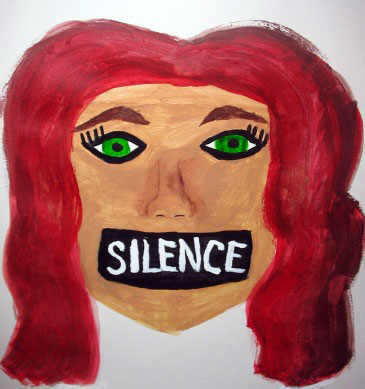
(Painting by April D. Boland)

There are some days when I feel like a bucket of cold water has been splashed in my face. Injustices happen to women all over the world every day, but sometimes it is easier to desensitize ourselves because the realities are unpleasant, and after all, what can we do?  

I have been guilty of this attitude at times. Then a day comes along when something pricks our conscience, and we don’t just become socially aware. We become socially aware and angry.

“Five girls dead after Amish school shootings”  
“Gunman May Have Planned Abuse”
“A pattern in rural school shootings: girls as targets”
“Police: Colorado Gunman Sexually Assaulted Hostages”

I am having one of those days.

When gunmen enter a school and order the males to leave so they can sexually assault and murder the females — an incident in Bailey, Colorado, that repeated itself days later in Lancaster County, Pennsylvania — it becomes hard to ignore that gender-based hate crimes are still rampant. Girls and women are targeted for violence, causing the rest of us to stand back and wonder, What can we do about this?

And so I think back to smaller incidents when there was something I could have done to defend women against hateful behavior. I remember those times when women have been devalued in speech, and how I restrained myself from defending us in order to maintain a sense of politeness.

For instance, I was with my sister, her boyfriend, and three of his friends at a diner one night, and when my sister and her boyfriend left the table, the friends exchanged jokes:  

“What do you tell a woman with two black eyes?”
“Nothing, you already told her twice!”
“What does a woman do when she gets home from the hospital?”
“The dishes, if she knows what’s good for her!”

I was disgusted and angry, spurred by their intense laughter and amusement by the subject of domestic violence, which claims the lives of four women every day.

But I said nothing because I did not want to cause trouble among the friends of my sister’s boyfriend.

The Giambologna sculpture, “Rape of the Sabine Woman,” in Florence, Italy.  

In another instance, I was with my boyfriend and a couple of his friends, as they were barbecuing. One of them fussed a bit over how the other was grilling, and the other said, “Stop being such a woman.” As if “woman” were a dirty word. To some, it is. I sat there wanting to ask, “What’s wrong with being a woman?” but I didn’t want to be rude to my boyfriend’s friend.  

Another time I was sitting in a class, listening to a female classmate give a presentation on the role of women within ancient cultures. Another classmate asked how patriarchy got to replace matriarchy, and the presenter theorized that it is because women have always been weaker, so men could just force them into submission. I seethed. I tried and tried to get a word in, to set this woman straight, when my professor said we were getting off-topic and didn’t have time to pursue this conversation.

In retrospect, I am ashamed by my lack of action. Having allowed this kind of talk to pass by as if it were appropriate and true is a difficult thing to look back on. There are those who say that a joke is a joke, an offhand comment and nothing more, and that I shouldn’t take things so seriously.

The people who say these things don’t hate women, these observers say. They’re just stating their opinions or having a little fun.

I don’t think it’s fun when society accepts the degradation of others as a source of amusement. Perhaps it would be funny in a world where these comments were not so loaded, where women did not have to struggle for equality or a social environment free of fear or abuse.

Words are powerful and can influence a young boy at the next table.

Jokes about beating women are inhumane.

Calling a man “a woman” in order to degrade and embarrass him supports the idea that being a man is much better than being a woman, and that any man who even slightly resembles a woman — in action or words — should feel ashamed.  

Generalizing that women are naturally weaker than men is dangerous. If someone has the impulse to commit a violent crime, why not target the “weaker” sex?  

So why do we use our words to hurt or to lend support to evil practices?  For a laugh?  To get a point across?

And why do we remain in silence?

For the sake of my sisters, my girlfriends, my mother, my future daughters and granddaughters — I just wish I hadn’t waited so long to break it.

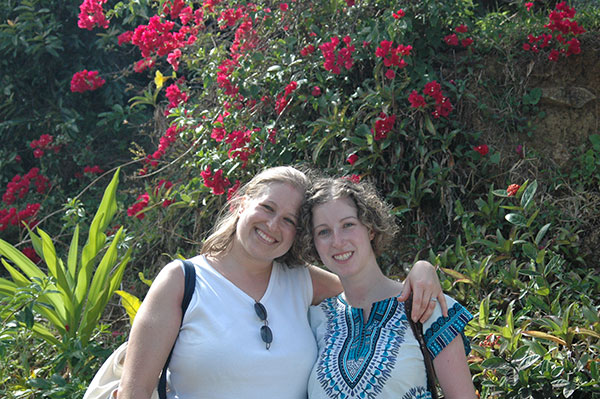
The writer with her sister, Lisa, on a family vacation in St. Thomas in 2006. (Leo Van Thyn)

The Spice of Life

A salt, sugar, and lactose-free tale of two sisters.

Rachel Van Thyn and her sister in St. Thomas
The writer with her sister, Lisa, on a family vacation in St. Thomas in 2006. (Leo Van Thyn)

Growing up in a house of people with digestive disorders, I have always lived with bland food. My family members share an alphabet soup of conditions, from the intestinal disorder known as Crohn’s disease to lactose intolerance. I never would have thought that eating sugar and spice could give us more than an upset stomach. But these seasonings almost killed one member of our family.

My older sister Lisa has been on medication since she was eleven months old, having inherited extremely high cholesterol and high triglycerides from her birth father. Because of this, she has always had to keep an extremely strict diet — no cholesterol, no sugar. Growing up, I remember watching her cheat on her diet and struggle with her weight, but never thought too seriously about it until this past August. That was when Lisa suffered three heart attacks, and we nearly lost her the same way she lost her father when he was only twenty-nine. At thirty-two, she has now outlived her dad by three years, but is having to reexamine her lifestyle and her diet after being given a second chance at life.

As a sibling who does not share her constraints, I have often wondered what it means to have to keep a “healthy” diet among those who don’t have the same types of restrictions. What foods does she eat, and what do they taste like? And what does it mean for the rest of our family to continually watch and worry over someone we love as she struggles with a difficult life devoid of cholesterol, sugar, and now salt in order to simply survive? The phrase “the spice of life” has begun to take on a very different meaning for all of us.

When we were growing up, I had only a vague sense of the life Lisa led. I knew that she wasn’t supposed to eat anything that had sugar third or higher in the list of ingredients. I knew she wasn’t allowed to eat the same sweets and candy I devoured constantly, and I knew she had to take medicine every day — pills and a weird yellow powder that she mixed up in juice or water. When cooking for her, my mom would always use egg whites instead of yolks, and she wouldn’t always eat what we did. I watched, but I didn’t really contemplate how such constraints played out in daily life.

I did, however, watch her cheat on her diet. She’d say things like, “Well, I’d rather live a short, happy life than have a long, boring one.” Lisa is seven years my senior, so I really didn’t see a lot of life-threatening habits — such as when she stopped going to the health clinic for monitoring, or when she occasionally skipped her medicine because it got too expensive and she didn’t want to ask for financial help.

Lisa made some spirited attempts to keep up a routine at the gym, but nothing stuck. I can’t say that I’ll ever know exactly what it’s like to be in her shoes — even if we do wear the same size — but I instinctively know that her lifestyle must be incredibly trying, and that I’m privileged because I don’t have to live by the same rules. In fact, while writing this story, I tried sticking to her diet myself. Let’s just say it didn’t last long.

To be honest, I never thought Lisa’s life was so much at risk. Maybe none of us did. I guess sometimes you have to learn things the hard way.

Although Lisa’s food restrictions have remained relatively the same since her attacks, her approach to life and her attitude have changed. For her heart disease, she keeps to a healthy low-fat, no cholesterol, no sodium diet. She tries to combine different spices to replace salt and throws in “all the vegetables you can eat” as well as certain fruits, but she still has to stay away from food high in natural sugar, such as most dried fruit. She uses a lot of Mrs. Dash, a salt-free seasoning, and sugar substitutes like Sweet’N Low. She drinks skim milk, and the breakfast foods she eats are always healthy and very bland, such as kasha, a porridge made with buckwheat — “cereal with twigs,” she jokes.

Lisa’s diet is also combined with a new zest for exercise. Right now she’s recovering and has to take things slowly, but she’s started walking on the treadmill at the gym. Once she has a second angioplasty to clear another blocked artery, she’ll start rehab under the watchful eyes of a cardiologist and a lipidologist. She is taking eight new daily medicines and keeping track of their dosage, their sizes, their side effects, and what she calls their “popping” times — enough to make the eyes glaze over.

When I ask Lisa if she finds her diet constraining, and how she feels when compared to others, she says, “Dining out is hard. When I go out with friends and they want to share platters, often I can’t, because so much is deep-fried. When I see on their plates that they’re having this or that, it’s hard. It never gets easier.”

“I try to come up with new stuff and interesting recipes. But this is something I’ve battled with all my life,” she adds.

I know Lisa has a new outlook, and that she understands she has been given a second chance. She told me that at the park the other day. Just watching the lake and the birds made her eyes well up with tears. The nurses in the emergency room called her the “miracle girl” because she only had about thirty minutes to get to the hospital before she surely would have died. She is one of the lucky ones.

Beginning Again

Of course, the rest of us want to do everything we can to ensure Lisa will be with us for a long time. We are trying to make changes in our individual lives to share this challenge with her. Lisa’s husband has cut certain fatty foods from his diet, and has begun eating similar things as she does. “My husband eats more salads, tries more vegetables, and opts for low-fat salad dressings instead of creamy ones,” says Lisa. “He’s trying fish, and we’re making healthier choices.” The two go to the gym together. As for me, sometimes I exchange recipes with her — or helpful hints such as the one about replacing salt with lemon — something I learned from my roommates.

I fly into town for a weekend — it’s Canadian Thanksgiving, and we’re also having a surprise birthday party for my dad. The night before the party, my sister’s husband and I pick up chocolate and chips at the grocery store for an evening of movie watching. My sister picks up a bag of pretzels, then puts it back — a past stand-by snack that’s now off-limits because of the sodium.

I can see her frustration build. Everything has salt or fat or too much sugar. She keeps apologizing for taking so long, and even though I want to grab her and tell her she can take as long as she wants, all I can muster up is a weak “really, it’s okay.”

The next day I help prepare the Thanksgiving birthday meal. Lisa makes squash, and we all agree to add cinnamon but to leave the brown sugar on the side. We make a turkey with garlic. Our stuffing is made simply of bread, apples, and shallots. A honey Dijon sauce is reserved for the vegetables, which we also leave on the side for those who can’t eat it. We use salt-free, low-fat margarine in place of butter.

And then we feast.

The Giambologna sculpture Rape of the Sabine Woman in Florence, Italy.

Breaking the Silence

Why violence against females is no joke.

Woman silenced
Painting by April D. Boland.

There are some days when I feel like a bucket of cold water has been splashed in my face. Injustices happen to women all over the world every day, but sometimes it is easier to desensitize ourselves because the realities are unpleasant, and after all, what can we do?

I have been guilty of this attitude at times. Then a day comes along when something pricks our conscience, and we don’t just become socially aware. We become socially aware and angry.

“Five girls dead after Amish school shootings”

“Gunman May Have Planned Abuse”

“A pattern in rural school shootings: girls as targets”

“Police: Colorado Gunman Sexually Assaulted Hostages”

I am having one of those days.

When gunmen enter a school and order the males to leave so they can sexually assault and murder the females — an incident in Bailey, Colorado, that repeated itself days later in Lancaster County, Pennsylvania — it becomes hard to ignore that gender-based hate crimes are still rampant. Girls and women are targeted for violence, causing the rest of us to stand back and wonder, What can we do about this?

And so I think back to smaller incidents when there was something I could have done to defend women against hateful behavior. I remember those times when women have been devalued in speech, and how I restrained myself from defending us in order to maintain a sense of politeness.

For instance, I was with my sister, her boyfriend, and three of his friends at a diner one night. When my sister and her boyfriend left the table, the friends exchanged jokes:

“What do you tell a woman with two black eyes?”

“Nothing, you already told her twice!”

“What does a woman do when she gets home from the hospital?”

“The dishes, if she knows what’s good for her!”

I was disgusted by their intense laughter and amusement on the subject of domestic violence, which claims the lives of four women every day. But I said nothing because I did not want to cause trouble among the friends of my sister’s boyfriend.

Rape of the Sabine Woman sculpture in Florence, Italy
The Giambologna sculpture Rape of the Sabine Woman in Florence, Italy.

In another instance, I was with my boyfriend and a couple of his friends as they were barbecuing. One of them fussed a bit over how the other was grilling, and the other said, “Stop being such a woman.” As if “woman” were a dirty word. To some, it is. I sat there wanting to ask, “What’s wrong with being a woman?” But I didn’t want to be rude to my boyfriend’s friend.  

Another time I was sitting in a class, listening to a female classmate give a presentation on the role of women within ancient cultures. Another classmate asked how patriarchy got to replace matriarchy, and the presenter theorized that it is because women have always been weaker, so men could just force them into submission. I seethed. I tried and tried to get a word in, to set this woman straight, when my professor said we were getting off-topic and didn’t have time to pursue this conversation.

In retrospect, I am ashamed by my lack of action. Having allowed this kind of talk to pass by as if it were appropriate and true is a difficult thing to look back on. There are those who say that a joke is a joke, an offhand comment and nothing more, and that I shouldn’t take things so seriously.

The people who say these things don’t hate women, these observers say. They’re just stating their opinions or having a little fun.

I don’t think it’s fun when society accepts the degradation of others as a source of amusement. Perhaps it would be funny in a world where these comments were not so loaded, where women did not have to struggle for equality or a social environment free of fear or abuse.

Words are powerful and can influence a young boy at the next table.

Jokes about beating women are inhumane.

Calling a man “a woman” in order to degrade and embarrass him supports the idea that being a man is much better than being a woman, and that any man who even slightly resembles a woman — in action or words — should feel ashamed.

Generalizing that women are naturally weaker than men is dangerous. If someone has the impulse to commit a violent crime, why not target the “weaker” sex?

So why do we use our words to hurt or to lend support to evil practices?  For a laugh?  To get a point across?

And why do we remain in silence?

For the sake of my sisters, my girlfriends, my mother, my future daughters and granddaughters — I just wish I hadn’t waited so long to break it.

UPDATE, 3/8/13: Edited and moved story from our old site to the current one.


ITF wins NLGJA Excellence in Journalism Award

Emily Alpert's article "Gender outlaws" won second place in the online media category of the 2006 National Lesbian and Gay Journalists Association Excellence in Journalism Awards. To learn more, visit this page.


Take off your veil

This could be the trigger for the grim spiral that produced riots in the north of England five years ago. Only this time the conflict would be much worse. We need to chill.

Trevor Phillips, chairman of the Commission for Racial Equality in the UK, writing in The Sunday Times about increasingly hostile race relations in the UK. Jack Straw, the Foreign Secretary, sparked the controversy by making a number of comments in which he expressed his reluctance about speaking with women wearing the niqab, more commonly known as the veil or the Islamic headscarf which only leaves the eyes uncovered. Jack Straw elaborated on his comments in subsequent interviews, explaining his belief that “Communities are bound together partly by informal chance relations between strangers, people acknowledging each other in the street, being able to pass the time of day, sharing just experiences in the street, and that is just made more difficult if people are wearing a veil…that’s just a fact of life.” Far from ushering in a polite debate, the veil — which Prime Minister Tony Blair has called “a mark of separation,” — is being blamed for widening the racial divide.

Mimi Hanaoka


Lithuania awarded first Oscar nomination

This may sound strange, but I have reasons to mention that Lithuania, the small Baltic country that gained back independence from the Soviet Union in 1991, finally got a nomination in the Foreign Film category from the Academy of Motion Picture Arts and Sciences, better known as the people who give out the Oscars every February or March.

The 46-year-old Lithuanian filmmaker Arunas Matelis’ film, Before Flying Back to Earth, will compete with 60 other films in next year’s 79th edition of the Academy Awards.  The film is a 52-minute documentary about kids with cancer, how they cope while stuck in a hospital, and their feelings and relationships with each other.  It has won the top prizes at last year’s Leipzig and Amsterdam film festivals.  Matelis is a graduate of the theater and TV division of the Lithuanian Academy of Music, and he set up the Nominum Film Production Company in 1992, just a year after the country gained independence.  He has directed more than ten documentaries and around 20 features.  In response to the nomination, he told AFP, “I am very happy with the nomination.  It is the first time for Lithuania, the first time for the Baltic countries and, as far as I know, the first time a documentary will compete against other movies.”

Now the reason why this is important to me is the fact that I’m half Lithuanian.  My mother recently traveled to the country for the first time in her life, finally visiting where her parents were born and meeting many cousins she has never seen in person before.  It makes me feel good that such a small and downtrodden country can emerge from years of oppression, start to pull themselves out of such a quagmire, and begin to become significant contributors to the global society. They continue to build upon their sport heritage with ever-increasing competitive athletes in many sports.  I applaud their efforts and, if I was an Academy member, you know where I’d place my vote. Gero pasisekimo, or good luck.

Rich Burlingham

personal stories. global issues.