Floods wreak havoc in parts of southern Africa, thousands need help

The World Food Programme (WFP) Friday announced serious concern about current flooding in the Zambezi Valley in central Mozambique.

wfp117338.jpgAmir Abdulla, WFP Regional Director for Southern Africa, said in a press release issued by the organization, "We are particularly concerned about the worsening situation in Mozambique which has yet to hit peak levels and is still being fed by rains in neighboring countries.”

"Our response in the region is hampered by a critical funding shortage and the need is now most acute in Mozambique," Abdulla said. "With the situation likely to worsen in the coming days, we are going to need the full support of the international community."

"We have been using pre-positioned stocks to respond to the floods across the region, but the severity of flooding in Mozambique will require urgent additional funding," he added.

"With the situation likely to worsen in the coming days, we are going to need the full support of the international community"
 
Amir Abdulla, WFP Regional Director for Southern Africa

The priority destination for WFP aid has been the district of Mutarara in Tete province, scene of severe flooding in Zambezi along the Shire River in January. The WFP has been distributing 300 tons of pre-positioned emergency food rations to 2,000 people gathered in centers in Mutarara.

Analysts point out, however, that local officials may have overstated the seriousness of the situation when they said that the rains have "filled the Cahora Bassa dam above capacity levels."

In fact, as the bulletins from the National Water Board (DNA) clearly state, Cahora Bassa Lake is at less than 70% capacity.

The WFP warns, however, that the current level of outflow from Cahora Bassa will push flooding in the Zambezi basin to levels similar to a major flood, which occurred in 2001.

The WFP plans to launch an appeal to the international community this week "to support the Mozambique government's efforts to contain the crisis."

That appeal is likely to request food aid, air support to rescue people who are stranded, and to deliver relief goods and telecommunications equipment to facilitate coordination of the humanitarian response.

Programme authorities estimate that 285,000 people "may need food assistance for the next few months, as many have had to flee the rising flood waters, leaving behind their meager possessions and food stocks."

WFP "already faces a critical shortfall in funding for all its operations in southern Africa,” say programme officials. They estimate “the efforts will require 105 million U.S. dollars through to the end of this year."

"Our response in the region is hampered by a critical funding shortage and the need is now most acute in Mozambique," Abdulla said. "With the situation likely to worsen in the coming days, we are going to need the full support of the international community."

global spin

Keywords:: Africa UN flood Mozambique aid   


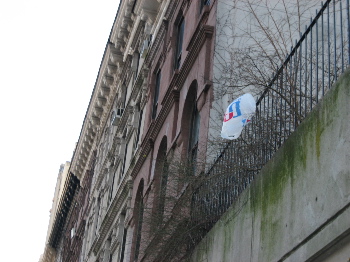
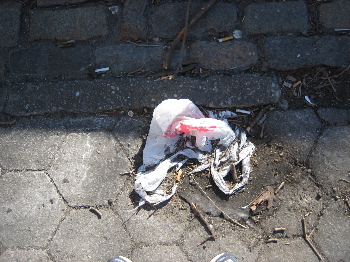
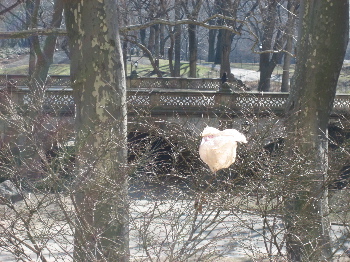
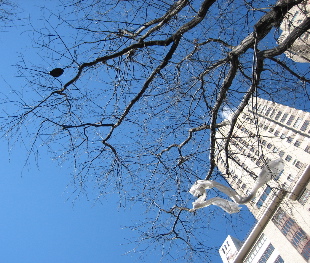
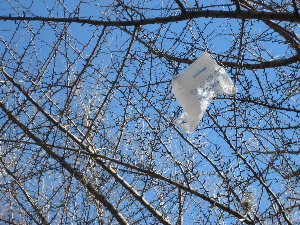
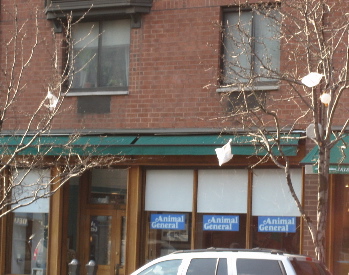
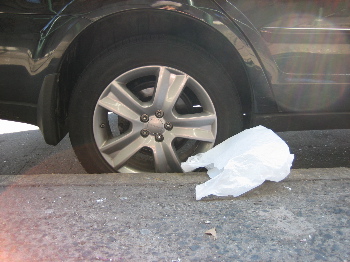
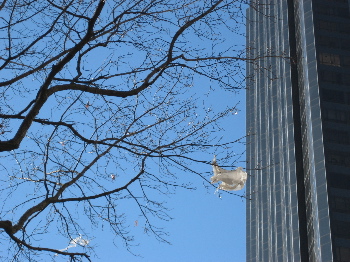
Caught on film, plastic bag litter

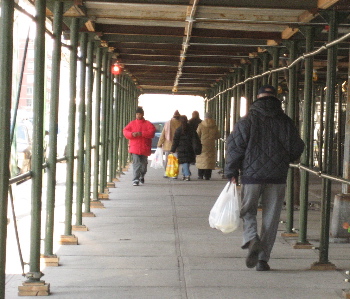
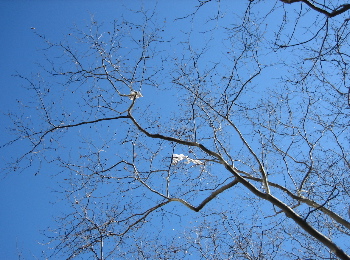
As previously noted in an earlier posting, plastic bags are an environmental scourge. Nothing can illustrate the point more than candid pictures of plastic bags littering the streets and trees of New York City.

keeping the earth ever green


What’s in your garbage?

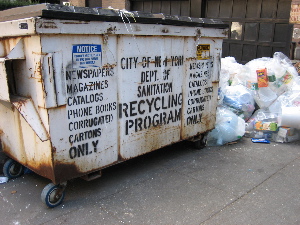
New York City's Department of Sanitation slogged through a year's worth of city garbage to see exactly what people throw away. Both the recycling and the waste were analyzed and compiled into a very interesting and telling report entitled: "The New York City 2004-05 Residential and Street Basket Waste Characterization Study." The trash study was the only way the department could decipher people's habits and in turn create better recycling programs. The recycling habits of New Yorkers have improved from 15 years ago, during the last trash study, but there is definitely a need for even greater change.

Residential trash contains ¼ recyclables
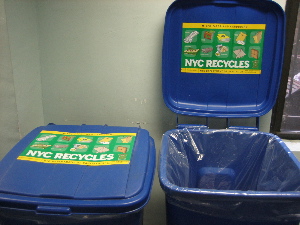
So what exactly is in the garbage? In residential trash, organic material makes up the largest segment at 47%, with recyclable paper at 15% and plastics at almost 12%. But of this refuse, 23% is easily recyclable material that just wasn't separated into the recycle bin. This includes paper, metal, glass, and plastic that people couldn't be bothered to toss into the blue container rather than the black one. And this is just residential waste.

Street litter baskets contain ½ recyclables
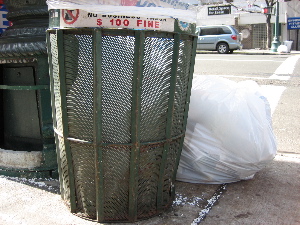
Street litter baskets are the worst offenders of holding potential recyclable material that is needlessly tossed away. Almost half that's 47.14% to be exact of street basket waste can be recycled but isn't. Newspapers make up the bulk of the garbage at more than 15%, with other recyclable paper at 15%, glass at 7%, metal at 6%, and plastics at almost 3%.

What the study doesn't show is the amount of people who make their livelihoods by picking through the street baskets for recyclables. Cans and bottles make up the bulk of their haul because the bottle deposits can be cashed in. Old newspapers and cardboard aren't attractive because there is no payback for digging those out of the trash. If the baskets weren't picked through, the amount of recyclables would be even higher than 47%.

Overall results
Overall, 35% of the refuse studied is recycled. But recycling habits of New York's citizens should be better than only 77% residential and 53% out on the street. On the Department of Sanitation's NYCWasteLe$$ website, there are numerous tips on how to reduce waste as well as information about recycling.

Recycling is mandated by law, so you are actually breaking the law when you don't recycle. At home recycling couldn't be easier. You either are given curbside recycling bins that are picked up on certain days, or your apartment building has different containers for your different recyclables. Throwing away trash and tossing recycling into its required bins takes the same amount of effort. When you are outside of home, think about what you throw away before you do it. How difficult is it to hold on to your read newspaper until you get to the office or home so you can recycle it? Can you put your used drink can or bottle into a bag and keep it with you until you find a place to recycle it?

Little acts like this will help keep one less thing out of a landfill. You might think that you aren't contributing much, but if the other eight million people in the city also decided to not throw away their newspaper that's 8,000,000 less papers in the trash.

keeping the earth ever green


Child’s play

Right now I am teaching a seven-day creative writing program at a public elementary school in Buffalo, New York. On the second day I had the students write collaborative stories: One child wrote a fictional story's beginning, another wrote the middle, and a third penned the conclusion. Most of them struggled with this. Exchanging papers was an ordeal, and many were not happy with the stories they were expected to add onto. Girls did not want to write the plot for a story about football; others thought the people with whom they were supposed to trade papers were icky. But some rose to the occasion and collaborated to produce solid stories.

One in particular caught my eye. It was about someone serving in Iraq. Here's what the students wrote:

Once there was a man named John. He was going to Iraq. He was going to fight for our lives. But then he got a little scared because he was thinking of what might happen to him. But then he was feeling sad because he missed his family. Then he went to Iraq, and when he got there, he felt really better. So he got a popsicle, then he said, “I am going to write a letter to my parents.” He got another popsicle, then he went back to war. This time he was not scared, so he got all the stuff he needed. He got the best gun he could. He wanted to see his parents.

Say what you will about the popsicles and the fact that John ceases to be scared when he gets to Iraq, there is some real awareness here about the dangers of war.


Superbowl commercials sell stereotypes, not products in 07

The majority of the attention at Sunday’s Superbowl parties certainly wasn’t always on Peyton Manning and the Indianapolis Colts.

Friends and I attended a Superbowl party at a local restaurant, and it didn’t take long before one of the truer highlights of the game – the commercials – took center stage.

A well-dressed business man walks down a hallway, talking mostly indecipherably from background chatter in the restaurant about his company. No one pays much attention and the commercial is dismissed as another ‘talker,’ clearly not expecting bouts of laughter. But when the male lead takes off his glasses and steps into the marketing room for GoDaddy.com, everything changes.

The question then became, “So what does GoDaddy.com do anyway?”

The ad, linked here, highlights well-endowed women in white logoed tanktops jumping up and down gleefully, while being rated by a number of “biker types,” clad in oversized black t-shirts. If that wasn’t enough to have the eyes of countless men in the room fixated on big screens – the waterworks would do exactly that.

Correct me if I’m wrong, but somehow, wet t-shirt contest doesn’t scream domain registry and web hosting to me. It screams sexism and objectification.

Sure, the Superbowl’s target audience is men, ranging in ages from their late teens on up to the 50-something population. But perhaps the visual was unnecessarily crass and sexualized. Scratch perhaps – that’s a definite.

The clencher: in a user poll by AOL Sports, the commercial didn’t fare that well against other, less “in-your-face” advertisements. In a poll for 2nd-quarter commercials, GoDaddy.com was trumped by the Budweiser dalmation, which came in with 31 percent of the vote. GoDaddy.com’s busty women only held the attention of 2 percent of those polled.

However, don’t let me mislead you. The stereotypes still sell.

Moving on to the Snickers kiss commercial, which painted two unmistakably ‘manly’ men meeting for an accidental kiss after sharing a Snickers bar.

Several problems emerge – the clear media construction of masculinity (who really rips hair off of their chest? Male friends at our table were polled, and apparently that takes a clear level of insanity), as well as the sounds of disgust echoing from around the room when the men’s lips met.

Even in post-Brokeback America, the general population can’t wrap its head around the idea of two men liplocking, whether on the big or small screens – or in real life.

Why is being gay, or being uncomfortable with homosexuality, so accepted in the United States? Why is homosexuality considered a threat to masculinity, as shown in the candy bar ad’s portrayal? What are advertisers selling today, their world views or their product?

Given the choice between the rest of the ads and the cute, yet safe, dalmation by St. Louis-based Anheuser-Busch, I’ll take the dog.


Relics

With Valentine’s Day looming, February greets us with commercials reminding us to buy timeless gifts — diamonds, anyone? — for our sweeties. But some of the most timeless presents cannot fit into a jewelry box or be gift-wrapped. And though some may have been mined as recently as the diamonds Zales wants to sell you, many come from another era and don’t sport a price tag.

In this issue of InTheFray we explore relics of the past and their value to the present. We begin in Brooklyn and Philadelphia, where Sasha Vasilyuk treats us to some Russian intellectual football, better known as “KVN,” a game show of comedy and music sketches in which Russian immigrants participate to hold onto a fragment of their past. In Detroit, Scott Hocking and Clinton Snider look at the city’s cyclical nature, from wasteland to thriving metropolitan area, to deserted area, to booming urban centre. In RELICS, their art installation, the two ask how long it takes the old to be forgotten. Meanwhile, across the pond, Jacquelin Cangro discovers Giants among us on a visit to Postman’s Park, where everyday people’s achievements are commemorated.

We then offer three different relics of love: ITF Literary Editor Annette Hyder and ITF Contributing Editor Kenji Mizumori’s Mixed Media Valentines to loves come and gone; a quilt that Rachel Van Thyn’s mother put together One piece at a time, using squares spanning three generations; and Jen Karetnick’s musings On vintage handkerchiefs passed down by her grandmother.

Rounding out this month’s stories is ITF Travel Editor Michelle Caswell’s interview with Easily angered activist Tom Hayden, who shares a veteran critic’s insight on the Iraq War, desegregation, political apathy, and making a difference.

Enjoy!

Laura Nathan
Editor
Buffalo, New York


On vintage handkerchiefs

Impressions of a grandmother.

Toward the end of her life, my grandmother went shopping for birthday and holiday gifts in her own apartment. Some years I received pantyhose; others, a milk glass vase or a brass alligator nutcracker.

Although I never used the last present I received from her, I kept them: three pristine, precisely creased, embroidered muslin handkerchiefs. They have survived college in one state, graduate school in another, and the arrival of my own family in a third. Aside from the figurative ties they give me to my grandmother, whose nose I have inherited, I have always considered them valuable.

But value has a different meaning when it comes to eBay.

One day I was browsing its “clothing, shoes and accessories: vintage” category when I found a listing for an inordinate amount of women’s handkerchiefs. In fact, 238 lots were for sale that very week. The cheapest, a set of four holly-embroidered Christmas hankies, was going for 99 cents. The most expensive, an assortment of 154 floral “everyday ladies” hankies, was on sale for under $60. At 38 cents a pop each, these weren’t exactly Caspian caviar.

On a visceral level, I was a bit disappointed in these anonymous sellers. I know that many dealers bought these products from estate sales and have no attachment to them other than the scant money they paid. But other sellers are daughters and granddaughters who may have cleaned out closets after the owner’s final stroke or battle with cancer. Isn’t the hawking of these long-held possessions akin to the selling of memories?

And at rock-bottom prices, no less.

Sentiment aside, I have no practical use for these tiny patches of gauze, trimmed with faded cross-stitch and permanently scarred with folds. What does one do with such items? Turn them into appliqué lampshades? They’re more suitable for polishing the furniture than they are for clearing the sinuses.

But thanks to my robust love for fiction and a vivid imagination — something else I inherited from Grandma — I can visualize one of these lace-and-linen confections tucked up her three-quarter sleeve.

Each brings back a piece of her. The off-white one with the scalloped edges reminds me that Grandma Min pickled the neighborhood’s best herring in sour cream sauce, heavy on the onions the way my dad and I like it. The eggshell one, with the crocheted border, takes me back to her fragmented square of a linoleum kitchen table, where I sat in my nightgown, watching as she cooked breakfast. She always salted the eggs before scrambling them rather than after, making them taste so much better. The handkerchief that was imported from Europe — and still in its original packaging — takes me to my grandmother's girlhood during World War I. She escaped in a covered wagon driven by her mother across the continent to a ship that would take them to America.

Although in the final decade of her life, Grandma Min blew into disposable tissues like the rest of us, and these vintage handkerchiefs are no longer intended for use, their personal history will always be nose-worthy.

Chances are, my own grandkids are going to receive them, and while they may be initially puzzled, perhaps in the end, they will discern the handkerchiefs’ true value.

personal stories. global issues.