How green are the new NYC sports stadiums?

A frenzy of construction activity has arisen to the cause of building new New York-area sports stadiums. It’s not that the old stadiums were falling apart but because new stadiums represent presumably more interest and revenues for the sports teams. Even though tear-down and construction of the stadiums could reap environmental disaster, as long as more money pours out from the stadiums, that’s all that really seems to matter. Green building has been gaining in popularity and is much easier to utilize and abide by environmental rules. It’s good to see that many of the new stadiums will be green, but unfortunately some of the new arenas decided against any sort of environmental aspects during and after construction. Lew Blaustein wrote an excellent article, "Green fields of dreams," for green-links.org detailing his search for answers about how green the new stadiums are/will be. Below are some sum-ups of his findings:

The Prudential Arena for NHL’s New Jersey Devils in Newark, NJ:
Green aspect: The fact that it will be downtown and easily accessible by public transport, something that their old Continental Arena in the Meadowlands did not offer.
Non-green aspects: Everything else about it, even though ironically the architect firm HOK Sport has collaborated with the U.S. Green Building Council on other stadiums.

Red Bull Park for the Red Bull New York major league soccer team in Harrison, NJ:
Green aspects: The new stadium will reclaim New Jersey’s largest brownfield (a commerical or industrial site unused due to environmental pollution) area and will clean up 100 acres along the Passaic River waterfront. It will also be accessible by public transport. Once built and in use, the stadium will supply only recycled paper products from a local company and will use clean energy supplied by carrier PSE&G.
Non-green aspects: Building plans and materials are not finalized and therefore LEED (Leadership in Environmental and Energy Design) compliancy in other words, the green building industry benchmark guidelines  is not certain.

Citi Field for baseball’s New York Mets in Flushing, NY:
Green aspects: Lew calls it a "veritable Green Grand Slam!" Will be LEED-compliant where possible during construction and operation. Public transportation, green energy use, sustainable building operations, among other implementations, are emphasized.
Non-green aspects: LEED currently does not have guidelines for open-air stadiums, but this stadium’s commitment to environmental protection sets its own high standards.

New Yankee Stadium for baseball’s New York Yankees in Bronx, NY:
Green aspects: No one associated with the stadium would talk to Lew about its greenness, therefore making him come to the conclusion that it is not green. Everyone likes good publicity, so he concluded that they would definitely be willing to talk up any sort of green aspect in the building or design if there was any. However, a new MetroNorth train stop is to be built by the stadium, giving it access by public transport.
Non-green aspects: The land taken over for building the stadium was two well-used public parks. A new mall will be built next to the stadium that will attract CO2-spewing vehicles.

Barclay’s Center Atlantic Yards for New Jersey Nets basketball team in Brooklyn, NY:
Green aspects: This Frank Gehry-designed stadium will be completely LEED-compliant and the first LEED-certified green arena. It will be built on environmentally-damaged land and will develop and clean up the area, creating public spaces, environmental homes, and office buildings. Construction will minimize environmental damage by using particulate filters, ultra-low sulfur diesel fuel, and noise barriers, among other things. Once completed, the arena will be easily accessed by public transportation and sewer overflow into the Gowanus Canal will be reduced by simply reusing rainwater.
Non-green aspects: Lew didn’t write about any.

Jets-Giants Stadium at the Meadowlands in East Rutherford, NJ:
Green aspects: Sustainabilty is a definite high priority for the building of this stadium. The separate teams decided to share the stadium, thereby cutting down instantly on the environmental detriment of building two different stadiums. A new light rail system will be constructed and car traffic is anticipated to be cut by 5,000 vehicles per game. Construction will be LEED-compliant.
Non-green aspects: Lew didn’t write about any.

keeping the earth ever green

Click here for the full article, "Green field of dreams."

For more on LEED, please visit the U.S. Green Building Council .


Burying “the N-word”

"Today, we’re not just burying the N-word, we are taking it out of our spirit, we are taking it out of our minds…To bury the N-word, we’ve got to bury the pimps and the hos and the hustlers. Let’s bury all the nonsense that comes with this."

Kwame Kilpatrick, Mayor of Detroit, speaking on Monday at a symbolic funeral for the “N-word,” organized by the National Association for the Advancement of Colored People (NAACP).


Deadly extractions: oil and mining interests in Africa

"In August 1996, Sutton’s bulldozers, backed by military police firing weapons, rolled across the goldfield, smashing down worker housing, crushing their mining equipment….About 50 miners were still in their mine shafts, buried alive."

BBC Correspondent Greg Palast, Bush Family Fortunes

On the fourth anniversary of the president’s visit to Africa we thought it would be appropriate to take another look at that moment in time at the Bulyanhulu Gold Mine and compare it to the present in order to examine what, if anything has changed since then with regard to the developed world’s approach to globalization and the welfare of Africa’s "mineral poor."

Mining has been a major source of income and development for much of Africa. At the same time mining projects are increasingly linked to serious environmental and social concerns. There is tremendous potential to harness Africa’s mineral resources as a means of developing the continent’s economy, yet there are notable differences in the efficacy of particular mining projects and regional development plans.

When President Bush made a one-week tour of the African continent in early July 2003 the U.S. public heard a lot about human suffering and conflict there. The tragic AIDS epidemic and the toll of bloody wars are critical issues that should be examined in depth. Yet, one key component seemed to be missing from the coverage: multinational corporate interests and their effects on people in African nations.

On this edition of "Making Contact," we take a look at some examples: In Tanzania a Canadian-based corporation is accused of burying alive artisan miners in order to acquire control of a gold mine; and, the drive for oil has sparked political and social upheavals in Sudan and Angola.

Featuring::

Nyang Chol, a senior official with RAS, the humanitarian wing of the rebel SPDF faction in Sudan; Leslie Lefkow, a human rights specialist with Doctors Without Borders; Sam Ibok, director of political Affairs with the African Union; Phillipe Gaspar, a 13-year-old Angolan refugee; Chantal Uwimana, Africa programme officer for Transparency International; Gregor Binkert, resident country representative for the World Bank in Chad; Ongar Lassie Yorongar, a leading political figure in Chad; Tundu Lissu, a Tanzanian human rights attorney; and investigative journalist Greg Palast, author of The Best Democracy Money Can Buy.

For more information::

Transparency International

+49 30 343820 0

http://www.transparency.org/


Lawyers’ Environmental Action Team

+255-22-2780859

 http://www.leat.or.tz/


Greg Palast, BBC reporter and author of Armed Madhouse and The Best Democracy Money Can Buy; http://www.gregpalast.com/


Sutton, acquisition of Barrick Gold Corporation, Canada


Petition for the UNFPA

If you’ve never heard of the UNFPA, or were unaware that the president had cut off the annual 34 million dollars in funding to their organization, let me give you the run-down: this branch of the UN didn’t like China’s forced abortion policy, so they went to the Chinese government and said, "We have an idea  contraception." So they began in eight provinces, then 10, and so on, and it was a complete success  no more pregnancies or forced abortions, and everyone was happy.

Then a handful of lunatics from Virginia, calling themselves PRI (Population Research Institute), got wind of this. As Christians against birth control, they believe that population control is not a problem for the planet, and that all six billion of us can be sustained on the resources from an area the size of Texas. So that means they’re smart. Anywho, they sent a paralegal to China to investigate. She went out to provinces that were not yet part of the UNFPA program and listened to illiterate peasant women talk about ongoing forced abortion. Then she visited a government health office, saw an empty desk that a worker said belonged to the UNFPA, and somehow in her little Christian-fanatic mind, came the conclusion that the UNFPA program was encouraging abortions, forced or not. She took her delusions home to her partners (the company has never had more than six employees), who turned to Rep. Christopher Smith (R-New Jersey), who was equally outraged. He turned to the president.

Our government sent dozens of investigators to China. Other countries sent hundreds of investigators, altogether, to China. Not one found any evidence that the UNFPA had anything to do with abortions, only family planning and contraception. But with this administration and the right-wing Christians, who needs evidence or facts? Those pesky things are just obstacles to certain people stamping their feet and getting what they want  which is usually more women dead for having sex. So yadda yadda, the Bush cut off funding. Other countries laughed at us, shook their heads, searched their minds for how on Earth the leader of the free world could take the unhinged word of a very few over the professional opinion of many legitimates. Also, the childish few got their way, and women and children all over the world suffered and died unneccessarily. This was back in 2002, and it was certainly a sign of times to come in all things international.

This denial of funding backfired. Other countries stepped up with more aid to the UNFPA. Two American women decided to start the 34 Million Friends Campaign to convince 34 million people to give a dollar and make the world a better place. They raised twice that amount in the first year alone.

Now it’s time for Bush to right a wrong and resume funding. Americans for UNFPA has started a petition calling for such an action. So, go, don’t just sit there  sign it! via Feministing.

For more about the USA’s unfortunate involvement with PRI, read Cristina Page’s How the Pro-Choice Movement Saved America.


Free at last

“It was like being buried alive really, removed from the world and occasionally terrifying…It became almost hard to imagine normal life again…The kidnappers seemed very comfortable and very secure in their operation — until a couple of weeks ago when it became clear that Hamas would be in charge of the security situation on their own here, and after that the kidnappers were much more nervous…It was appalling really…not to be able to report on the extraordinary turmoil, the events that I could hear going on, the fighting in the streets around the hideout, for days on end and I just knew the scale of things that were happening.  It’s the biggest story since I’ve been in Gaza, but I couldn’t utter a word.

— Alan Johnston, the BBC’s Gaza correspondent, who was freed yesterday after being held for 114 days following his kidnapping by the Army of Islam group, speaking about his ordeal.  On the day of his release Amnesty International honored Mr. Johnston with their radio award for his reporting on human rights in Gaza, where he has been reporting for the past three years.  


Tit for tat

In the United States, sports enthusiasts have long touted the adage, “Winning isn’t everything; it’s the only thing.” But while that saying has guided many of us in competition — be it in the stock market, on the battlefield, or at the sports stadium —winning, though tantalizing, is rarely that simple. What about the losers? How are they affected? Can a winner go too far in the quest to achieve success? And can victors end up worse off than they were before tasting success?

In this issue of InTheFray, we examine these questions in a variety of international contexts. We begin in Uganda, where Anna Sussman and Jonathan Jones examine The difficulties of ending a war. As the duo of journalists discover, ending Uganda’s long-running war requires resolving another conflict — that over the International Criminal Court, which many Ugandans regard as a threat to negotiations, while others see it as the ticket to peace and justice.

And back home from a visit to Malaysia, Mindy McAdams is Missing the mango, or the rich diversity of cultures, foods, and religions that have shaped the 50-year-old nation. But, McAdams worries, this successful mixture is threatened by a trend toward cultural separatism.

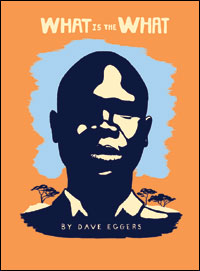
Meanwhile, Jennifer Fishbein reviews Dave Eggers’ What Is the What, the retelling of Valentino Achak Deng’s struggle to come of age in the midst of Sudan’s civil wars. In Eggers’ account, Deng has been victimized in his adopted country — the United States — as badly, perhaps even worse than, he was in Sudan. Here, he is invisible, negligible, leaving readers desperate “to rekindle belief in humanity,” as Fishbein eloquently puts it.

Rounding out this month’s pieces is an eclectic collection of poems by Gaia Holmes about Summer heat, moths in the moonlight … and the mysteries of love, life, and longing.

Happy reading!

Laura Nathan
Editor
Buffalo, New York


The difficulties of ending a war

200707_uganda3.jpgWhy Uganda’s victims don’t want The Hague to prosecute.


Stopping an insurgency isn’t easy.
 
That’s the lesson in northern Uganda, home to Africa’s longest running conflict, where a rebel group called the Lord’s Resistance Army (LRA) has been fighting the Ugandan government since 1986.
 
For years, the war, which has claimed an estimated 100,000 people and displaced more than a million, has defied mediation attempts.
 
But peace talks are under way here, and there is renewed hope that the most recent negotiations in Juba, Sudan, can end the war for good.
 
There is only one problem.
 
Of all the issues on the table, including the disarmament of rebels and reparations for victims, the main sticking point revolves around arrest warrants against four of the top LRA commanders, including its leader and self-declared prophet, Joseph Kony.
 
There are many Ugandans, including most of the war’s victims, who believe the warrants issued by The Hague (The Netherlands)-based International Criminal Court (ICC) will hurt the negotiations at a time when peace finally seems within reach.
 
Recently, Vincent Otti, second-in-command of the LRA and also named in the indictment, told Reuters that the war will continue as long as the ICC presses its case.
 
In camps for displaced persons in northern Uganda’s Gulu District, there is a near unanimous chorus from the war’s victims. When asked, they say peace will not come until the arrest warrants are retracted.
 
“I think that the ICC is making a lot of problems here,” said 17-year-old Ronaldo Otto, whose parents were killed by the LRA. He now lives at the Awoch IDP camp in squalid conditions with 14,000 others. “We need to forgive the LRA leaders so that the peace talks continue, because if we decide to punish them, I know the peace talks will fail. The LRA will start [attacking] us very seriously. So what I want is forgiveness.”
 
But that doesn’t sit well with international observers and many human rights groups, which argue that formal justice is vital to a lasting peace, and want to see the fledgling ICC establish itself.

“In northern Uganda’s 21-year-conflict, horrific crimes have been committed,” said Richard Dicker, director of the International Justice Program at Human Rights Watch in a statement on May 30, 2007. “Fair and credible prosecutions with appropriate penalties will tell would-be perpetrators that no one is above the law, thereby helping to promote a peace that is durable.”

The ICC is unlikely to pull out now, said Eric Stover, director of the Human Rights Center at the University of California, Berkeley, which is preparing a report from the region on this issue.

But if the ICC did withdraw, said Stover, “Kony and the leaders of the LRA, who have committed up to 37,000 abductions, could get away with murder. The question is: Do people want peace without any justice? And do they understand what exactly the ICC is? Do they understand that it’s not the rank-and-file [soldiers] that people in northern Uganda want home who will be prosecuted, but the top LRA leaders?”

One of the ICC’s first cases, northern Uganda is emerging as a critical test of the court’s legitimacy.
 
But Human Rights Focus, a Gulu-based human rights organization, says the ICC intervention here is arbitrary.
 
“I’ve told the ICC, they should deal with those recalcitrant countries like the U.S. who don’t want to be under the armpit of the ICC, not a banana republic like Uganda,” said James A.A. Otto, executive director of the group. The U.S. is a not a signatory to the ICC and is exempt from prosecution, he noted.

Otto also argued that the ICC is biased because it is not prosecuting the alleged human rights violations committed by the Ugandan military, the Uganda People’s Defense Force (UPDF).

But the people of northern Uganda seem unconcerned with any nuanced questions of international justice. They feel they have suffered enough and just want the ICC to go away.
 
Those living in the war torn area say the ICC arrest warrants provide a disincentive for LRA rebels to come out of the bush and stop fighting.
 
“Now there is no way the rebel leaders can be punished,” said Yafes Okot, a 30-year-old former rebel who was forced by his commanders to butcher others who tried to escape. “If they know they will be punished and are asked to come out of the bush for peace talks, they won’t come. What else can be done?”


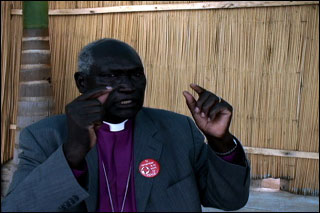
Retired Anglican Bishop Baker Ochola, former vice president of the Acholi Religious Leaders’ Peace Initiative, believes the ICC is only concerned with international legitimacy, not with healing a shattered community.  
 
“Real justice is not punishment,” said Ochola, who lost his wife to an LRA landmine. Instead of the ICC’s arrest warrants, Ochola and many other Ugandans support more traditional mechanisms of peace, including a truth and reconciliation commission and tribal justice ceremonies.

“Real justice is not killing someone because someone has killed your child, because now you’re becoming a killer just like him or her,” said Ochola. “So for us, we bring a different perspective: We are not going to kill you. We’re going to give you back your life. That’s the difference. Truth, mercy, justice, and peace must stand together.”
 
The local tribal justice systems help to rebuild the relationships between the perpetrator and the victim through reconciliation ceremonies, he said. One such ceremony is the Mato oput, a system of truth-telling followed by a series of ceremonial gestures like slaughtering livestock, sharing a meal, and drinking from the same cup.
 
Such systems stress forgiveness over punishment and accountability. But given the extent of massacres, maiming, and forced abductions by the LRA, Kony and his top commanders have a lot to account for.
 
“A culture of impunity should not be encouraged anywhere in the world for those who commit war crimes against the population,” said Lt. Col. Francis Achoka Ongom, Civil Military Relations Officer for the UPDF, whose duties include the protection of civilians in conflict areas. “That is why [the government] sought help from the ICC, so that the ICC could help the government solve this problem.”

But now, even the Ugandan government is sending mixed signals about its preference for the court. After initially inviting the ICC, the government recently signed a peace agreement with the rebels acknowledging that “the national legal and institutional framework provides a sufficient basis for ensuring accountability and reconciliation.”
 
In other words, Uganda can take care of itself.

In the coming weeks, the Ugandan government may request that the ICC abandon its prosecution of the LRA rebels.
 
If that occurs, the court will have to make a difficult decision: It can ignore the request, continue to pursue the prosecutions, and risk prolonging the war, thereby losing legitimacy in the eyes of the victims.

Or the court can abandon the prosecutions, and lose legitimacy in the eyes of international observers.


From dust to dust

200707_offtheshelf.jpgA look at Dave Eggers’ What Is the What, an account of a Sudanese refugee’s struggle to adapt in the United States.

Growing up amidst the horrors of civil war in Sudan in the 1980s, Valentino Achak Deng witnessed acts that could stamp out the faith of even the staunchest believers in humanity. Hordes of armed men from the north torched his village and massacred his relatives and neighbors when he was just seven years old. Later, Deng saw hundreds of boys his age die as they walked across the desert to seek shelter in Ethiopia. The army that supposedly was fighting for his freedom — the Sudan People’s Liberation Army — drove many other boys to their deaths. But the book that tells the story of Deng’s brutal and courageous life is as much a commentary on its readers as it is on Deng’s experiences and his native country. What is the What, the creative retelling of Deng’s life by journalist and author Dave Eggers, seems to convey that Deng has been victimized by the citizens of his adopted society in America perhaps even more cruelly than he had been during the bleakest days of the war.

Deng’s story involves a 13-year journey from his ravaged village in southern Sudan to refugee camps in Ethiopia and Kenya until, at long last, he is granted asylum in the United States and flown to Atlanta. What Is the What, a fictionalized version of Deng’s life with Deng as the narrator, focuses on a two-day period in Atlanta, opening with him being assaulted and robbed in his own home. In the book, Deng imagines addressing his attackers when they leave him tied-up and bloodied on the floor, then the God-fearing neighbors oblivious to his calls for help, the cop indifferent to the glaring clues at the crime scene, the emergency room receptionist who makes him wait 14 hours for an MRI, and lastly, the harried clients at the fitness center where he works as a receptionist.

A theme running throughout Deng’s narrative is his recurring doubt as to whether he actually exists to the Americans he encounters. All the characters he meets within the two-day span of the novel behave as though Deng were either not alive or not a human being. “This boy thinks I am not of his species, that I am some other kind of creature, one that can be crushed under the weight of a phone book,” Deng surmises when the child of his attackers drops a phone book on his head to shut him up. When Deng calls his own stolen cell phone after he is freed and the child answers, he expresses defeat that the police never bothered to trace his phone number. “This is the moment, above any other, when I wonder if I actually exist. If one of the parties involved, the police or the criminals, believed that I had worth or a voice, then this phone would have been disposed of. But it seems clear that there has been no acknowledgment of my existence on either side of this crime.”

Deng expresses more outrage here than he does when describing the events of his horrific past. Brutal injustices can be wrought by governments and men during times of war; perhaps they are expected. It is these lesser abuses æ such as being ignored æ that truly offend Deng. “In a furious burst, I kick and kick again, flailing my body like a fish run aground,” Deng says, describing his attempts to free himself after the perpetrators leave him bound and gagged on the floor of his apartment. “Hear me, Christian neighbors!  Hear your brother just above!” He waits. “Nothing again. No one is listening. No one is waiting to hear the kicking of a man above. It is unexpected. You have no ears for someone like me.”

A reader will likely feel frustrated for Deng. How could anyone assault someone who has endured so much? How could the police not intervene? How could the neighbors be deaf to his pleas? But in fact, we too are his neighbors. How many times have we been deaf to the kicking of a man above? How many of us consider ourselves sensitive and empathetic, only to act as if some around us don’t exist?
 
“Does this interest you, Julian?” Deng asks the receptionist who sits ignoring him as he waits hours in an empty emergency room for treatment for his bloodied head. “You seem to be well-informed and of empathetic nature, though your compassion surely has a limit. You hear my story of being attacked in my own home, and you shake my hand and look into my eyes and promise treatment to me, but then I wait. … You wear a uniform and have worked at a hospital for some time; I would accept treatment from you, even if you were unsure. But you sit and think you can do nothing.”

Julian does not hear this, of course; Deng is not speaking aloud. But Deng’s words ring in the minds of the readers. It is us he is addressing, and his acknowledgement of our existence despite our ignorance serves as an accusation. “I will tell stories to people who will listen and to people who don’t want to listen, to people who seek me out and to those who run,” Deng states in the book’s final paragraph. “All the while I will know that you are there. How can I pretend that you do not exist? It would be almost as impossible as you pretending that I do not exist.”

Though Deng’s closing tone is a hopeless one — for of course, we can and do act as if he doesn’t exist — his exhortation is clear. To rekindle belief in humanity, we needn’t put an end to all its wars. We must simply assume the responsibility of hearing those we deafly ignore. 


Missing the mango

How cultures mix, or don’t, in Malaysia.


From the back of a small white van, a man named Muhammad sold rojak in takeaway containers. The shopping mall on the other side of the parking lot boasted a KFC, Pizza Hut, and Starbucks. A big McDonald’s did a lively business one block away. But Muhammad usually had at least three or four customers lined up at his truck, waiting for him to scoop their orders from his assortment of plastic tubs.

The mixture of cucumber and pineapple chunks included various pieces of jicama, mango, apples, bits of puffy fried tofu, and bean sprouts. The sauce tasted strongly of shrimp paste cut with sugar, hot chilies, and lime juice. A generous sprinkling of chopped peanuts completed the dish.

Like most Malaysians, Muhammad thought a white person like me would not like rojak. “Spicy,” he warned me politely. It’s not for everyone.

Few people in the United States know anything about Malaysia. Why should they? The peaceful Southeast Asian country is half a world away from either one of our shores, its history obscure to us.

“They’re Buddhists there, aren’t they?” a university colleague asked me as I rushed around the office, making last-minute preparations near the end of 2004 to leave for an eight-month stay. No, he must have been thinking of Thailand.

Scuba divers, however, know Malaysia — its clean, white sand and clear, tropical waters. Europeans fly down for beach holidays. Saudis come during the hottest part of the year, Western-looking men in jeans and polo shirts, with multiple black-robed wives in tow — they find both the Muslim culture and high humidity welcoming.

Islam came to the lands occupied by Malays certainly before the 14th century, and maybe as early as the ninth century, 200 years after the death of the prophet Mohammed. One sees evidence of Islam everywhere, from the halal Chinese restaurants that serve no pork, to the sarong-clad boys on motorbikes converging on mosques each Friday afternoon. The official state religion is Islam, and the country has an official doctrine of tolerance and religious freedom.

I met Maria and her family in Kuching, a city in East Malaysia, on the island of Borneo. They enthusiastically introduced me to paper dosa, a gigantic crispy pancake imported from southern India. Maria’s daughter was waiting to hear whether she had won a place in the university, a process based on academic testing, controlled by the national government. Why should she worry? I asked, assuming that because the family is Iban, one of the native tribes of Borneo, the girl would be assured a place.

“You’ll get a place. You are bumiputera,” I said, using the word assigned to all Malay ethnic groups, regardless of religion.

“We are second-class bumiputera,” Maria said dryly. “We are not Muslim.”

The winds of the southwest monsoon brought Arab and Indian traders to the Strait of Malacca hundreds of years ago. The Chinese merchants came in on the winds of the northeast monsoon. During the inter-monsoon season, the traders waited in port for the wind to turn to blow them home again, their ships laden with pepper, cloth, gold, tin, products of the wet forests, and sinuous inland rivers. In the meantime, they mingled — with each other and with the Malays, Javanese, and Sumatrans who lived there year-round.

Great Hindu civilizations flourished there — Srivijaya and Majapahit — empires never mentioned in my American schoolbooks. Much later came the Portuguese sailors, then the Dutch, and finally, the British.

I went on a trekking excursion in Borneo, and there was one Englishwoman in our group, a nurse in her early 30s. As we sprawled on a beach by the Sulu Sea, shaded by leaning palm trees, she said, “I’ve always wanted to visit Borneo. It’s been my dream since I was a little girl.” I mulled over the idea that a child in England, born almost 30 years after the end of World War II, had grown up on stories of the exotic lands once controlled by the British Empire.

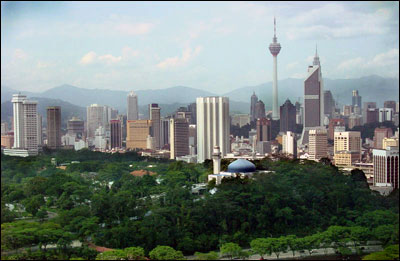
My friend Kiranjit was born and grew up in Kuala Lumpur, the national capital. She lives there still. Of her 12 brothers and sisters, all but two have moved abroad, either to Australia or to England. Their parents were Sikh, immigrants from India.

“Why should they raise their children in a place that doesn’t want them?” she said, explaining the exodus. Even more so than Maria’s daughter, their chances of winning places at a public university are low.
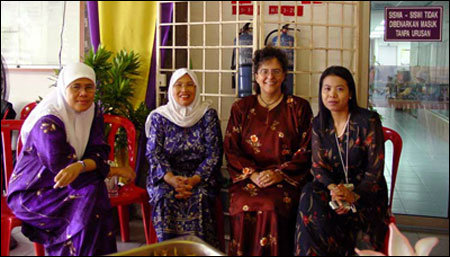
 

On another day, I visited Universiti Kebangsaan Malaysia (UKM) and met with a group of lecturers. “You know, people have their loyalty to their home country,” a UKM professor told me as we drank coffee and munched on curry puffs. “People like your friend Kiranjit — of course, her real home is in India.” When I explained that I had a different impression, the professor was quite surprised.

I felt exasperated by his assumption that my friend was allied with a country she has never lived in. “She’s Malaysian,” I said. “She speaks Malay and English. She doesn’t know any Indian languages.” He seemed pleased by the idea that my friend identifies herself as a Malaysian — but also a bit perplexed. I was reminded of the expression on the face of Muhammad, the rojak vendor, as he watched me smile after I had chewed and swallowed the spicy fruit salad.

Chatting with that group of Malay professors, I wondered whether the fabulous rojak culture of Malaysia had yet to be digested by their generation, the generation born in the years just before and after independence. They ate it, drank it, served it at their own dinner tables, but they seemingly did not realize that it is the variety of flavors and textures that makes their country great. When the rojak does not include mango, I really miss it.
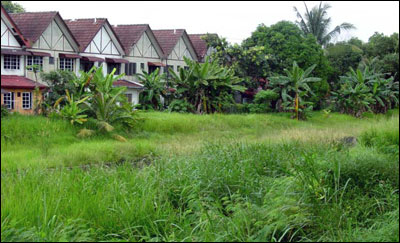
 

Before 1957, there was no “Malaysia.” On the Malay Peninsula and on the island that foreigners call Borneo lived various groups of people with strong ethnic or tribal identities. Sultans controlled, more or less, certain geographic territories, but borders are hard to draw inside jungles, and even harder to enforce. Chinese immigrants worked in tin mines. Indian immigrants tapped the rubber trees on plantations. Malays, under the British policy of “divide and rule,” took jobs in the civil service. As in many parts of Asia, Africa, and South America, the recipe for Malaysia followed a European logic.

My friend Siti closed the door to her office, unclasped an ornamental pin near her throat, and removed her hijab, the Muslim head covering which the Malays call tudung. She pushed at her hair with her fingertips. “It gets so hot, Prof,” she said. She told me that she did not wear the scarf until she was married, and she did not ask her daughters to wear the scarf, but rather left the decision to them.

“All this scarf-no scarf business — we didn’t have that when I was young,” Siti said. “Then we were all in school together, Chinese and Malay, some Indian girls too. And we went to each other’s houses, lah. We didn’t think anything about eating in the Chinese girl’s kitchen. Her mom made us some mee, lah, and we just ate it.”

This August, Malaysia will celebrate the 50th anniversary of merdeka, their independence. They have been inventing a new nation for 50 years. They started with a diverse collection of cultures, beliefs, customs, and languages, but that’s hardly new. Their country is the product of several hundred years of collaboration and trade, extending from the western edge of Arabia to the southern tip of India (and Sri Lanka) and onward to the eastern edge of China.

The great beauty of Malaysian culture comes out of this mixing of people, in which they maintain the pure flavor of their ancestors’ religions, languages, clothing, and customs — like the separate fruits in rojak — but at the same time, they are transformed by the sauce, the spicy-tart flavor that brings all of them together. If they try to separate, to reinvent a purity that vanished centuries ago, I worry that they will lose the unique strength they have gained from being mixed.


Summer heat, moths in the moonlight …

200707_imagine2.jpgThree poems.

Rioja

One sip
and the skyline
starts to soften.
Ignore the glare
of a nun-faced moon.
Crush out the stars
in an ash tray.
Let the moths rest
and glitter
on your cuffs.

Gulp down
that dark blue
backlash of night
until
you can almost taste
the milk of the morning
until you can feel
the key of his tongue
turning the shadows
and sweetening
the black.


The man who dripped Digitalis

He could charm the poison out of fox gloves
and used his skills to quicken my heart.
I wondered what he fed on: frayed liturgies
and the secret dreams of women
toxic spores translated into messages
of lust, slivers of the dank March sky
rolled up like pickled herring.
I never knew. He always skimmed me
left me hooked on some potent pollen
some sacrificial line
some cold gap between sentiments.
His fingers were like cathedrals
too big to untie my delicate knots
yet he knew me inside out like he knew
the names of flowers and bats and clouds
like he knew how to throw daggers
without skewering the soul.
He could sniff out creeping wolf-men
and crack their backbones with a lazy wink
worked my fingers to his throat
like a snake charmer
made me slide and arch with his singing breath.
After we’d loved and I was doped up on glow
he laid wet silver on my eyelids
believing it would bring him luck.
He told me he wanted me to wear
red in bed so I wore it on my lips
I wore it in my memory
and the sleep was good.


Canticle
 
Our whole loving metropolis
is crumbling.
Ornamental hearts
have fallen off gateposts.
The sun-sucked river
is hissing for alms.

There were words once.
Now they’re gone
wiped off your lips
like biscuit crumbs
and I have nothing
just the dry silence
the murmur
of things dissolving

and I sit here
trying to tap the void
trying to remember a life
pumped full of colour:
nights tinged
with peacock green
moths crushed into gold dust
cold blue canticles of frost. 

Salvation will come
with the thunder.
Your old touch will swell
in the drag of rain.
Ignited by lightning
our eyes will be
feverish again.
Our fat tongues will flicker
with song.


Warning dreams: Never run past them

One night I dreamt of a masked man pursuing me down a dark and deserted street. I ran too fast to slow down, even when I saw a warning sign that said the street was about to end. And then the street dropped off like a cliff.

I fell screaming the name of Jesus, and my body righted itself. I landed on my feet. The dream was warning me about something, but I didn’t recognize anything awry in my life, so I put it out of my mind.

A few months later I landed an Internet job opportunity that appeared legitimate. Raising funds for life support systems in third world countries was the goal of the organization, and the headhunter was looking for facilitators to handle financial transactions between his organization and potential sponsors. We corresponded for a few months, and finally he emailed me to inform me a sponsor would be sending a check. He instructed me to cash the check at a certain bank, take out my fee for handling the transaction and send the rest on to him.

A check came in the mail in my name. I took it, unsigned, to a cash store instead of the bank they suggested after my daughter told me the cash store has an authenticity machine for checks. I waited a long time and began to feel that something wasn’t right. The next thing I know I saw a policeman come into the store and approach me. He asked me several questions about the check and my job position. He told me the check number had already been used and that the check was a fraud. I was arrested for uttering a forged document and spent an uncomfortable night in jail.

While I lay on the cold bench that night in jail, the Lord reminded me about the dream that I had months before. I was in the middle of the dream and trouble came to me, but I did not heed the warning signs and fell off the cliff. I had failed the test!

I was found not guilty, an incident that should never have happened. If the dream had come back to me when I received the check, I would have recognized it as a trap and torn the check up. Now I look at every sign when it comes to making decisions. I have learned not to overlook the small details as well as the big ones. Even if signs or dreams do not make sense to me, or I tell myself, "It was just a dream," they are God’s message to me that I am heading for trouble and had better heed the warning signs sent to guide me.

personal stories. global issues.