Blog


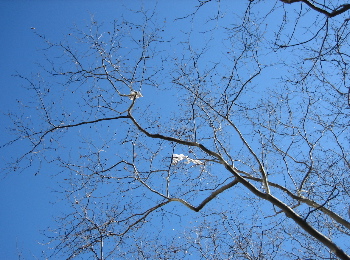
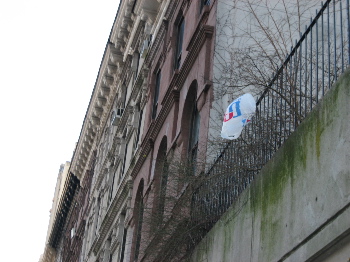
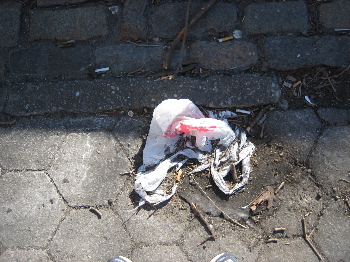
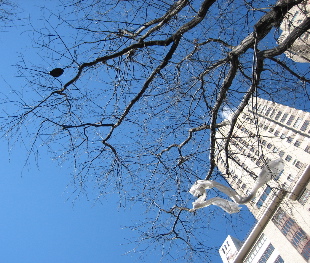
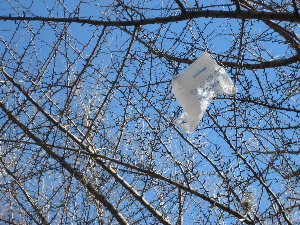
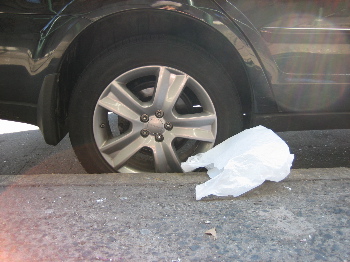
Caught on film, plastic bag litter

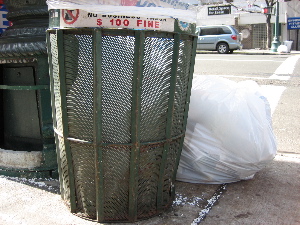
As previously noted in an earlier posting, plastic bags are an environmental scourge. Nothing can illustrate the point more than candid pictures of plastic bags littering the streets and trees of New York City.

keeping the earth ever green


What’s in your garbage?

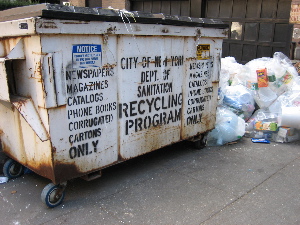
New York City's Department of Sanitation slogged through a year's worth of city garbage to see exactly what people throw away. Both the recycling and the waste were analyzed and compiled into a very interesting and telling report entitled: "The New York City 2004-05 Residential and Street Basket Waste Characterization Study." The trash study was the only way the department could decipher people's habits and in turn create better recycling programs. The recycling habits of New Yorkers have improved from 15 years ago, during the last trash study, but there is definitely a need for even greater change.

Residential trash contains ¼ recyclables
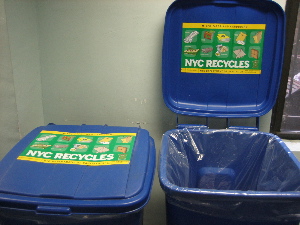
So what exactly is in the garbage? In residential trash, organic material makes up the largest segment at 47%, with recyclable paper at 15% and plastics at almost 12%. But of this refuse, 23% is easily recyclable material that just wasn't separated into the recycle bin. This includes paper, metal, glass, and plastic that people couldn't be bothered to toss into the blue container rather than the black one. And this is just residential waste.

Street litter baskets contain ½ recyclables
Street litter baskets are the worst offenders of holding potential recyclable material that is needlessly tossed away. Almost half that's 47.14% to be exact of street basket waste can be recycled but isn't. Newspapers make up the bulk of the garbage at more than 15%, with other recyclable paper at 15%, glass at 7%, metal at 6%, and plastics at almost 3%.

What the study doesn't show is the amount of people who make their livelihoods by picking through the street baskets for recyclables. Cans and bottles make up the bulk of their haul because the bottle deposits can be cashed in. Old newspapers and cardboard aren't attractive because there is no payback for digging those out of the trash. If the baskets weren't picked through, the amount of recyclables would be even higher than 47%.

Overall results
Overall, 35% of the refuse studied is recycled. But recycling habits of New York's citizens should be better than only 77% residential and 53% out on the street. On the Department of Sanitation's NYCWasteLe$$ website, there are numerous tips on how to reduce waste as well as information about recycling.

Recycling is mandated by law, so you are actually breaking the law when you don't recycle. At home recycling couldn't be easier. You either are given curbside recycling bins that are picked up on certain days, or your apartment building has different containers for your different recyclables. Throwing away trash and tossing recycling into its required bins takes the same amount of effort. When you are outside of home, think about what you throw away before you do it. How difficult is it to hold on to your read newspaper until you get to the office or home so you can recycle it? Can you put your used drink can or bottle into a bag and keep it with you until you find a place to recycle it?

Little acts like this will help keep one less thing out of a landfill. You might think that you aren't contributing much, but if the other eight million people in the city also decided to not throw away their newspaper that's 8,000,000 less papers in the trash.

keeping the earth ever green


Child’s play

Right now I am teaching a seven-day creative writing program at a public elementary school in Buffalo, New York. On the second day I had the students write collaborative stories: One child wrote a fictional story's beginning, another wrote the middle, and a third penned the conclusion. Most of them struggled with this. Exchanging papers was an ordeal, and many were not happy with the stories they were expected to add onto. Girls did not want to write the plot for a story about football; others thought the people with whom they were supposed to trade papers were icky. But some rose to the occasion and collaborated to produce solid stories.

One in particular caught my eye. It was about someone serving in Iraq. Here's what the students wrote:

Once there was a man named John. He was going to Iraq. He was going to fight for our lives. But then he got a little scared because he was thinking of what might happen to him. But then he was feeling sad because he missed his family. Then he went to Iraq, and when he got there, he felt really better. So he got a popsicle, then he said, “I am going to write a letter to my parents.” He got another popsicle, then he went back to war. This time he was not scared, so he got all the stuff he needed. He got the best gun he could. He wanted to see his parents.

Say what you will about the popsicles and the fact that John ceases to be scared when he gets to Iraq, there is some real awareness here about the dangers of war.


Superbowl commercials sell stereotypes, not products in 07

The majority of the attention at Sunday’s Superbowl parties certainly wasn’t always on Peyton Manning and the Indianapolis Colts.

Friends and I attended a Superbowl party at a local restaurant, and it didn’t take long before one of the truer highlights of the game – the commercials – took center stage.

A well-dressed business man walks down a hallway, talking mostly indecipherably from background chatter in the restaurant about his company. No one pays much attention and the commercial is dismissed as another ‘talker,’ clearly not expecting bouts of laughter. But when the male lead takes off his glasses and steps into the marketing room for GoDaddy.com, everything changes.

The question then became, “So what does GoDaddy.com do anyway?”

The ad, linked here, highlights well-endowed women in white logoed tanktops jumping up and down gleefully, while being rated by a number of “biker types,” clad in oversized black t-shirts. If that wasn’t enough to have the eyes of countless men in the room fixated on big screens – the waterworks would do exactly that.

Correct me if I’m wrong, but somehow, wet t-shirt contest doesn’t scream domain registry and web hosting to me. It screams sexism and objectification.

Sure, the Superbowl’s target audience is men, ranging in ages from their late teens on up to the 50-something population. But perhaps the visual was unnecessarily crass and sexualized. Scratch perhaps – that’s a definite.

The clencher: in a user poll by AOL Sports, the commercial didn’t fare that well against other, less “in-your-face” advertisements. In a poll for 2nd-quarter commercials, GoDaddy.com was trumped by the Budweiser dalmation, which came in with 31 percent of the vote. GoDaddy.com’s busty women only held the attention of 2 percent of those polled.

However, don’t let me mislead you. The stereotypes still sell.

Moving on to the Snickers kiss commercial, which painted two unmistakably ‘manly’ men meeting for an accidental kiss after sharing a Snickers bar.

Several problems emerge – the clear media construction of masculinity (who really rips hair off of their chest? Male friends at our table were polled, and apparently that takes a clear level of insanity), as well as the sounds of disgust echoing from around the room when the men’s lips met.

Even in post-Brokeback America, the general population can’t wrap its head around the idea of two men liplocking, whether on the big or small screens – or in real life.

Why is being gay, or being uncomfortable with homosexuality, so accepted in the United States? Why is homosexuality considered a threat to masculinity, as shown in the candy bar ad’s portrayal? What are advertisers selling today, their world views or their product?

Given the choice between the rest of the ads and the cute, yet safe, dalmation by St. Louis-based Anheuser-Busch, I’ll take the dog.


Relics

With Valentine’s Day looming, February greets us with commercials reminding us to buy timeless gifts — diamonds, anyone? — for our sweeties. But some of the most timeless presents cannot fit into a jewelry box or be gift-wrapped. And though some may have been mined as recently as the diamonds Zales wants to sell you, many come from another era and don’t sport a price tag.

In this issue of InTheFray we explore relics of the past and their value to the present. We begin in Brooklyn and Philadelphia, where Sasha Vasilyuk treats us to some Russian intellectual football, better known as “KVN,” a game show of comedy and music sketches in which Russian immigrants participate to hold onto a fragment of their past. In Detroit, Scott Hocking and Clinton Snider look at the city’s cyclical nature, from wasteland to thriving metropolitan area, to deserted area, to booming urban centre. In RELICS, their art installation, the two ask how long it takes the old to be forgotten. Meanwhile, across the pond, Jacquelin Cangro discovers Giants among us on a visit to Postman’s Park, where everyday people’s achievements are commemorated.

We then offer three different relics of love: ITF Literary Editor Annette Hyder and ITF Contributing Editor Kenji Mizumori’s Mixed Media Valentines to loves come and gone; a quilt that Rachel Van Thyn’s mother put together One piece at a time, using squares spanning three generations; and Jen Karetnick’s musings On vintage handkerchiefs passed down by her grandmother.

Rounding out this month’s stories is ITF Travel Editor Michelle Caswell’s interview with Easily angered activist Tom Hayden, who shares a veteran critic’s insight on the Iraq War, desegregation, political apathy, and making a difference.

Enjoy!

Laura Nathan
Editor
Buffalo, New York


Christians and yoga

Demonstrating an intolerance that is noxious, bizarre, and antithetical to living in a globalized world, the founder of PraiseMoves – a recently concocted “Christian alternative to yoga” – is demonizing yoga, of all things. PraiseMoves founder Laurette Willis was, apparently, stunned to learn that yoga was related to Hinduism, and now decries the practice, suggesting that the mental components of yoga can lead, apparently, to something approximating possession: “If there's nothing in your mind, you're open to all kinds of deception… While I don't believe Christians can become possessed, I do believe we can become oppressed by demonic spirits of fear, depression, lust, false religion, etc.”

While the movement’s idiocy may neuter its effectiveness, the motivations for PraiseMoves are both destructive in its encouragement of religious division and demonization as well its curious inability to acknowledge religious dialogue and shared religious practices that have evolved through inter-religious contact. If Ms. Willis were to be told that the Christmas tree is a practice that has rich pagan roots, she might be nudged to reconsider her intolerance. Although factionalization and the rhetoric of religious and ethnic division has gained currency and publicity, Ms. Willis would do well to be reminded that religious practices neither developed in a vacuum, nor are they static: they are dynamic processes that have developed through intellectual exchange – polemic and violent as well as syncretic and peaceful – both within and with other faith communities.


Global warming caused by humans

It's official. The question mark has been removed. A panel of scientists for the Intergovernmental Panel on Climate Change (IPCC) has released their report on global warming and states unequivocally that "human activity" is the major cause for this plight.

And the report predicts dire consequences for the earth. Droughts, rising sea levels, rising average temperatures, heat waves, stronger tropical storms, basically more of what we've been experiencing lately. For Americans that means more Hurricane Katrinas, more stifling hot and longer summers, as well as warmer winters. Retirees may not have to move to Florida or California anymore; besides, those places might be flooded. Global warming has already been predicted in Europe with the consequences being that the northern countries will benefit while the southern ones will languish. The excellent article in the Financial Times says that rising temperatures will let northerners vacation closer by thereby leaving typical warm getaways such as Greece to deal with their hotter temperatures and related problems themselves.

So what good is the report? In it, governments are urged to do something about this problem. In an interview with Reuters, French President Jacques Chirac said, "Faced with this emergency, now is not the time for half measures. It is the time for a revolution, in the true sense of the term. We are in truth on the historical doorstep of the irreversible." On Thursday night before the report was released, several European monuments turned off their lights as a symbolic gesture showing concern for climate change.

The United States government has tried a few times to be more active in controlling its impact in global warming. The benchmark for greenhouse gas emissions controls is the Kyoto protocol, which the Bush administration pulled out of for lack of proof that global warming is man-made. Now that the proof is here, perhaps Mr. Bush will take a more active role in reducing greenhouse gases for which the United States is the worst offender. In 2003, Senators John McCain and Joe Lieberman co-sponsored their self-named Climate Stewardship Act only to have it shot down by the Senate. Perhaps now this important bill will be welcomed and put into use rather than kicked so easily to the curb.

It is also interesting to note that the IPCC report was released one day after former Vice President Al Gore was nominated for a Nobel Peace Prize for his efforts to bring about awareness of global warming. If global warming is the new "it" thing of the year, then let it be and let us start changing for the better.

Global warming is a serious problem, and the world is slowly beginning to realize the consequences of individual as well as big business contributions to it. It took 2,500 scientists organized by a United Nations special panel to realize that global warming is caused by human activity. Now it will take the 6.5 billion-plus people on the planet to take the threat seriously and drastically change their habits in order to keep the world habitable.

keeping the earth ever green


Rape is America’s four-letter word

It isn't the woman walking through a dark alley way or the woman who "wants it" who becomes the next victim of rape and sexual assault. It isn't a woman deemed sexy by middle-class society. The assailant isn't large, black, and waiting for her, and he isn't a stranger in most cases. These are the myths surrounding rape and sexual assault that cloud our media and further attack men and women who are victims of this violent crime. With such hefty assumptions furthered daily by the mainstream, it should be no shock that rape is the violent crime that goes unreported most often.

Statistics abound regarding the numbers of women affected by rape and sexual assault. The predominant statistic circulated among rape educators reads “1 in 4 women will be affected by sexual assault or rape in her lifetime.” That is 25 percent of roughly half the world’s population – 25 percent that will be violated in some way by another person against her consent, against her will.
The legal system is failing our victims, failing our men and women by taking one of the most devastating violent actions and getting it caught up in the bureaucracy of legal red tape. A woman in Florida reported a rape, but instead of following through with the prosecution of the incident, she was jailed when a former warrant surfaced. A statement by the Florida college student also says an employee of the jail refused to administer a second dose of the “morning after” pill.

The woman received an apology from the Tampa police, according to the article, but it doesn’t remove the devastation.

Instead of consoling victims, or helping those who brave their own fears and report a rapist, we as a society too often chastise them, smear their names in the media and dehumanize them even further.

Have you looked at the Duke lacrosse rape case ? Perhaps, a better question would be “Who hasn’t?” Though the facts of the altercation are grey at best, given the intense media campaign coupled with commentary by leaders in all walks of life.

This case, beyond any other, has made it painfully clear that the American nation needs a shift in mentalities when it comes to victims of rape and sexual assault. Immediately, this woman’s claim was lessened because of two key factors and perhaps misconceptions when it comes to speaking about rape and sexual assault. First, society discredited this woman because of her deviant profession – an exotic dancer. As a sex worker of sorts, it was believed that she could not be raped. A career choice, made for whatever reason, does not take away a woman’s ability to give consent.

Secondly, the woman involved was a woman of color accusing young white men from a prestigious university. The combination of the two factors built a case against her in the public eye, regardless of other issues in the case. All of the cards were already against her.

I can imagine the fear that goes along with such a situation, in knowing that no one is going to believe you, yet persisting with identifying high-profile sexual assailants. Am I saying that I, without a shadow of a doubt, believe in this woman’s claims, inconsistent story and all? No. But, the vast majority of survivors or victims of sexual assault and rape do not lie about their experiences. I owe her the same benefit of the doubt.

Rape isn’t only a woman’s issue and never should have been assigned to that domain. The violent act itself is most commonly perpetrated by men against women, and that in and of itself is enough to break down the stereotype that men “don’t have to worry about it.” The chilling statistic that declares that 1 in every 12 men will be raped or sexually assaulted adds to the mounting case that society is ultimately dismissing a horrible phenomenon, that at one point or another, will affect most people in the country in some way or another. It is fortunate that each individual in this country will not have to deal with the atrocities of rape and sexual assault personally. However, in some way or another, most will be touched through the life of a survivor – a sister, mother, aunt, grandmother, best friend, partner, or other individual. Rape is not something we can close our eyes to.

Rape and America’s inconsistent, at best, attitude towards it didn’t disappear with the 20th century. It still exists and will continue to do so until someone says it’s time for the violence, the legal bias, the media judgement, and the acceptance to stop.

The longer we treat rape as a four-letter word, unspeakable except for in hushed tones, the more victims will amount and the fiercer battle we create for ourselves as human beings.