
The bookish stereotype of linguists just got a little sexier. In today’s article in The Los Angeles Times, Sebastian Rotella draws attention to the power of the word by profiling the work being done by linguists employed by anti-terrorism agencies.
The focus on world relations with the Middle East has made bilingual, bicultural Arabic-speaking investigators and translators the hottest thing since sliced bread. The risks Rotella lists give linguists the romantic glow that the Indiana Jones trilogy lent to the study of archaeology.
Ideally, translators and interpreters are teamed with detectives; the precision and subtleties involved in the nuances of culture and language mean that this job requires a high level of human sensitivity which computers can’t match. The French interpreter Rotella interviewed for his article, whom he refers to as “Wadad,” believes the best linguists are bilingual and bicultural from childhood:
“Otherwise, you might understand the words but not the meaning … You have to understand the dialect, [the] mentality, [the] history. If you don’t know the two civilizations, it’s very difficult. A North African might constantly mention Allah in his conversations. But that’s common. It doesn’t mean he’s a religious extremist … There are Arabists in France who are brilliant intellectuals and know a lot, but I think there are things that escape them. I think if Arabic is not your mother tongue, if you don’t read the Koran from the perspective of a devout Muslim and try to see it with the mind-set of the time when it was written, you miss things. The academics try to make everything fit into their theories.”
- Follow us on Twitter: @inthefray
- Comment on stories or like us on Facebook
- Subscribe to our free email newsletter
- Send us your writing, photography, or artwork
- Republish our Creative Commons-licensed content
“To-do’s” before Inauguration Day
Recently, I received an email from a cousin of mine. The substance of the email was a list of 30 things that people should do before President George W. Bush is inaugurated for the second time. Although the email was meant as a joke, my cousin inadvertently managed to sum up, in perfect language, the deepest current of the philosophy of liberalism. Liberals around the country still bare a venomous hatred for the democratically chosen President of the United States. A month has passed since the election, but many liberals are still involved in a somewhat lame campaign to put a vicious sting into the republican victory.
Comically, most of the items on my cousin’s “To Do” list are either entirely contradictory or based on gossip that has bounced around the echo chamber for so long, that lazy or disinterested people mistake it for fact. Politics is a brutal sport, and you can be sure that if someone makes an accusation and gives very little or no evidence to sustain the charge, chances are you are playing with a liberal. So, for the next several weeks, I will focus on one or more of these items that more or less summarizes the position of the liberal left in this country, and try to pound some sense into people.
TO DO: Start a day of school without saying a prayer
Liberals love the First Amendment. They love it. Liberals have an uncanny ability to use the First Amendment as both a shield and a sword. When anyone attacks a liberal for his/her ridiculous assertions to ban Christianity, back down to terrorist interests, and that George W. Bush is the reincarnation of Hitler, liberals hold up the First Amendment crying and crying, “Freedom of Speech, Freedom of Speech.”
Simultaneously, whenever somebody wants to use his freedom of speech to say a prayer before class, recite the pledge of allegiance or, most recently, try to hand out the Declaration of Independence to students, liberals rear back on their hind legs (I am convinced that liberals walk on all fours when I’m not looking), and bleat like billy goats “Seppppperation of Chuurrrrrch and Staaaaaaaaate!” Just for posterity, it’s worth mentioning that the Constitution doesn’t mention anything about a “separation of church and state.” Rather, pursuant to Article V of the Constitution, the first amended article, called “Article I,” and loosely referred to as the First Amendment says:
“Congress shall make no law respecting an establishment of religion, or prohibit the free exercise thereof; or abridge the freedom of speech, or of the press, or of the people peaceably to assemble.”
The amendment, along with nine others, was proposed to the states in 1789 and was ratified by most of the states by 1791. The First Amendment was passed as a reaction to the notion of a national church, such as the Church of England, from which their ancestors had fled. It was not intended to stop school children from saying a humble prayer before class or to strike down the pledge of allegiance.
Only liberals could have such a vague sense of history that they would confuse the First Amendment with a law prohibiting all expression of faith in the public sphere. Liberal groups and politicians have distorted the First Amendment to mean, “Nobody should be offended — ever.” Unless of course you are a liberal accusing the President of the United States of being a murdering fascist, then the “no offending” rule becomes sort of a loose guideline; after all, “freedom of speech, freedom of speech!”
The “no offending” rule has now blown up all over the country as Christmas draws closer. In a school in New Jersey, the holiday band performance is not allowed to even play instrumental versions of popular Christmas songs. A Christian church group is prohibited from entering a Christian float into the city’s annual parade of lights, which happens to feature a float by gay American Indians recognized as holy people; Lion Dancing, which is a Chinese New Year Tradition meant to chase away evil spirits; and German folk dancers. The parade’s spokesman, Michael Krikorian, told the Rocky Mountain News that entering a Christmas-themed float into the parade “could be disrespectful to other people who enjoy a parade each year.”
In Florida, a school disallowed any references to Christmas while simultaneously allowing the open celebration of Hanukkah and Kwanzaa. Luckily, a court overturned the school’s ruling, citing the exclusion of Christmas references as discriminatory. But, out in John Kerry land, California, a school in Cupertino, California has banned a teacher from distributing the Declaration of Independence to his students. In its “Week in Review,” The New York Times cited Charles C. Haynes, a senior scholar at the Freedom Forum’s First Amendment Center, who said that conservatives were trying to use historical documents to “back-door the introduction of religion into the curriculum.” NO! He’s discovered our dark and evil secret … we’re trying to teach kids about America by using (gasp!) American historical documents! Indeed, we have no shame.
What is puzzling though, is why conservatives even need to “back-door” teaching the influence of Christianity in a historical context. In California, where the 38-year-old Steven Williams is banned from using the Declaration of Independence because of its scary and “unconstitutional” reference to “the creator”, teachers are required to teach their eighth grade students Islam. Yes, that’s right. It offends liberals to hear the name of Jesus spoken out loud in public. Yet they are perfectly at ease sending their children to learn all the great things about a religion, which prompted 19 people to fly airplanes into the World Trade Center. One thing is for sure, if the Declaration of Independence goes, the next things to go are the Emancipation Proclamation (after all, it was God who made everyone equal, right?). In the not-too-distant future, teachers will be handing out historical documents that will have words and sections blacked-out like declassified FBI files. Still dissatisfied with the “intolerance” of the people, liberals will decide that somehow the Constitution isn’t quite in keeping with the tolerance and understanding expressed in … the Constitution, and decide that it too must be sacrificed so that there will no longer ever be a person with hurt feelings.
- Follow us on Twitter: @inthefray
- Comment on stories or like us on Facebook
- Subscribe to our free email newsletter
- Send us your writing, photography, or artwork
- Republish our Creative Commons-licensed content
Stuck in a moment
What do Bono and the film Saving Private Ryan have to do with the war in Iraq? The New York Times reporter Frank Rich draws some connections between the censorship of pop culture and the way our media is representing President Bush’s White Elephant.
Three Sundays ago, in his article, “Bono’s New Casualty: ‘Private Ryan’,” Rich reported that this Veteran’s Day, 66 ABC affiliates “revolted against their own network and refused to broadcast ‘Saving Private Ryan.’” Though Spielberg’s film had been previously aired on Veteran’s Day in 2001 and 2002 “without incident, and despite the protests of family-values groups,” the repercussions of NBC’s public chastisement by the Federal Communications Commission left its mark upon this holiday season’s entertainment.
What has changed in the last year? What is it that led so many affiliates to exercise self-censorship when ABC had already given them the go-ahead to broadcast Saving Private Ryan? According to Rich, it wasn’t fear of terrorism or low ratings that drove them to censor Spielberg’s WWII tribute, but rather “fear that their own government would punish them for exercising freedom of speech.” Rich writes:
“What makes the ‘Ryan’ case both chilling and a harbinger of what’s to come is that it isn’t about Janet Jackson and sex but about the presentation of war at a time when we are fighting one.”
Rich notes that some of the companies who exercised self-censorship in refusing to broadcast Ryan are also owners of major American newspapers:
“[It] leaves you wondering what other kind of self-censorship will be practiced next. If these media outlets are afraid to show a graphic Hollywood treatment of a 60-year-old war starring the beloved Tom Hanks because the feds might fine them, toy with their licenses or deny them permission to expand their empires, might they defensively soften their news divisions’ efforts to present the graphic truth of an ongoing war?”
I never thought I’d be promoting the presentation of war on television. Then again, I never thought I’d live to see the day when our rights to know the facts are threatened. It’s possible the only thing worse than showing the violence of war is to live in a society where such violence is swept under the carpet.
- Follow us on Twitter: @inthefray
- Comment on stories or like us on Facebook
- Subscribe to our free email newsletter
- Send us your writing, photography, or artwork
- Republish our Creative Commons-licensed content
Quote of note
“Some people think that the women should be confined to their houses and put veils on and all that and they should not move out — absolutely wrong.”
— Pakistani President General Pervez Musharraf, speaking to the BBC about the merits of a moderate understanding of Islam.
General Musharraf has been busily chattering away over the past few days, condemning the current approach of the war on terror and admitting that the trail of Osama bin Laden, the leader and figurehead of al-Qaeda, has disappeared into the ether.
- Follow us on Twitter: @inthefray
- Comment on stories or like us on Facebook
- Subscribe to our free email newsletter
- Send us your writing, photography, or artwork
- Republish our Creative Commons-licensed content
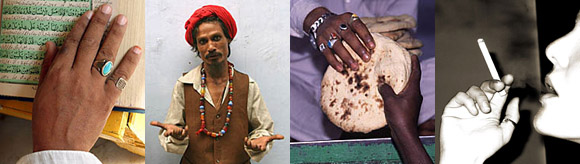
Out: Loud and proud
The 2004 election results gave voice to an influential 22 percent minority of “moral values” voters, mostly folks against gay marriage. But what are the moral values of other minorities? We at InTheFray thought the year wouldn’t be complete without an exploration of the rarely heard views of a few other groups.
We begin with queers. American Indians have long been under- or misrepresented in mainstream U.S. culture, and queer Indians even more so. Emily Alpert investigates how the Two-Spirit movement has grown over the last 10 years in Rainbow and red. Meanwhile, Park Slope tribe member Keely Savoie, in her debut column, explores how Democrats sold out gays following the election.
On the subject of sex, we turn to Editor Laura Nathan’s interview with porn star and feminist-activist Christi Lake, who has some startling views about her job and the media’s representation of it. Writer Eric Duncan reveals what it is like to go through life being called “‘Sugar,’ ‘Peaches,’ ‘Hon,’ ‘Miss,’ ‘Sweet Thing,’ ‘Girl,’ and ‘Little Lady, ’” in Propositions, a fictional tale of a waitress who resents being treated like a sex object, and then decides to oblige.
Next, we make a quick stop at the Amazon.com Theater, as columnist Afi Scruggs returns to ITF with a Christmas critique of the megalith’s latest marketing ploy. Then we escape from all things commercial, as photographer Tewfic El-Sawy shares a fabulous photo essay centered on the Delhi shrine of Sufi Saint Nizzamuddin. Think mystical love of God, combined with a devotion to the poor on earth. It’s a combination that very well could put you in the proper holiday spirit.
Nicole Leistikow
Managing Editor
Baltimore, Maryland
Coming mid-December:
Don’t forget to vote for your favorite pieces of the past year in our annual BEST OF ITF Survey!
Also, Jairus Grove’s review of Cornell West’s new book Democracy Matters: Winning the Fight Against Imperialism.
- Follow us on Twitter: @inthefray
- Comment on stories or like us on Facebook
- Subscribe to our free email newsletter
- Send us your writing, photography, or artwork
- Republish our Creative Commons-licensed content
Quote of note
“We don’t know where he is. He might be anywhere.”
— Pakistani President General Pervez Musharraf, speaking to CNN about Osama bin Laden, the leader and figurehead of al-Qaeda.
“Mission Accomplished,” read the sign aboard the USS Abraham Lincoln on May 1, 2003, as Bush announced that “from Pakistan to the Philippines to the Horn of Africa, we are hunting down al-Qaeda killers,” and that “al-Qaeda is wounded.”
- Follow us on Twitter: @inthefray
- Comment on stories or like us on Facebook
- Subscribe to our free email newsletter
- Send us your writing, photography, or artwork
- Republish our Creative Commons-licensed content
Secret Asian Man
 The hierarchy of alternative lifestyles.

- Follow us on Twitter: @inthefray
- Comment on stories or like us on Facebook
- Subscribe to our free email newsletter
- Send us your writing, photography, or artwork
- Republish our Creative Commons-licensed content
Are TV networks losing their religion?
Adding fervor to the religious conservatism debate engulfing the United States, ABC, NBC, and CBS have all rejected a commercial about religious tolerance. Produced by the United Church of Christ (UCC), the 30-second ad implies that other denominations exclude gays and other minorities.
When the Cleveland-based Church conducted focus groups and test market research last spring, the Church found that many people throughout the country feel alienated by churches. It says that the ad is geared toward bringing those people into the Church.
A voiceover in the commercial says, “Jesus didn’t turn away people and neither do we,” as two bouncers standing in front of a church admit only select while people. They turn away a young black woman, a Hispanic-looking man, and two men some may interpret as gay.
The UCC originally pitched the commercial to the networks nine months ago. But the Church decided to try its hand again this fall after the ad was rejected the first time.
Network executives suspect that the Church, one of the most liberal Christian denominations in the U.S., may have been looking to ignite controversy and make a political statement about Bush’s domestic agenda the second time around.
When the Political Action Committee MoveOn pitched an advertisement for CBS to air during the Super Bowl last year, the PAC received just as much or more publicity from the controversy than it would have had the commercial been aired.
NBC simply told the UCC that the advertisement was “too controversial.”
NBC’s head of broadcast standards Alan Wurtzel told reporters, however, that the network would have aired the commercial had the Church emphasized its own inclusiveness without casting others as anti-gay and anti-minorities.
CBS told the UCC’s advertising agency that the network believes the ad’s statement on gays in the church is linked to the controversial debate on gay marriage. The network said it does not accept advertising “on one side of a current controversial issue of public importance.”
This is consistent with what CBS told the liberal Political Action Committee MoveOn last year when the group pitched a commercial for the network to run on Super Bowl Sunday. CBS told MoveOn that it will not advertise commercials with a political agenda.
ABC told the Church that it generally does not accept any religious advertising. The specificity of ABC’s basis for rejection has insulated it from criticism by the UCC.
The Rev. John H. Thomas, the church’s general minister and president, dismisses NBC and CBS’s arguments that the ad is controversial. He says the advertisement had been broadcast in several parts of the country, like Oklahoma City, central Pennsylvania and Florida, “without generating a negative response.”
The UCC has criticized NBC and CBS for playing into the hands of conservative political and religious groups.
Part of me thinks this is true, though I also wonder whether airing a commercial that seems to alienate people of other religions has the potential to play into religious conservatives’ hands, allowing them to say, “Hey, see, we really are compassionate conservatives!”
Maybe this is why Fox News Channel, which consistently casts itself as the pro-Bush conservative arm of the American media, is the only broadcast network airing the commercial. Or maybe Fox is just trying to liberalize its ways…
The ad can be viewed online at http://www.stillspeaking.com.
- Follow us on Twitter: @inthefray
- Comment on stories or like us on Facebook
- Subscribe to our free email newsletter
- Send us your writing, photography, or artwork
- Republish our Creative Commons-licensed content
Political sportsmanship
Nearly a month has gone by since John Kerry did something great for this country: He lost the election and admitted it. Listening to his concession speech, he was so much greater, more majestic and even classier than he seemed before. If only the rest of the Democratic Party could follow his example.
John Kerry in his concession speech told the world of his conversation with President Bush on election day and expressed his wish for a bipartisan country. Will the real John Kerry please stand up! Then, not even two weeks later, the defeated democratic challenger responded to a question posed by Fox News Reporter Geraldo Rivera about why he lost:
“It was that Osama tape, it scared them [the American people],” he said.
Message: The American People are gullible twits, too scared of their own shadows to stand up to Osama bin Laden. And did I mention that I served in Vietnam? It was the John Kerry I had seen for the past year, back in black.
For months, the democratic demagogues both in Washington and the press had lodged a sustained carpet bomb-style assault on both President Bush’s policies and even his character. MoveOn.org likened him to Hitler, and Michael Moore and the Hollywood crap machine churned out propaganda so vile it would make Lenny Riefenstahl shake her head in disgust. Teddy Kennedy and Terry McAuliffe, the tag team of trash talk, have yelled so hard and so long that President Bush is a liar that their lungs now have the capacity to sustain each of them during the next Boston Marathon. Surely, they thought, their campaign of smear and fear would be enough to pull Kerry past the finish line. After all, the war in Iraq is so bad. One thousand soldiers have died and we are still there. It’s been a year and a half and we haven’t built Iraq into the land of milk and honey! Osama bin Laden is still on the loose, he isn’t weighted down by chains in a dungeon or being flogged by angry soldiers with wet, rolled-up American flags.
And what about Bush’s pathetic domestic policies? The Kerry campaign hammered for months that Bush had turned America into some sort of wasteland and with confidence bordering on arrogance, thought that they somehow convinced all Americans to believe that the economy was the worst since the Great Depression and that President Bush has lost more jobs than Herbert Hoover. Kerry and clan thought they convinced everyone that Bush wants to have state-sanctioned gay stompings in the streets and that a Bush victory would mean a return to slavery for blacks. They thought they had convinced parents that their kids are getting dumber by the second and that Bush has bankrupted the education system. And for some reason, they believed they had convinced the primarily Christian population of this country that somehow Bush’s personal faith in God is a weakness that should be laughed at in the halls of Congress and the streets of capitols around the world.
John Kerry thought that he had convinced the youth of the country that they would be torn away from their mommies and daddies and be shipped off to Iraq with nothing but a musket and a pat on the back if the president were re-elected; and John Edwards was confident in saying that if they were in office now instead of the Republicans, Christopher Reeve would not only have lived but would be doing a foxtrot with Michael J. Fox at the Kerry victory rally.
So what went wrong? They had more money than they ever had. They had Hollywood with Susan Sarandon, Ben Affleck, and Leonardo DiCaprio planting yard signs and giving speeches. They had Michael Moore and Robert Redford making and airing every hate-Bush movie ever made. They had scores of books, tons of magazines, and newspapers. They had the music industry, MTV, and even the Boss himself, Bruce Springstein, touring with Kerry like he was a rock star to get the vote out. They had the billions of George Soros and his wife’s ketchup empire, and the support of the Canadians, the French, and the Germans. So why did it all go wrong? It went wrong because the American people can’t be bought. It went wrong because the American people cannot be tricked. It went wrong because although Democrats seem to think anybody who believes in God deserves a seat on the short bus, they continue year after year to forget that the majority of this country believes in God. They continue to forget that the American people, like Leonardo DiCaprio in Titanic at the bottom of the Atlantic, are not in politics. They forget that people want the news, not what certain people think is the news, and that The New York Times somehow forgot how to be The New York Times. And they forget that Americans love the fact that Bruce
Springstein was “born in the USA,” but also love the fact that he doesn’t run the USA.
The Democrats cry every year that the Republican campaign machine makes issues out of the same things every year: God, gays, guns, and government interference. The problem is that Democrats never seem to get hip to the fact that Republicans aren’t making these things the issues, but that they ARE the issues. They reflect the concerns and the character of the people, of the people! So until Democrats finally do get the idea that Americans care more about America than they do with the issues of self-interest that Democrats think that they should, it would behoove the left to learn how to lose more graciously.
- Follow us on Twitter: @inthefray
- Comment on stories or like us on Facebook
- Subscribe to our free email newsletter
- Send us your writing, photography, or artwork
- Republish our Creative Commons-licensed content
Tearing the Church apart
Is the Anglican Church headed for a 21st century schism? Apparently yes, if traditionalist evangelicals have their way.
The controversy stems, most immediately, from the issue of whether gay bishops may be installed in Anglican churches. There has been a furor since Gene Robinson was installed as the ninth Bishop of New Hampshire, the first openly gay bishop to have such an honor, and the more traditional elements of the Anglican Church are threatening to split from the rest of the church. Archbishop Peter Akinola of Nigeria has gone so far as to declare that homosexuality is “an aberration unknown even in animal relationships.”
In stark contrast to Archbishop Peter Akinola, the 104th Archbishop of Canterbury, the Welshman Dr. Rowan Williams, recently declared to the world’s Anglican churches: “Any words that could make it easier for someone to attack or abuse a homosexual person are words of which we must repent … Do not think repentance is always something others are called to, but acknowledge the failings we all share, sinful and struggling disciples as we are.”
With 70 million baptized Anglicans who belong to 43 autonomous churches across the world having riotous disagreements, we might well witness a 21st century schism within the Anglican Church, and the split will certainly not be an amicable one.
- Follow us on Twitter: @inthefray
- Comment on stories or like us on Facebook
- Subscribe to our free email newsletter
- Send us your writing, photography, or artwork
- Republish our Creative Commons-licensed content
Quote of note
“I think it’s unthinkable that we’re debating what a family is, a man married to a woman. They’ve got that right in the barnyard. We’ve had that for 6,000 years and to think that we’re trying to redefine families.”
— Reverend Jerry Falwell, founder of the Moral Majority, speaking today on NBC’s Meet the Press.
The Liberty University School of Law, in Lynchburg, Virginia — the new branch of the university founded by Jerry Falwell in 1971 — opened its doors this year to its first class of law students. According to Mr. Falwell, among the school’s missions is the desire to prepare “conservative warriors” for the “important battles against the anti-religious zealots at the American Civil Liberties Union.”
- Follow us on Twitter: @inthefray
- Comment on stories or like us on Facebook
- Subscribe to our free email newsletter
- Send us your writing, photography, or artwork
- Republish our Creative Commons-licensed content
Enter Europe, center stage
It looks as though Europe is beginning to play a “forceful and distinctive role” in global politics. If so, how will it affect the foreign policy of the United States? In his International Herald Tribune article, “Europa: EU diplomacy, the way it’s supposed to happen,” Richard Bernstein draws attention to recent political events in which the European Union has braved the footlights.
This may be due to the increasing solidarity of the European Union, as its constitution nears adoption. Perhaps EU Foreign Policy Chief Javier Solana’s ability to improv with the best of them has something to do with it. And then any media archive will show that, while Europe may have taken a supporting role in the past, where leadership of political actions is concerned, its think tanks and diplomatic relations have been hardworking members of the repertory.
Bernstein credits Solana for having taken the “clearest practical initiative” by “pointing both to a penalty and a possible way out for Ukraine” this Wednesday. Solana succeeded in obtaining a formal request for the EU to conduct a political mediation in Ukraine, after warning Moscow and Kiev the Ukrainian election results would remain unacknowledged by the 25 members of the EU should the request be denied.
John Palmer, the political director of the European Policy Centre, notes that the diversity of cultures, languages, and opinions among EU members seems to stimulate the EU’s motivation to reach a common understanding about which issues take priority and how to address them.
“You might think that because of the split in Europe over Iraq, the attempt to create common defense and foreign policies has been aborted. But that is not the view here. In fact, it’s partly because of the split that a serious effort is under way to find collective solutions.”
The United States might do well to observe the behavior of its eastward neighbor over the next four years; the publicized divisions along our nation’s racial, class, and political lines are proving as unnecessarily paralyzing and hazardous to the United States as harmful gossip hurts any earnest actor.
- Follow us on Twitter: @inthefray
- Comment on stories or like us on Facebook
- Subscribe to our free email newsletter
- Send us your writing, photography, or artwork
- Republish our Creative Commons-licensed content