Blog


Commemorative affairs

issue banner

This month ITF supplies ring-side seats at two very different commemorations. Our writers visit a Bosnian graveside, and a Lagos dance party doubling as a memorial service.

Our photo essay this month was created by Joscelyn SG Jurich following her 2005 trip to Bosnia-Herzegovina. Visiting the remains of Srebrenica massacre victims 10 years after the killing, she invites us to bear witness to their family members’ lasting sorrow.

In Nigeria, the passage of 25 years since a grandmother’s death is reason for a party. Jennifer Oladipo visits relatives and learns how to celebrate, Lagos style. Dress your best and bring lots of cash in small denominations for “spraying” — a custom we’re surprised hasn’t made it to Los Angeles.

Nicole Leistikow
Managing Editor
Baltimore, Maryland


The Girls of Riyadh

The lesbian aspect of it, the gay son — that’s not been talked about before. Obviously it happens…but to say it in public doesn’t show the other rich elements of Saudi… I don’t think it’s a very balanced portrayal of Riyadh.

—Hani Khoja, producer of a youth TV program in Saudi Arabia, commenting on Rajaa al-Sanei’s new book, titled Banat al-Riyadh, or The Girls of Riyadh.  The 24-year-old dentist’s new book addresses issues of lesbianism, cross-dressing, homosexuality, and sex in the kingdom.  To the chagrin and horror of some, the book recently gained permission to be sold in the conservative kingdom, which is governed, in large part, by statues of Wahhabist Islamic codes.

Mimi Hanaoka


Please disregard the frightening statistics. The world is a safer place.

Always release the bad news midday on Friday, for brief mention in the ill-read Saturday paper.Yesterday the U.S. State Department released its second annual Country Reports on Terrorism (click …

Always release the bad news midday on Friday, for brief mention in the ill-read Saturday paper.

Yesterday the U.S. State Department released its second annual Country Reports on Terrorism (click here for the report). This year, there were statistics. According to the government, there were 11,000 terrorist attacks around the world in 2005, which killed a total of 14,600 people. Iraq alone accounted for about one-third of these attacks and more than half of the fatalities. At a news conference announcing the report’s findings, the State Department’s counterterrorism coordinator put a happy face on the numbers, insisting that the world is becoming a safer place and the fight against terrorism can’t be measured “month by month or year by year.”

So how exactly are we doing in the “war on terror”? Do we have any idea of how last year compares to previous years? The National Counterterrorism Center (NCTC), which compiled the report’s statistics, says that the 2005 figures cannot be compared to previous year’s figures because the center started using a new methodology for identifying terrorist attacks. This new methodology counts not just incidents of “international terrorism” (“incidents that involve the territory or citizens of two or more countries”), but acts of terrorism more broadly.

Perhaps I’m missing something here, but a browse through the NCTC’s online data pulls up not just the 2005 data, but also the 2004 data — beginning on January 1 and including incidents with victims from just one country (i.e., the broader definition of terrorism). These are the figures we get for 2004: 3,168 incidents of terrorism, 7,717 fatalities, 18,865 injuries, and 6,086 hostages. In 2005, there were 11,110 incidents, 14,602 fatalities, 24,755 injuries, and 34,780 hostages.

On all counts, the numbers have gone up — way up.

Now, I’m not sure when the methodology change occurred, or if it even applies to the data online (the difference may be between what’s online and the previous reports, for example). But assuming that the change occurred in May 2004 — as the Counterterrorism Blog suggests — then the figures later in the year should be comparable. In December 2004, there were 455 incidents and 692 deaths; in December 2005, there were 888 incidents and 1,013 deaths. In October 2004, there were 323 incidents and 628 deaths; in October 2005, there were 927 incidents and 1,377 deaths.

Again, the 2005 figures are substantially higher.

So is the world really a safer place? I’m not sure, but the numbers here don’t look promising. We should also remember that the government has quite a history of spinning terrorism numbers. Last year’s Country Reports on Terrorism did not include statistics after a controversy over what to categorize as “terrorist incidents.” Counterterrorism officials declined to use an alternative accounting method recommended by Secretary of State Condoleezza Rice’s office that would have reported fewer significant attacks. Rice’s office responded by creating the Country Reports on Terrorism — which replaced the previous series, Patterns of Global Terrorism — and refusing to include any numbers in the 2004 report. (At the news conference announcing that report, however, State Department officials did provide figures: 1,907 people had been killed and 9,300 wounded in terrorist attacks in 2004, they said — the highest ever.)

Before that, there was a flap over the 2003 report, which the government hailed as showing a decline in terrorism when first released. After a barrage of criticism — including allegations from two academics that the numbers were being manipulated — the government revised its estimate upward two months later and admitted a “slight increase” in terror.

Here’s some insightful background on the government’s international terrorism reports from the Counterterrorism Blog.

You have to wonder how the U.S. government is going to win this war on terror if it can’t even get the numbers right.

Victor Tan Chen

Victor Tan Chen is In The Fray's editor in chief and the author of Cut Loose: Jobless and Hopeless in an Unfair Economy. Site: victortanchen.com | Facebook | Twitter: @victortanchen


Religious shopping

A mall with no cafes, no cinema, only headless mannequins and a strict bar against admitting any men on its upper floor may sound like an unappealing shopping center, but the novel outlet aims to fill a niche market: shopping for ultra-Orthodox women in the Bnei Brak neighborhood of Tel Aviv. The mall features 20 stores, all designed to meet the ultra conservative tastes of its clients. Even the beds here are only available in the snug single size, due to the ultra-Orthodox injunction against sleeping in the same bed, even for married couples.

The owner, Yehuda Amar — whose prior forays have been in the apartment building construction business — insists that business is good: “Business is good, and it’s better because it’s women-only… It’s what the people in this area want. They can look at the lingerie and make-up without worrying about men lurking behind them.”

Mimi Hanaoka


Statistics that kill

“As the world continues to turn away from the use of the death penalty, it is a glaring anomaly that China, Saudi Arabia, Iran and the USA stand out for their extreme use of this form of punishment as the ‘top’ executioners in the world.”

Irene Khan, Amnesty International Secretary General, speaking about the death penalty statistics for 2005 generated by the organization. Amnesty International catalogued at least 2,148 people executed in 22 countries in 2005, 94 percent of whom were executed in China, Iran, Saudi Arabia, and America. China accounted for the majority of executions, with approximately 1770 deaths.  

Mimi Hanaoka


Progressives gather to watch film, discuss issues

Both in political and film appreciation circles it seems that conservative groups, or those marketing to them, have been far more successful in attracting large amounts of people to gather in one place, usually a church setting, to hear candidates or watch movies that appeal to their sensibilities. The film The Passion of the Christ was a great example of niche movie marketing that drove box office of the Mel Gibson-directed film, one entirely in Aramaic and Latin, off the charts.  Not to be outshined, the Southpaws of politics have decided that perhaps those Righties know what they’re doing and have decided to duplicate their successes.  The national organization, Ironweed Films, is such a progressive group that is trying to bring like-minded people together in non-traditional ways to rally around political issues, and movie screenings seem to be an easy method to test.

Next week, voters around the country – from D.C. and Decatur to St. Petersburg to Seattle — will gather in homes, halls, dorms, and theaters for the first-ever “Progressive Movie Night Week” (April 23-30).  The events will showcase the 2006 Oscar-nominated film, Street Fight, about the hard-fought 2002 Newark, NJ mayoral race. Following the screenings, guests will discuss the film with neighbors and local progressive candidates at the federal and local level, and their hope is that they will be as successful as conservative groups with a similar strategy.  

Ironweed Films founder Adam Werbach made history as the youngest-ever elected president of the Sierra Club at age 23 and is now heading up this effort.  Similar liberal-leaning media efforts, such as Air America radio, haven’t been too successful, but if it worked for Mel, it can work for others, no matter which way they hold a bat.  If you’d like to be part of a gathering, go to Ironweed Films’ website to see about participating in next week’s gatherings.

Rich Burlingham


A victory for freedom

Yesterday, the CIA fired Mary McCarthy over leaks about secret prisons in Europe.  Super-hack Senator Pat Roberts of Kansas was of course congratulatory.

Could there be a more perfectly clear case of using “national security” to protect political interests rather than the country?  The argument that the revelation somehow helps international terrorists is so ludicrous that it’s difficult to even state.  Assuming that the CIA actually didn’t arrest the wrong guy, one would have to believe that the leadership didn’t notice their people being abducted until The Washington Post pointed it out.

Frightening, isn’t it?  Just think how effective a killing machine al Qaeda will be now that they know the CIA is after them and the NSA might intercept their phone calls.  Before these dangerous revelations, they didn’t bother to conceal their identities and made operational plans over the phone.

Pete DeWan


Hiroshima’s crucifix

Last week I visited the peace park in Hiroshima, where a U.S. bomber dropped the first nuclear weapon to be used in war. Walking through the memorials, it is impossible not to remember the exact moment of the bomb’s det…

Last week I visited the peace park in Hiroshima, where a U.S. bomber dropped the first nuclear weapon to be used in war. Walking through the memorials, it is impossible not to remember the exact moment of the bomb’s detonation: 8:15 a.m. on August 6, 1945. Clocks in the city stopped because of the awesome power of the atomic blast, and the distinctive face of the A-bomb watch — minute hand stretched level to the right, hour hand splayed out slightly lower to the left — is Hiroshima’s own crucifix, displayed in wristwatch relics that survived the bombing as well as modern-day memorials. By the end of 1945, an estimated 140,000 people had died from the A-bomb attack, slightly less than half the city’s population. An astounding one in ten of the dead were actually Koreans, many of them brought over to Hiroshima as slave laborers.

I remember a while back there was a flap over an exhibit in the Smithsonian Institution commemorating the 50th anniversary of the bombing of Hiroshima. American veterans groups were angry that the exhibit focused too much on the casualties inflicted by the bomb and not enough on how it — and the atomic bomb dropped on Nagasaki three days later — brought about a thankfully swift end to the war. The Smithsonian exhibit was eventually canceled. More anniversaries have come and gone, but the debate is still not resolved. Supporters of the bombings, including some Japanese historians, have argued that the war would have gone on for many months longer without the use of atomic weapons and that the cost of conquering Japan, in military casualties on both sides as well as Japanese civilian deaths, would have surpassed the nuclear death toll. Opponents of the bombings, including General Dwight Eisenhower and other top U.S. commanders during the war, have said that Japan was all but defeated by August 1945 and the use of such an awesome and indiscriminate weapon could not be justified militarily. The latter is the view expressed in the Hiroshima peace museum. Clearly, the Japanese war machine needed to be stopped — the exhibits in the museum make pointed reference to Japanese war crimes in China and Korea — but the atomic bombings were not the solution. The museum makes the case — one that I never heard growing up in the U.S. — that the entry of the Soviet Union into the war against Japan would have ended the war quickly, without the need for atomic weapons. (The Americans refused to wait, the museum claims, because they did not want the communists to establish any further footholds in Asia once the fighting ended and the victorious powers began carving up their post-war spheres of influence.)

Which military scenario would have brought about the least loss of life is just one of the questions to consider, however. We sometimes forget that bombing Hiroshima was more than just the taking of civilian life — it was the taking of life in the most gruesome way imaginable. The horror is captured in heartbreaking detail by the museum’s exhibits. Men, women, and children walked through the burning city like zombies, their skin charred and hanging off their bodies in tatters. Black rain fell from the skies, the detritus of a poisoned earth; bomb victims mad with thirst drank the radioactive waters. The black-and-white photographs of the carnage are difficult to behold, but for me the most moving images were the sketches drawn by the survivors themselves. In raw colors and sometimes child-like scrawls, they depict the most terrible suffering. Naked bodies and tortured flesh, like a scene of hell from the dark imaginations of medieval Christian painters. A mother wailing over her son’s disfigured body as it lies in a field of unclaimed dead. Such suffering did not end on the day of the bombing. Those who were within one kilometer of the blast radius died within days. Others drowned themselves in the Motoyasu River because the pain of their wounds was so great and the available treatment so little. Still others suffered for years to come, bearing keloid scars and other disfigurements and eventually contracting diseases linked to their radiation poisoning. (They included the young girl Sadako Sasaki, just two years old when she was exposed to the bomb’s radiation, who died of leukemia at the age of 12 and whose spirit is remembered in the peace park’s especially moving memorial to Hiroshima’s young victims.)

Since the bombing of Hiroshima, the city’s mayors have written letters to the leaders of the world’s nuclear powers, reminding them after each nuclear test they conduct that they are dishonoring Hiroshima’s dead and killing the hopes of the bomb’s survivors for an end to war. The last two letters featured in the museum were sent in February to U.S. President George Bush and British Prime Minister Tony Blair. Sixty years after Hiroshima, the United States and Great Britain persist in testing sophisticated new forms of nuclear weaponry, even while reprimanding hostile nations like Iran and North Korea for their arms development.

Since the U.S. and British governments still have not given up their addiction to nuclear weapons, citizens of these two countries may find a trip to the city’s peace museum all the more important. For American visitors in particular, the scenes of blasted buildings and soot-covered victims may evoke memories of the horrors of the September 11 terrorist attacks. It seems that the power to perpetrate mass killings of civilians, and the politics to justify them, remain very much with us today. Until the world lays down its arms, Hiroshima, too, will remain with us, as the cross of our shared suffering.

Victor Tan Chen

Victor Tan Chen is In The Fray's editor in chief and the author of Cut Loose: Jobless and Hopeless in an Unfair Economy. Site: victortanchen.com | Facebook | Twitter: @victortanchen


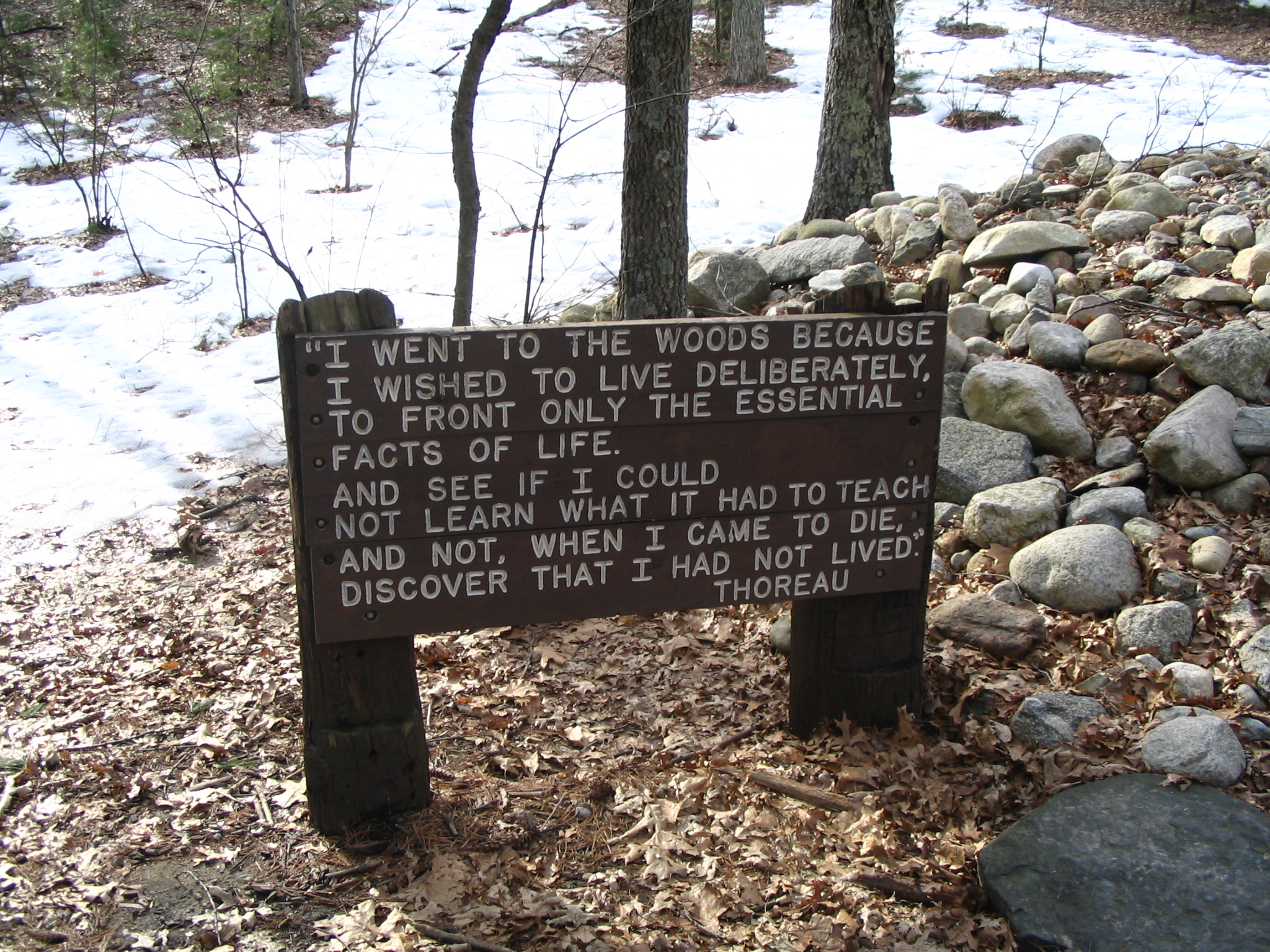
I Went to the Woods

See you all at the end of May.

Yours truly,

Motýlí Voko

Jan Vihan is a contributing writer for In The Fray.