Blog


Sontag’s last stand

If you haven't already done so, get your hands on a copy of Susan Sontag's At the Same Time. To read this book — the collection of nonfiction pieces Sontag was working on at the end of her life — is to realize what a bold mind and voice we have lost. But this collection, though less groundbreaking than its predecessors — Against Interpretation, Illness As Metaphor, On Photography, also reassures us that Sontag’s writing, her wit, grace, and resolve, will continue to influence serious readers, curious minds, and the politically concerned for generations to come. Each essay published in its unedited form, these pieces, right down to the collection’s structure, were shaped by Sontag’s hands alone.

Its unsentimental foreword penned by Sontag’s son David Rieff, At the Same Time illuminates the late writer’s many passions: literature, translation, beauty and aesthetics, politics, free speech, and, of course, photography. Featuring forewords Sontag wrote for translated works like Leonid Tsypkin’s Summer in Baden-Baden and Anna Banti’s Artemisia, the collection’s first third gives us an intimate portrait of Sontag the reader. Written in a way that reads like curling up with a glass of wine and talking to a good friend, the forewords all but ensure that we readers will becomes fans of the authors Sontag celebrates.

With its focus on September 11, the second third of the collection initially feels pedestrian. But read alongside Sontag’s reflections on September 11, 2002, and Abu Ghraib, these essays reveal the power of candor when it was eschewed, courage when it was confused with consent. Considering how quickly Sontag said what few other Americans dared to mutter, they remind us how Sontag has changed our understandings of this post-9/11 world.

It seems fitting that the collection’s back cover includes a picture of a note that says, “Do something. Do something. Do something," for the collection’s concluding pages relay this urgency through Sontag's final public speeches. Illuminating the ethical importance of translating foreign works, of writing and truth telling, of resistance, they are a lasting reminder of the inseparability of politics and literature, one that confirms Sontag’s belief that “in a time in which the values of reading and inwardness are so strenuously challenged, literature is freedom.”


For the Comfort Women

According to an article published Friday by the Associated Press, the Japanese government said it has no evidence that Japanese women were forced to work in World War II military brothels, according to a statement made on Friday.

The government has not come across anything recorded in the materials it has found that directly shows so-called 'coercion' on the part of the military or constituted authorities," the statement read, as presented in Tokyo.

These women, better known as comfort women, were a part of an atrocious history of sexual slavery on the Asian continent sixty years ago. During World War II, the victims, according to a report complied by Amnesty International, up to 200,000 women were enslaved sexually by the Imperial Army, between 1932 until the end of World War II.

Following these devastating acts, these

Sixty years later, these women have been unable to find justice from the government that ultimately led to their physical and emotional discomfort.

While the American government has watched from afar, it remarkably has not remained silent. In 2005, and again this year, members of the United States Congress have sponsored legislation which would plead for an official apology for the women involved.

There are few times that there is extreme bipartisan support of a measure, especially when it deals with international relations. However, both Democrats and Republicans in Congress see the requests of the comfort women as valid, and want our government to demand this simple act of justice. I stand with them.

There is a striking possibility that the surviving comfort women will never hear a "sorry" from the Japanese government, and an even more likely possibility that they will die before recognition is made. The surviving women are in their 70's, roughly, and have broken their silence to speak out against the sexual violence attributed to war. Breaking their silence, in the Japanese community, led to shame and ousting from mainstream society. But these women outweighed their own discomfort for a greater good, and for that, I admire them.

I personally became connected with the story of the Comfort Women as an actor in the Vagina Monologues on my college campus. Eve Ensler, who compiled the monologues, interviewed several of these courageous women, and made them the topic of the 2005 spotlight.

Theatre is a powerful tool that liberates those who perhaps can not free themselves from societal entrenchment. The comfort women, though few in number, will be heard. Each year, thousands of women will relate their tale on college campuses across the country. These women will trouble the community to take action, to remember, and to speak out against acts of violence against women in times of war.

When those in our global community have no voices, we must be their voices. When those in our community can not achieve justice on their own – we have to help them find that inner peace.

Perhaps the Japanese government will never recognize these atrocities verbally. There is a striking chance that their history will not appear in the country's history texts – those things, those institutional barricades to truth, are not things we are able to control.

But we have to remember the comfort women.


What we know

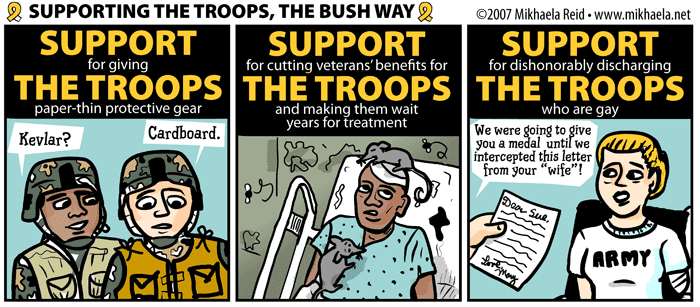
Every time I hear a Republican saying that Democrats and liberals undermine the troops by demanding that they not get killed for nothing, or by writing articles exposing their pain, I think of how the Republican congress voted, five days before the war began in 2003, in the middle of the night on a Friday when no one would know about it, to cut veterans' benefits by 40%. When I think of troop morale, I think of the troops' first Thanksgiving in Iraq, when the President showed up with a full feast. But once the cameras were gone, the turkey and the chicken-in-charge were packed back onto the plane and the troops hit the desert again without so much as a cranberry. I also think of Mr. Rumsfeld telling a soldier asking why they didn't have enough armor and protection well, we don't have any, so tough. I read the WaPo article on Walter Reed. The blog written by an injured soldier inside the center is just as heartbreaking.

"The stress has come from being here. From being inside these four-gated walls. From seeing what becomes of the broken soldiers. We go from being the team leader to just a specialist. We go from being convoy commanders to being just another sergeant. We are broken down by our name, rank, and sex; sometimes even our injuries. And that is the sum of who we are. We are what has been cropped from the canvas. We are the cost of war." (via boingboing)

The first two tidbits were provided by What We've Lost by Graydon Carter back in 2004. Imagine what else we've lost in the three years since.♦

The literary giants from Latin America had a 30-year feud over a woman. I expected more from these two.♦

It's Sunshine Week. For those of you who don't know:

"Sunshine Week is a national initiative to open a dialogue about the importance of open government and freedom of information. Participants include print, broadcast, and online news media, civic groups, libraries, non-profits, schools, and others interested in the public's right to know." (From sunshineweek.org.)


UN global initiative, safe water

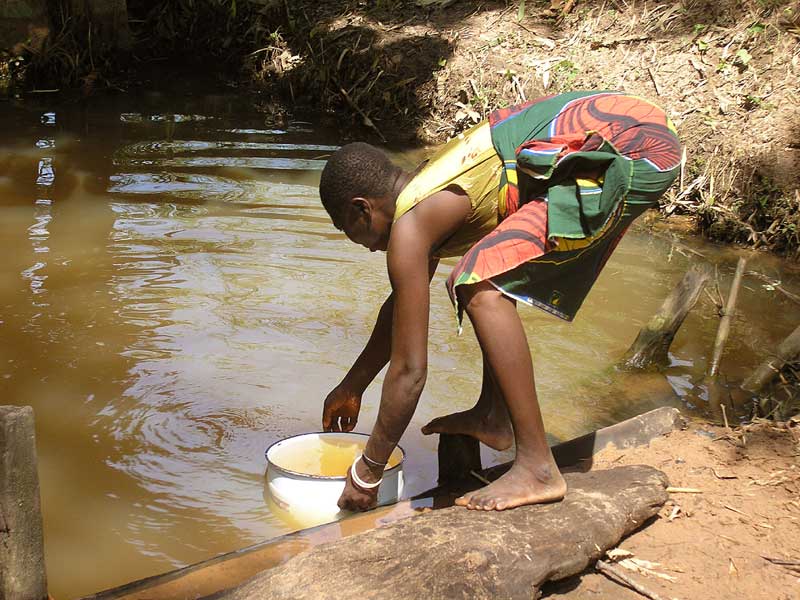
Worldwide, more than one billion people lack access to an improved water source, such as a rainwater collection or wells. Two billion still need access to basic sanitation facilities.

By 2015, the international community, working through United Nations' Millennium Development Goals adopted in September, hopes to reduce by half the number of people without safe drinking water and basic sanitation. drinking_water-nigeria.jpg


In the developed world, the moment a drop of water hits the ground it goes into the water system until it becomes wastewater. Then it's treated and put it back into the system.

"We have a large-scale infrastructure in the United States to provide clean water," said Joseph Hughes, chair of the Georgia Institute of Technology School of Civil and Environmental Engineering. "Using our current approach will not provide the rapid fix the United Nations is looking for in developing countries. It would take decades."

Hughes outlined four steps to solving the developing world's water and sanitation problems. First, researchers must determine how big the problem is, then analyze the water distribution process, understand the complexity of the systems required and, finally, create new approaches to water supply and sanitation through research and development, which might include new methods of storing, treating, and disinfecting water and developing sanitation systems that minimize pathogen release.

Urbanization, climate changes, water scarcity, and economic development will affect where water will be available in the future and where concentrated amounts of water will be required to meet the needs of large populations, Hughes says. The United Nations projects that two-thirds of the world's population will live in areas that face water scarcity by 2025.

"Historically we've tried to go to groundwater sources, such as a well, to initiate improved water sources, but there's a very finite capacity in groundwater," Hughes noted. "We have to work much harder to make ocean or surface waters safe."

The water must be safe and in reliable quantities

"We need to go beyond providing better water," Hughes added. "We need to provide water that you and I would drink and consider safe. If a pregnant woman drank it, she wouldn't be worried about her health or the baby's health."

In the United States, the only thing consumers need to know about their water supply is how to pay their bill and call a plumber if there's a leak, said Susan Cozzens, who organized the AAAS session on water and sanitation in developing countries. But a family in a developing country with a latrine needs to know a tremendous amount  how to build the latrine and how to maintain it.

"If a part breaks, what does that family do? Does the family stay in touch with the organization that came and provided the service or part originally? Is there someone who assumes the role of civil engineer in every town?" asked Cozzens.

Cozzens, in order to answer these questions, plans to investigate how communities in developing countries share their knowledge. She will conduct case studies in urban as well as rural locations in Mozambique, South Africa, Costa Rica, and Brazil.

Cozzens' goal is to provide insight to international and local water authorities helping developing countries set the right conditions for people to learn and solve the problems of unsafe water and sanitation.

TECHNICAL CONTACTS:
1. Susan Cozzens (404-385-0397); Email: susan.cozzens@pubpolicy@gatech.edu
2. Joseph Hughes (404-894-2201); Email: joseph.hughes@ce.gatech.edu


Patchwork: it’s not grandma’s quilt

Hey, I am all for recycling but $42,000 for a handbag? Yes, you read correctly. French icon Louis Vuitton introduces us to a fresh take on recycling. According to the March 13th edition of The New York Post, fashion house Vuitton is preparing to launch its Tribute Patchwork Bag. Reminiscent of my grade-school collage days, the $42,000 handbag will combine patterns selected from 15 bags from the Louis Vuitton spring/summer and cruise collections. No slouch when it comes to promotion, Vuitton is limiting the number of Tribute bags to 24. Only four of these handbags will be crossing the Atlantic to the U.S. And yes, for those of you with the dough, all four have been taken.

Vuittondm060307_400x520

According to the U.K.'s Daily Mail, Louis Vuitton and designer Marc Jacobs, along with company executives, created the concept as an attempt to stem the tide of mass counterfeiting that generally occurs when new bags are launched. No matter that imitation is the best form of flattery  if you are creating a product that is generating income, it is definitely preferable that you get to keep the bucks. That said, let's ask ourselves why we are willing to pay exorbitant amounts for an item that, while it may serve a helpful function (where else would you put the pound of make-up needed for touch-ups?), according to one enterprising reporter can be re-created for approximately $205?

What is it about us that makes owning collections of expensive shoes, handbags, and make-up so vital? In fact, it appears that our need to be included and yet just a wee bit better is what keeps the counterfeiters counterfeiting and the Louis Vuittons so sure in their ability to attract people willing to spend $42,000 on a handbag. In our consumption-driven world, the end is never in sight. Whether we are filling our closets with the latest fashions, juggling our planners to fit in one more appointment, or adding one more book about organization to our shelves, we acknowledge the ironies only to return to the feast. For a lucky 24, the exclusive Tribute handbag will be served. Louis Vuitton will gorge on an extra $1,000,000. Street vendors, with a new vision to hawk, can hope for some additional bread. Thanksgiving in March, we can keep on giving thanks that there is room for just one more at the table, err, in the closet.


Dirty secrets? Like, whatever!

When I asked one of my classmates how he felt about the classification of government information, his response was as terse as it was disappointing. "I don't," he said.

Ask a student you see walking to a class at any college campus in America. The responses rarely vary.

The iPod Generation, with its sleek camera phones and on-demand online news, has all too often simply forgotten about the dirty little secrets that those we empower to run our lives and spend our money hide from us on a daily basis.

We skate across the surface of today's 24-hour news cycle, across the icy layer of the superficial and the celebrity that dominates today’s programming.

So how can anyone blame us?

We are, as the cliché goes, what we eat. As the news becomes increasingly soft and profit-oriented, healthy choices become more and more scarce.

Can I or any other transparency advocate blame a generation choosing from the journalistic equivalent of McDonald's for their unhealthy diet? Logic tells me I must answer no.

Had I never broken through that ice and into the debate room during high school, I, too, might never have discovered the cold waters that lie beneath the surface.

Once I did, the truth was as shocking as any plunge into a wintry lake.

Hundreds of detainees held without charge or due process in Guantanamo Bay, Cuba; torture in secret prisons from North Africa to the Middle East to Eastern Europe; illegal wiretapping of American citizens. Every story read like the topic of a high-adrenaline bestseller ready to fall off bookshelves at a Borders or Barnes & Noble near me.

But the stories were true. And the deeper I dove, as I arrived at college and began volunteering at the Freedom of Information Center, the more unbelievable, shocking truths I discovered.

A U.S. government report saying the Iraq war has significantly increased the threat of terrorism, not quelled it; Iraqi insurgents who not only were financially self-sufficient but even earned enough money to fund other terrorists around the world: These kinds of truths made me stare dumbly at my flat new laptop’s screen.

They underscore the necessity of a national dialogue about open government and transparency like Sunshine Week.

Now that I have seen the shadowy world beneath that layer of ice, I wonder how anyone could simply ignore the injustices our votes enable and tax dollars bankroll.

But I don’t wonder long.

I remember the words of the late President Reagan, who famously classified his grades after taking the oath of office: "All you knew is what I told you."

I remembered what I learned in history class: how he had neglected to mention his decision to sell arms to Iran and send the profits to anti-communist guerrillas in Nicaragua.

I remembered my generation, entirely too young to remember the lesson of the famous Iran-Contra Affair and, like every generation, probably could have paid closer attention during American History.

When I think about how little my generation knows about the indignities of our times, I have to forgive them.

Instead of learning from a young age not to trust our politicians' power to create secrets, we went ice-skating.


This week is Sunshine Week, a national initiative to open a dialogue about the importance of open government and freedom of information. Participants include print, broadcast, and online news media, civic groups, libraries, non-profits, schools, and others interested in the public's right to know.


Right-wing entertainment

Alternet has an article up about the parallels between the movie 300 and the Republican-backed war. Even as a liberal, feminist Democrat, I still want to groan  enough already. It's. A. Moo-vie. Just like 24 is a TV show. So was V For Vendetta (does anyone even remember that one anymore, besides Natalie Portman bald?). Is this all we have to talk about? Out of everything happening in the world today, this week, this is what you choose to use your degree and access to a wide audience for? ♦


Building green for environmentally conscious homeowners

Green building is gaining a small foothold in American homes. Although mega-mansions and their wealth status are popular in many subdivisions, some environmentally conscious homeowners are no longer satisfied with consuming energy for the sake of showing off. Conserving the environment while making a home more energy-efficient, using alternative energy sources, as well as building with reclaimed materials is gaining in popularity. And now some states even help the greening of homes by offering attractive tax credits and incentives that offset some of the costs of materials and installations. Creating or restoring a home into a clean-energy-efficient one also creates less of a dent in owners' wallets each month. This perk, along with creating less of a carbon footprint, are enough of an incentive for owners who have already gone green.

Reclaimed building materials
Buildings, houses, and barns are demolished everyday, and many of the materials used for these buildings are still perfectly good to use. Second-hand goods are cheaper in every market and, by reusing these goods, it also keeps them out of landfills and creates less destruction of nature for manufacturing. Reusing building materials such as bricks, tiles, and flooring is an attractive way to help your home become green. And, in turn, home restorers can also recycle their old materials. There are companies that specialize in recycling and reclaiming building materials from demolished or renovated residences.

Solar power
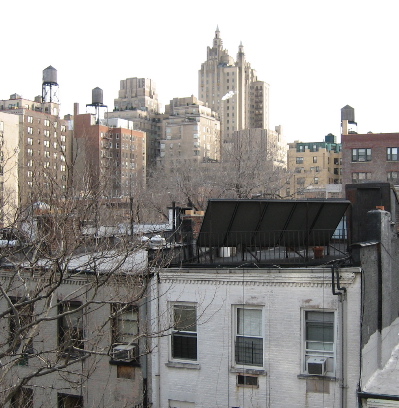
With energy costs creeping higher and higher and energy resources dwindling, alternative and clean energy sources are gaining a small momentum with homeowners and businesses. Certain states such as California, New Jersey, and New York offer rebates and excess-energy buyback programs that, along with federal tax credits, can offset the cost and installation of solar panels. Depending on the state and program, most actual payback times the amount of time that your out-of-pocket costs versus zero-energy-costs merge can be as little as 10 years. Most solar panels are hooked up to a battery pack or generator that store excess energy to be used when the sun isn't out.

Indoor energy efficiency
Using less energy to begin with will make your house green. It starts with proper insulation this keeps the house warm in the winter and cool in the summer. Some green builders have used hay as a natural insulator. Ceiling fans use much less energy than air conditioners and, in the winter, the fans can circulate the hot air that rises to the ceiling. Installing florescent energy-saving light bulbs cuts down on energy consumption and the bulbs also last much longer than traditional incandescent ones. Saving water is becoming a big concern, so dual-flush toilets, which use more or less water depending on the need, are a good alternative. For more on how to save energy around the home, check out my post How to fight global warming, use less energy.

Natural aspects
Not all green building has to do with the house itself. In the summer, a big tree over the roof of your house provides natural shade for cooling. Installing a bucket to catch rainwater is a good way reuse it to water the lawn. Planting the garden with native plants that don't require a lot of watering also makes ecological sense.

Your home is one of the most expensive investments you will ever purchase. Most anyone can easily do a few things around their home to make it green. The next time the energy bill comes around, think about simple solutions to bring down the bill and in return help the environment.

keeping the earth ever green

For more on green building check out the excellent "Austin House Project" series on "This Old House."


Suicide bomber in Morocco kills one — himself

This morning I was informed of a suicide attack here in Morocco  Casablanca (the financial capital), to be precise.

As it turns out, only the bomber himself was killed, and the rest of the story was pretty straightforward.  The BBC reported this morning that prior to the attack, a patron of a cyber café had been told by the owner that he was no longer permitted to view "jihadist" (BBC's term, not mine) websites and that the bombing was perhaps in retaliation, although there is question as to whether or not the bombing was intentional.  A friend accompanying the bomber managed to escape and has not yet been questioned.

The bomber hailed from Sidi Moumen, as did the perpetrators of 2003 bombings in Casablanca which killed 45 people and targeted a five-star hotel and some Jewish cultural buildings.

Whether or not this will affect tourism remains to be seen.  Morocco has basically been on terror alert since 2003, but tourism has only increased, particularly in Fez and Marrakesh, both major historical centers.  Casablanca, on the other hand, has very little of interest to tourists; most go only to see the giant Hassan II mosque  funded entirely by donations  then move on to the former imperial capitals, the Sahara, or the Mediterranean coast.

Personally, I'm not concerned.  As a co-worker reminded me this morning, "you could be hit by a bus at any time."  Morocco has far less crime, even "terrorist" or "religion-related" crime, than my home country and less than most developed countries.  I'll stick it out.