- Follow us on Twitter: @inthefray
- Comment on stories or like us on Facebook
- Subscribe to our free email newsletter
- Send us your writing, photography, or artwork
- Republish our Creative Commons-licensed content
Charlie Savage, a Boston Globe correspondent and ITF contributor, was awarded the Pulitzer Prize for a series of articles uncovering the tactics used by the Bush Administration to circumvent hundreds of laws passed by Congress, including those banning torture and new safeguards in the Patriot Act.
To read the article Charlie wrote for ITF about his experiences coping with cancer, click here.
The tragedy at Virginia Tech, like all such occurrences, brings the issue of school safety to the forefront of national debate. All schools need to have plans in place for this type of disaster and I believe most do. Since Columbine especially, schools and communities have prepared for the worst, the unthinkable. In our school, we have lockdown mode. When we get the word, basically we shut and lock the doors. What else can you do? If it really happens, I think we can only hope survival mode kicks in and we do whatever the situation calls for to save our lives and the lives of those around us.
Lockdown in a high school is fairly easy. A P.A. system connects every room in the building. There are phones in every room and every teacher has access to email in his or her room. I cannot imagine how long it might take to reach everyone on a college campus. The buildings are scattered over a large area and, from my own experience, there are not even phones in the rooms for communication purposes.
Another issue arises after a major school tragedy. Copy-cats. Not necessarily someone trying the exact same thing, but threats in general occur in quick succession after these tragedies. Already in the region where I work, two districts shut down for a day each because of threats. One threat specifically mentioned the Virginia Tech tragedy.
It actually surprises me that my school has not received any threats this week. We have already experienced about four this year citing bombs in the building. Four is a pretty typical number for my school and we are not that unusual. This creates a real problem. Mostly, it makes for a situation in which the boy cried wolf. They never amount to anything. Usually it's a student who wanted to postpone a test or simply go home early on a sunny, warm day. Fortunately, our administration takes a hard line on these students. They press criminal charges. Still, the seriousness of the offense and consequences have not stemmed the frequency of threats.
In the event of a bomb threat at my school, we go into lockdown mode so no students can leave any classes until the principal or police clear the building. But, what if just one time, there really is a bomb in the school? It only takes one time for a tragedy to occur.
Virginia Tech happened because the Democrats failed with gun control laws.
Virginia Tech failed because the other students were not armed and able to defend themselves.
Virginia Tech happened because we raise our kids to be wimps and cowards.
Virginia Tech happened because of video games and Hollywood violence.
The best one yet has come from a conservative blogger named Gina Cobb who believes that teaching students young and old to believe in God could've prevented this. A few hours after I read this, NBC revealed the contents of their present from Cho Seung-Hui, in which Hui "rails against… Christianity." Well, there goes Cobb's already ridiculous theory.
I don't think it will be long until someone blames immigrants, as Seung-Hui's parents came to America from Korea.
Maybe having someone to blame makes everyone feel better. But finger pointing is useless and most of the time incorrect. Accusing everyone and everything just adds to the thick cloud of sadness and confusion for those involved.
Some of the issues will need to be addressed: the response of campus officials, guns on campus (personally, I wouldn't have been comfortable sitting in a room of armed classmates during my four years), etc. Talk of God and movies related to this case is nonsense.
The only person to blame is Seung-Hui. It doesn't matter what he watched, listened to, who he dated or was rebuffed by, or whether or not he was quiet or anti-social. He was simply a psychopath.
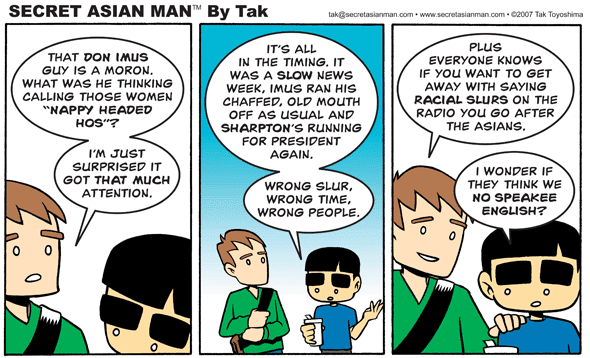
I confess to ignorance about Imus before he was fired. I never listened to his show, or any other radio show, actually. It took some back reading and summary articles before I could have an opinion: that his sorry a** should've been fired a long time ago. But so should a lot of others.
In the aftermath, the media is looking closely at rap, free speech, whether or not flippant but hateful statements even matter, and what else, or who else, should follow Imus.
Nothing will change. Imus was never the problem — there's no shortage of ignorant old white men with opinions, and there never will be, unfortunately. But there's also no shortage of media professionals willing to employ these men and no shortage of a complacent audience to ignore their racist/sexist remarks.
People are willing to let it go — so what, he was joking, he didn't mean it, get over it, God, you're so sensitive. It's just some casual racism with my morning coffee. It's just a sexual put-down to women that we want our daughters to look up to: women who have the strength, intelligence, courage, and self-respect to never be "hos."
Maybe if, for all these years, Imus had just been the old coot down the street or your drunken uncle, it wouldn't matter. But when you're paid to say such things, it matters. When millions of people, even those young and just learning right and wrong, are listening, it matters. When others follow in your footsteps and willingly spew hatred for cash and fame, it matters. If you ignore Imus, you have to ignore every other talking head who says something that is just plain unacceptable. The dominos keep falling — ignore what Ann Coulter says about The Jersey Girls or Rush Limbaugh's take on Michael J. Fox, and others fall in line.
In Virginia, a record number of innocent people were killed. Their family member and friends will never be the same. Most of all, the survivors no doubt have the hardest road ahead of them. Instead of support, sympathy, or aid, an Imusite, John Derbyshire, has only this hurtful bit: "College classrooms have scads of young men who are at their physical peak, and none of them seems to have done anything beyond ducking, running, and holding doors shut" (via Time). A blogger named Nathanael Blake agrees with him.
Haven't they ever heard of survivors' guilt? The constantly haunting questions of "Why did I get out and not them? What could I have done differently? If only I hadn't been here or doing this?" It drives people to suicide. Then there are the coming stories of students who did step up, who did fight back, who risked or gave their lives to help the person next to them. But people like Derbyshire and Blake have no problem rubbing unnecessary salt in a fresh, gaping wound.
Journalist Gwen Ifill (in 1993, Imus said of her professional appearance at the White House that they had let the "cleaning lady" in) appeared on "Meet the Press" and spoke about the Imus incident: "…people will say, I didn’t know, or people will say, I wasn’t listening. A lot of people did know and a lot of people were listening and they just decided it was okay. They decided this culture of meanness was fine — until they got caught. My concern about Mr. Imus and a lot of people and a lot of the debate in this society is not that people are sorry that they say these things; they are sorry that someone catches them."
Think of how many there are who are not afraid of getting caught, whose remarks will not be condemned, who will keep their jobs, and who will never have to or want to apologize. Imus apologized and got fired. Does that really change anything? Michelle Malkin, for one, is still getting air time and column space. Countless others like her are on radio, on TV, in print every day saying worse than Imus. And they will be tomorrow and the day after, as long as you let them. Everytime you hear something that you know in your heart is wrong but ignore it, you are no better than Imus. As long as you listen, let the advertisers pay, shrug, don't write that letter or blog post, don't protest, don't act, you're telling these fame-seeking mouthpieces and the world that it's OK.
This is the ugly side of free speech. Yes, I do believe the above mentioned have the right to say whatever they want. It doesn't mean it's right, entertaining, acceptable, unimportant, or worthy of a salary and a spot on any news show.
Leftist movements around the world are facing new problems and possibilities. Each spring in New York City, organizers and intellectuals gather at what has become known as the Left Forum. They discuss, debate, and develop new visions and strategies. On this edition, we hear selections from the opening panel of the Left Forum, recorded March 9, 2007.
The 2007 Left Forum was subtitled: "Forging a Radical Political Future," but creating a leftist vision in today's world generated some questions: Is "reform" alone the best that leftists can hope for? If not, what are the steps to deep economic, political, and social transformation, and what kinds of organizations are needed to bring about real change?
Hear more about the Left Forum on "Making Contact."
Featuring::
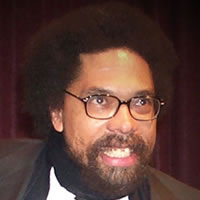
Cornel West, professor of Religion and African American Studies at Princeton University; Stanley Aronowitz, co-managing editor of the journal Situations: Project of the Radical Imagination; Hilary Wainwright, editor of Red Pepper magazine and fellow at the Center for Global Governance at the London School of Economics.
Guest Host: Sandina Robbins
Intern: Alexis McCrimmon
For more information::
Left Forum
c/o Ph.D. Program in Sociology
CUNY Graduate Center
365 Fifth Avenue
New York, NY 10016
212-817-2003; leftforum@leftforum.org
www.leftforum.org
Center for African American Studies
Princeton University
One Palmer Square, Suite 315
Princeton, NJ 08544
609-258-0021; maryannr@princeton.edu
www.princeton.edu/africanamericanstudies
Situations: Project of the Radical Imagination
The Center for the Study of Culture, Technology, and Work
CUNY Graduate Center
365 Fifth Avenue, Room 6115
New York, NY 10016
saronowitz@igc.org
http://ojs.gc.cuny.edu/index.php/situations
Red Pepper
1B Waterlow Road
London N19 5NJ, UK
+44 020 7263 9345; redpepper@redpepper.org.uk
www.redpepper.org.uk
This morning during breakfast I was reading an article out of The Washington Post National Weekly Edition to my son. The article, entitled "A Plea to Keep Families Together," discussed the realities faced by children born in the U.S. of illegal immigrants. As I am prone to do, I shared my opinion with my son, to which he replied, "Why don't you email the president and tell him what you think?" "What a good idea," I answered. My son, looking quite thoughtful, then said, "Oh, mom, George Bush probably won't like your email, so he might put you in jail; maybe you'd better not send one." Lucky me, a lesson on the freedom of America just fell into my lap. "Well, you know sweetie, in America you are free to have your own opinion and say what you think." The words were barely out of my mouth when images of Don Imus entered my head.
Now I have no interest in Don Imus. Two weeks ago, I wouldn't have recognized his name, although I think I once saw a picture of him. I happened to come across his comment about the Rutgers's women's basketball team while I was waiting for my car to be serviced. The gasp I made caused my older son to look up from his Gameboy wanting to know what I had read. I slid the paper to him and watched as his eyes widened. "This is not 1892," he said, "It's 2007, what's wrong with this guy?" I beamed at my son's response, patted myself for raising a sensitive child, and did not once utter a word about free speech in America.
I can tell you why I didn't stand up for Don Imus; it goes back to my freshman year in college. I was standing in line for the Rocky Horror Picture Show with my boyfriend. A man and a woman probably in their mid-forties, about my age now, got into an altercation with a 16-year-old girl. As the argument became heated, the man suddenly yelled out, "You are nothing but a c–t." The hairs on my arms stood up and, as my disgust turned to anger, I yelled back, "I can't believe a grown man like you would say that to a young girl. You offended not only her, you offended me and every other woman here, even your own friend!" As I moved towards him, my boyfriend grabbed my arm, stepping between myself and the man. The man opened his mouth to say something, stopped and turned away. I'd like to think my words had something to do with his change in attitude, but it was probably the glare my boyfriend aimed at him that shut him up.
That is why at 44 I find myself at a crossroads. I'm fed up and disgusted with a culture that allows women to be treated with contempt disguised as art. I know why I wasn't aware of Don Imus — one listen and I would have changed the station. So I ask myself, why isn't that enough now? After all ,no one has to listen to a Don Imus or watch a Mel Gibson. The thought is if enough people stop listening and watching, the individuals will be minimized, eventually fading into the background. So is it censure when CBS fires Don Imus? Is it a response from the American public, fed up with an anything-goes media? What does freedom of speech really mean?
For myself, I am going to take a stand. I cherish my right to have an opinion, to know that I can disagree with others, even the president, and not end up in a cell somewhere. The right to voice an opinion, however, is not a blank check to hurt others. Calling young women who have just won a victory a derogatory name is not an opinion; it is simply a man trying to put women in their place, someone seeking approval by hurting others. I want my children to know that those who came before them died for their freedom to make their own choices in the world. I want my children to know that I will fight to protect the rights that we have been given. Most importantly, I want my children to know that words can hurt and no amount of "sorrys" can take them back.
One thing you must know about Morocco is the overabundance of street cats. They're absolutely everywhere — the other day, a fellow Morocco blogger posted a jaunt around the medina of his city, including all of the cats he ran into. In one photo, seven (yes, seven) cats wait outside the door of the public hammam (baths). As funny as that is, it is not at all strange.
In my neighborhood, there are about eight cats that I see on a daily basis. There's the fluffy but extremely dirty black and white cat that sits on the walls of the local cafe; there's Ninu, the cat all of the businesses in my building feed; there's the ginger cat who hisses at me. Etc.
What is rare, however, is to see a kitten around. As I'm sure you would know, a female cat would never just give birth on a sidewalk — rather, she'd seek out a clean(ish), dry, safe place and have her kittens there. So you can imagine my surprise one evening when, upon arriving home with a friend, I found a practically microscopic white and brown kitten meowing outside my door. She looked clean enough, and she stood right at my feet, looking up with her big, sad green eyes.
"Meow," she said to me.
I reached down to pick her up, assuming she'd run — in other words, I gave her the litmus test of Moroccan street cats (cats who live outside of butcher shops don't run; skinny cats and most female cats do). She allowed me to scoop her up, even hug her to my chest. "She's a keeper," my friend told me.
And so, LC (short for "Little Cat") came to live with us one January evening.
Four months later, it was time to take her in for her shots — since we don't have a car, we borrowed a cat carrier from a Canadian friend, and my husband walked her over to the veterinarian. Old men followed him, peering into the case; young kids squealed. It is a rare sight indeed here in Morocco.
After LC had been given her shots, the vet informed my husband that she would require a photograph for her health card. So, rather than go home, take a digital photo and have it printed, my husband decided to take LC to the same place we go when we need passport-sized photos — the professional photographer.
And so, this afternoon, I will be the happy owner of a set of prints of…my cat.
Anyone want a wallet-sized?
After eight months in Israel, I’ve crossed through its borders approximately once a month with very little hassle. This past Monday, however, was an exception. Although only flying domestically from Tel Aviv to Eilat, and departing from the local Tel Aviv airport rather than the colossal fortress of Ben Gurion International, security was rigorous.
After thirty minutes of general questioning—where are you from, where are you going, why are you in Israel, what do you teach, why did you choose to teach in Israel, where is the school, do you know anyone in Egypt—I thought I had provided sufficient satisfactory answers. However, the stone-faced security supervisor was called over, and I was subjected to rapid-fire questioning, my answers hardly complete before the next query was delivered.
With twenty minutes remaining before the departure of my flight, I was taken to an outside bunker partitioned with heavy floor-to-ceiling drapery. The contents of my duffel and my tote were unceremoniously dumped into plastic tubs and sent through the industrial x-ray machine. The security officer proceeded to meticulously run her hands over every surface on my body, then passed her metal-detecting device over the same tracks. The wand beeped once at the fly of my pants, and the officer asked me to remove them.
“Am I going to miss my flight?” I asked the security supervisor.
She shrugged. “I can’t promise anything.”
My belongings proven to be explosive-free, they were returned to me in a pile resembling the clearance bin in a thrift store.
Seven minutes left until my flight, I was told I could refold, reorganize, repack my bags, then was personally escorted to the plane, a security officer carrying my suspicious duffel all the way from the security bunker to the interior of the cargo space of the plane. I settled into my seat, checked my watch: two minutes to takeoff.
I was relieved that I made my flight, but I was distracted by feelings of humiliation even though my experience was not severe. I certainly understand the need for heightened security in the state of Israel—a lone Jewish island in a vast expanse of Islamic territories. Especially given its international threats: the current tensions with Hezbollah, the open animosity of the Islamic Republic of Iran President Ahmadinejad, the stagnancy of peace efforts with Syria. And locally: a Palestinian suicide bombing in the resort city of Eilat in late January of 2007—the first such attack in nine months and the first to ever hit Israel’s southernmost city, the infighting of the Palestinian factions, the recent capture of suicide bombers in Bat Yam and the Sinai, and last year’s target of the popular Israeli-frequented Sinai resort town of Dahab that killed 24 people during the Passover holiday.
However, as a 22-year-old female of East Asian appearance with an American passport—an American passport with an Israeli government-issued work visa for employment at an international embassy-sponsored school no less—treated with such suspicion and rudeness, I could not fathom the humiliation and rage suffered by a young adult male of Arab appearance and a Palestinian Authority passport. (I’ve been told that Arab-Israelis give themselves a five- to six-hour window before departure time to even allow the possibility of catching their flights.)
In addition, this type of suspicious, inconsiderate treatment of foreigners on the ground in Israel stands in stark contradiction to the Israeli state’s efforts to improve their image abroad and revitalize the tourism industry in this historically, culturally, and religiously rich land that suffers from an exceedingly negative public image given the violence and instability of the intifadas and the recent Israeli-Hezbollah war.
Does Israel’s tangible and justified need for rigorous security stand compatible with its desire for a healthier tourism industry? Does the pervasive suspicion of the non-Israeli, the non-Jew allow, for warm reception of foreigners in this land? Does tight security mandate racial profiling, intensely elevated levels of suspicion, and potentially humiliating treatment of foreign visitors? Can Israel salvage its public image abroad and cultivate an image of friendliness and open arms while maintaining the distrustful, near-paranoiac scrutiny utilized to execute security efforts?
Rigorous security on the ground in Israel is a clear necessity, but I fear that the intense measures utilized to maintain this priority may be detrimental to other aspirations of the Israeli state.
The more time I spend with them, the more I feel that condoms are the worst idea man has ever come up with. And no, it has nothing to do with the “feeling.”
I hate condoms because the little Catholic boy in me gets embarrassed every time I have to buy them. He’s not scared of wasting his seed (Sing it! Every sperm is sacred…), he’s scared of someone knowing about it.
I avoid the subject of “them” as much as possible because “they” embarrass me. When people see condoms, they know exactly what you’re doing. It’s a complete invasion of privacy.
My resident assistant freshman year got so annoyed with my stammering, woebegone way of asking him for free condoms he provided that he said, “Why be embarrassed? You’re getting laid. That’s awesome, you moron.”
But that didn’t make me feel any better. If anything I was even more uncomfortable. (He knew I was having sex…gross.)
Even when I think of my RA’s inspiring words, I still approach the cash register, box of phallus wrappers in hand, and get the same scared, bottom-of-my-stomach nausea. More and more I think this is my body’s physical reaction to the embarrassing-but-true reality that I am feeling judged by the clerk.
You probably don’t think about it too much, but the clerk at your grocery store knows more about you than most people. He or she knows what kind of food you put in your body, your favorite toothpaste, and now your sex life (I can only assume that they also giggle about your KY Warming Liquid as well).
It’s too much to imagine they know all of that. Some of my best friends have no idea.
I will concede that the clerk probably doesn’t care about me personally, but still, with all of the talk about “keeping it in the bedroom,” it does suck. Just imagine their thoughts: “Frozen pizza…peanut butter…box of Trojans? Who’s sleeping with this idiot?”
Terrifying.
The only idea worse would be if the clerk were actually depressed about the situation. What if they saw me there with condoms and thought, “Why am I alone?” That’s the type of thing that puts Woody Allen on a psychiatrist’s couch every week.
I worked at a McDonald’s for nine months and, believe me, we judged people all the time. A person with that expansive double-ass (where the front and back are equal orbs) would get ridiculed for hours after they left. I add in the knowledge of that person’s sex life, and I don’t want to imagine the things we’d have said.
My girlfriend asked me about why condom purchasing made me nervous (as I talked her into buying them instead) and, when I was done telling her, she stared at me for about 30 seconds before calling me an idiot. And she’s right. I shouldn’t be embarrassed about practicing safe sex.
But think about this if you agree with her: The clerk at the grocery store has a tattoo on his neck that says “Maddog.”
If you’re OK with that guy knowing about your plans, then buy up. Then could I just have a couple?
"We hope that after this show airs, homosexuality will no longer be an issue, that society will be more enlightened about it, more understanding and more tolerant."
—Gang Gang, the producer of "Gay Connections" in English or, according to the Chinese press release, "Connecting Homosexual People," the first program to focus on gay issues in the country. The 12-episode show is produced by a Hong Kong-based broadcast, launched by a Chinese TV channel, and is airing on the Internet. Despite the fact that homosexuality was categorized as a mental illness until 2001, the show is hosted by AIDS activist Didier Zheng, who is openly gay.